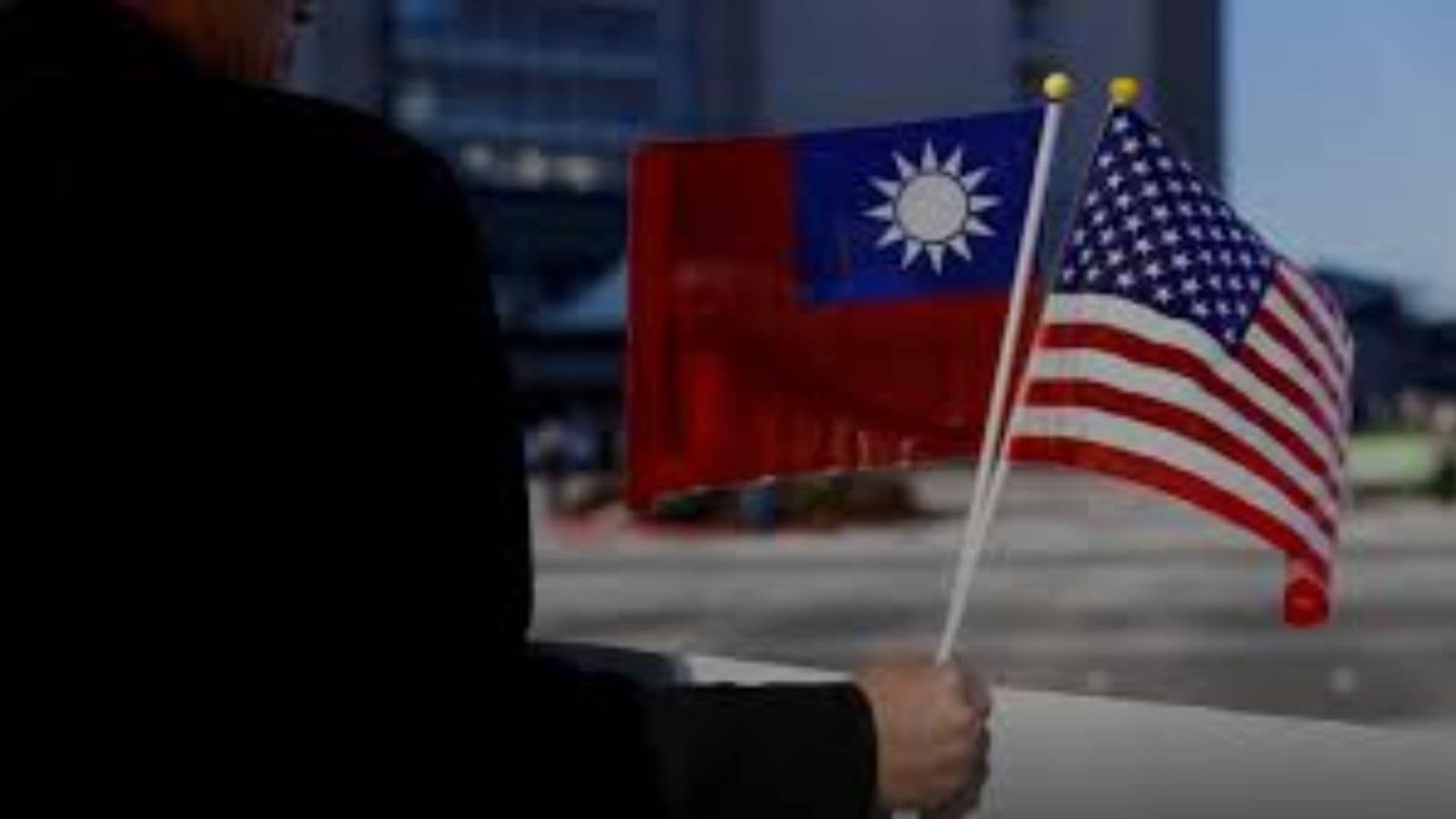
China has quietly expelled New York Times correspondent Vivian Wang in retaliation for an interview the newspaper conducted with Taiwanese President Lai Ching-te, triggering a direct diplomatic counterstrike from Washington. The expulsion, which occurred in February but was kept under wraps until now, marks the first time since the mass expulsions of 2020 that Beijing has ousted a journalist from a major U.S. news outlet. Taiwan forcefully condemned the move, declaring it will not be silenced, while the Trump administration responded on Friday by revoking the visa of a U.S.-based journalist for China’s state-run Xinhua News Agency.
This is not a standard diplomatic tiff over press credentials. It is a structural shift in how Beijing enforces its geopolitical red lines, using the livelihoods of on-the-ground journalists as geopolitical collateral.
The most alarming detail of Wang’s expulsion is that she had absolutely nothing to do with the interview that allegedly caused it.
The interview in question was conducted via video link in New York by Andrew Ross Sorkin during the Times’ DealBook Summit. During that event, Sorkin referred to Taiwan as a "country"—a definition Beijing aggressively rejects—and President Lai warned of China’s increasing aggression in the Taiwan Strait. Wang, who had been based in Beijing since 2022, was thousands of miles away, completely decoupled from the production, editing, or broadcasting of the segment.
By punishing a reporter for content produced entirely outside of mainland China by her colleagues, Beijing is signaling a new era of collective corporate liability for foreign media houses.
The Myth of the Pretext
Chinese authorities told the Times that the DealBook summit was the catalyst for the ouster. Veteran analysts and those familiar with the Ministry of Foreign Affairs bureaucracy know better. The video interview was not the cause; it was a convenient exit ramp for a government that had grown deeply uncomfortable with Wang’s boots-on-the-ground reporting.
During her tenure in Beijing, Wang distinguished herself by avoiding the standard, sterile analysis of top-down Communist Party decrees. Instead, she focused on how those decrees ground against the lives of ordinary Chinese citizens. Her reporting chronicled:
- The hyper-intrusive expansion of the domestic security apparatus.
- The psychological and economic fallout of Beijing’s draconian lockdowns.
- The invisible lines drawn by internet censors that dictate daily digital life.
This style of granular, empathetic journalism is precisely what the state fears most. It humanizes a system that prefers to present itself as a monolithic, frictionless collective. By tying her expulsion to Taiwan, Beijing accomplishes two goals simultaneously. It disciplines a major American newsroom for elevating a Taiwanese leader, and it scrubs the capital of a reporter whose notebook was getting far too close to the fabric of Chinese society.
The New York Times spent months negotiating behind the scenes to reverse the decision, hoping to preserve its dwindling footprint in the country. At one point, Chinese officials offered a minor, almost cynical concession: a seven-day short-term visa. It was an offer meant to be rejected, a bureaucratic finality wrapped in a temporary stay. When the diplomacy failed, the executive editor of the Times, Joseph Kahn, went public, calling the expulsion "wrong" and noting that the number of American correspondents inside China has fallen to an alarmingly low level.
The Short-Term Visa Trap
The expulsion of a high-profile writer gets headlines, but the slow, bureaucratic strangulation of the broader press corps happens in the shadows. The historical norm for foreign journalists in China was a one-year journalist visa, which required annual renewal. While precarious, it provided enough stability to rent an apartment, build a network of sources, and develop deep institutional knowledge.
That system has been replaced by a policy of rolling anxiety.
Foreign ministry officials are increasingly bypassing the one-year visa altogether, granting foreign correspondents short-term visas lasting three months, one month, or even a few weeks. The message to the press corps is unmistakable: your presence here is a weekly subscription that can be canceled without a refund if your coverage displeases the state.
This institutionalized precarity fundamentally alters the nature of international journalism. When a reporter knows their visa extension rests on the mood of an official reading their next dispatch, self-censorship ceases to be a conscious choice. It becomes a survival mechanism. It changes the questions asked at press conferences, the topics pitched to editors, and the risks taken to meet sources in dark corners of the capital.
The Transnational Silencing Machine
Taiwan’s Presidential Office, via spokesperson Karen Kuo, framed this development not as an isolated incident, but as part of a coordinated strategy of transnational repression. Taipei's assessment is accurate. Over the last two years, Beijing has scaled up its efforts to control the global narrative surrounding Taiwan, attempting to enforce its domestic censorship laws far beyond its physical borders.
Consider the recent treatment of Agence France-Presse. According to individuals familiar with the matter, Chinese authorities denied visas to new AFP reporters after the wire service secured an interview with President Lai. The pattern is clear. If a global news organization interviews the leadership in Taipei, its bureau in Beijing will pay the price.
This strategy forces international media companies into an impossible commercial and ethical corner. Do they exercise their editorial independence to cover Taiwan—a critical global flashpoint and microchip hub—knowing it will result in the total blindness of their bureaus in the world's second-largest economy?
For a long time, Western newsrooms assumed that keeping a physical presence in Beijing was paramount, even if it meant absorbing minor slights. The calculation was that some access was better than no access. But as the terms of that access become more humiliating and restrictive, the value proposition vanishes.
The Danger of a Blind West
The immediate casualty of this diplomatic warfare is clarity. We are entering a phase where Western policy toward China will be crafted in an information vacuum.
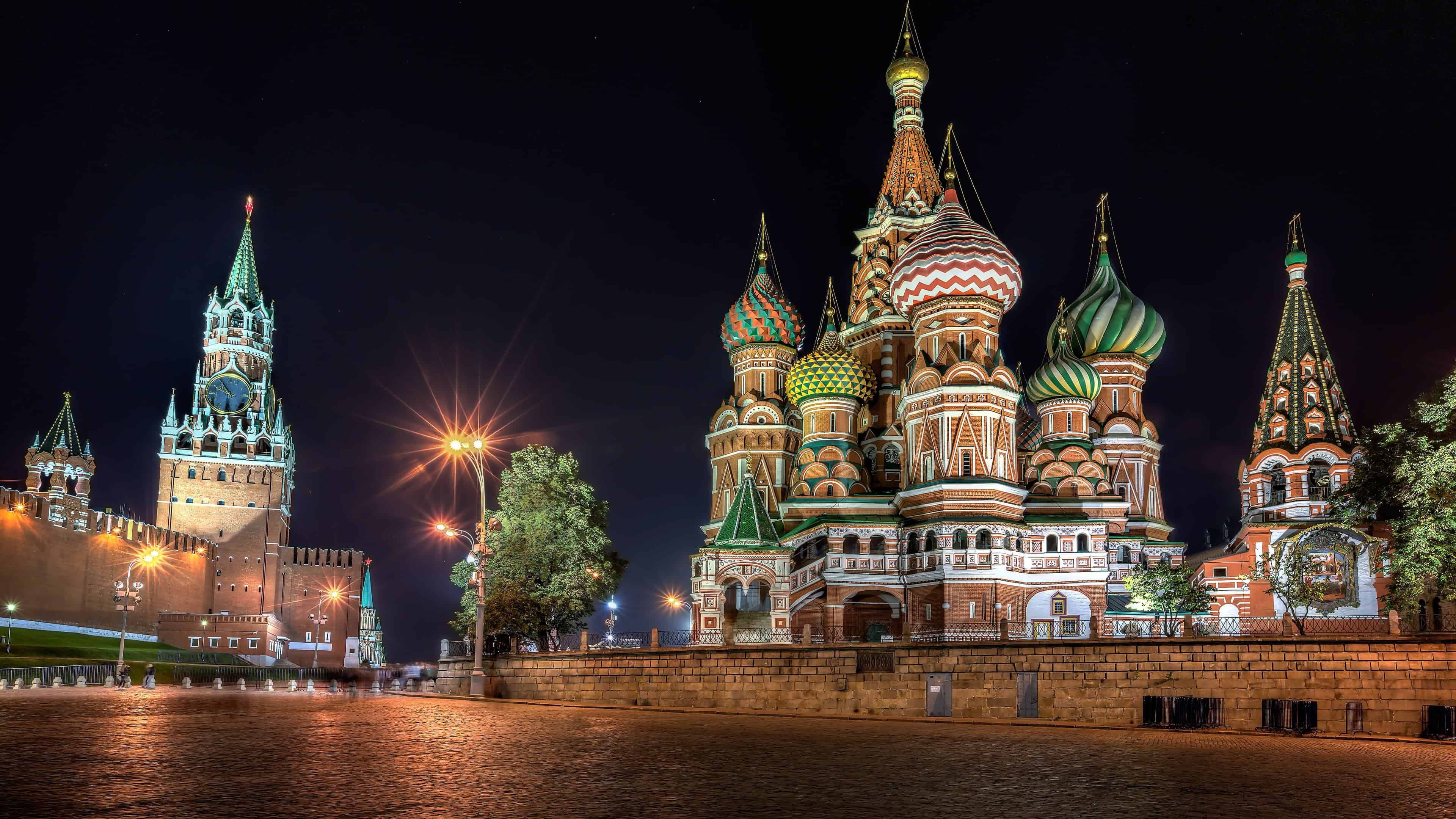
During the Cold War, the West relied on "Kremlinology"—the art of reading the vague body language of Soviet officials on atop the Lenin Mausoleum because access to the country was so restricted. We are rapidly approaching a state of "Zhongnanhaiology," where the inner workings of the Chinese leadership must be parsed from state propaganda broadcasts and sanitized press releases because there are no independent eyes left on the ground to verify them.
The White House’s decision to revoke the visa of the Xinhua employee shows that Washington is no longer willing to turn the other cheek to asymmetric press crackdowns. For decades, Chinese state media workers enjoyed relatively free rein in Western capitals, operating under the protection of free-press laws while reporting back to a propaganda apparatus that denies those same rights to foreigners. The tit-for-tat retaliation breaks that paradigm.
Yet, this symmetry offers cold comfort. Expelling a state media worker from Washington does not restore an independent journalist to Beijing. It merely confirms that the bridges are burning from both sides. The world is left to watch a rising superpower close its shutters, leaving the global community to guess what is happening behind the glass.