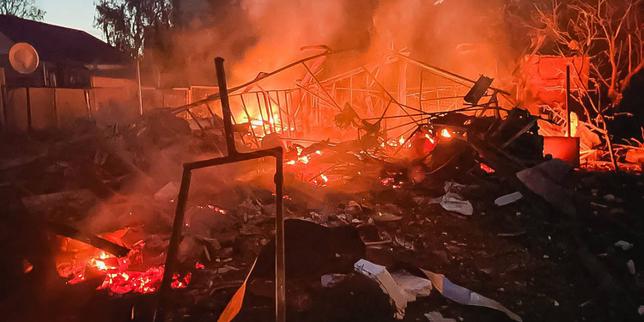
The recent explosion of violence across Pakistan-occupied Kashmir that left at least 11 people dead, including four police officers, is not a sudden burst of lawlessness. It is the predictable collapse of a structural fiction. For decades, Islamabad has treated the region as an resource-rich periphery while masking systemic economic neglect with temporary financial band-aids. When a Combined Military Hospital in Rawalakot becomes a combat zone and funeral processions devolve into lethal firefights between local demonstrators and security forces, the crisis has moved far beyond a dispute over utility bills.
At the heart of this escalation is the Joint Awami Action Committee, an umbrella coalition of traders, students, and lawyers that has effectively paralyzed regional administrative machinery. While state media frequently attempts to dismiss these movements as politically motivated or externally agitated, the reality is far more grounded in basic survival. Locals are refusing to pay for the very resource they produce, pointing to a stark math problem. The region generates roughly 3,500 megawatts of hydroelectric power, contributing a vital slice to Pakistan's national grid. Yet, the residents who live in the shadow of these mega-dams face soaring tariffs and rolling blackouts.
The Illusion of the Subsidy Quick-Fix
Whenever the regional capital of Muzaffarabad grinds to a halt, the federal government follows a familiar playbook. It deploys paramilitary forces, cuts mobile internet services, and eventually signs an emergency financial package. We saw this cycle play out with a multi-billion rupee grant intended to slash flour prices and electricity rates.
The problem with this approach is that it treats a structural hemorrhage like a scratch.
Subsidies require a stable treasury to remain viable. With Pakistan caught in a perpetual loop of bailouts and strict fiscal monitoring from international lenders, these financial cushions vanish almost as fast as they are promised. When the artificial price caps fail, the public feels cheated, the state feels broke, and the underlying tension returns with double the kinetic energy. The Joint Awami Action Committee evolved its strategy from simple bill-burning campaigns into a rigid 38-point charter because it realized that temporary economic relief means nothing without institutional reform.
Hydropower without Local Power
The economic friction centers on a concept known as net hydel profit. Under the current legal framework, provinces receive royalties for the electricity generated by water resources within their borders. However, because of the unique, legally ambiguous status of Pakistan-occupied Kashmir, these funds rarely trickle down to local infrastructure or public services.
- Production: Local dams pump cheap, clean energy directly into the national grid.
- Distribution: The power is managed, priced, and redirected by federal authorities in Islamabad.
- Consumption: Local consumers are forced to buy back their own regional resource at inflated, taxed retail rates.
This creates an environment where a heavily resource-exporting region experiences the living standards of an impoverished importer. It is an economic arrangement that cannot endure under the weight of high inflation and widespread youth unemployment.
The Fatal Crackdown Strategy
When administrative leverage fails, the state routinely falls back on policing. The recent deaths occurred because authorities attempted to preemptively break the organization by arresting its leadership during overnight raids. This tactic ignores a fundamental rule of civil unrest: arresting a visible leader does not dismantle a decentralized grievance; it merely removes the moderate voices capable of negotiating a peaceful retreat.
Instead of stopping the planned long marches, the heavy-handed security presence transformed civic strikes into street warfare. Tear gas and live ammunition were met with stones and, eventually, firearms. Labeling civil society activists and regional traders as terrorists under national security laws does not project strength. It exposes a government that has completely run out of arguments.
[Federal Grid Demands] ──> Extracts Hydro-Power ──> [PoK Rivers]
                                                         │
[Local Consumers] <── Charges High Tariffs <─── [Taxation Framework]
The Elite Privilege Disconnect
Public anger is not fueled solely by what people lack, but by what they see the administrative elite consuming. Part of the current agitation focuses squarely on the systemic perks, free fuel, and special allowances granted to high-ranking regional officials.
While the average citizen is told to tighten their belt to satisfy macroeconomic stabilization targets, the local bureaucracy remains insulated from the pain. A judicial commission promised to review these privileges has yielded few tangible results, turning a bureaucratic concession into another symbol of broken faith. When an administration loses its moral authority to demand austerity from its public, basic governance breaks down.
The current peace agreements and temporary truces are fragile precisely because they leave the core machinery untouched. A communication blackout can clear the streets for a week, and a fresh injection of federal funds can quieten the leadership for a month. But as long as the fundamental imbalance between resource extraction and local economic autonomy remains unaddressed, the next spark will always be more destructive than the last.