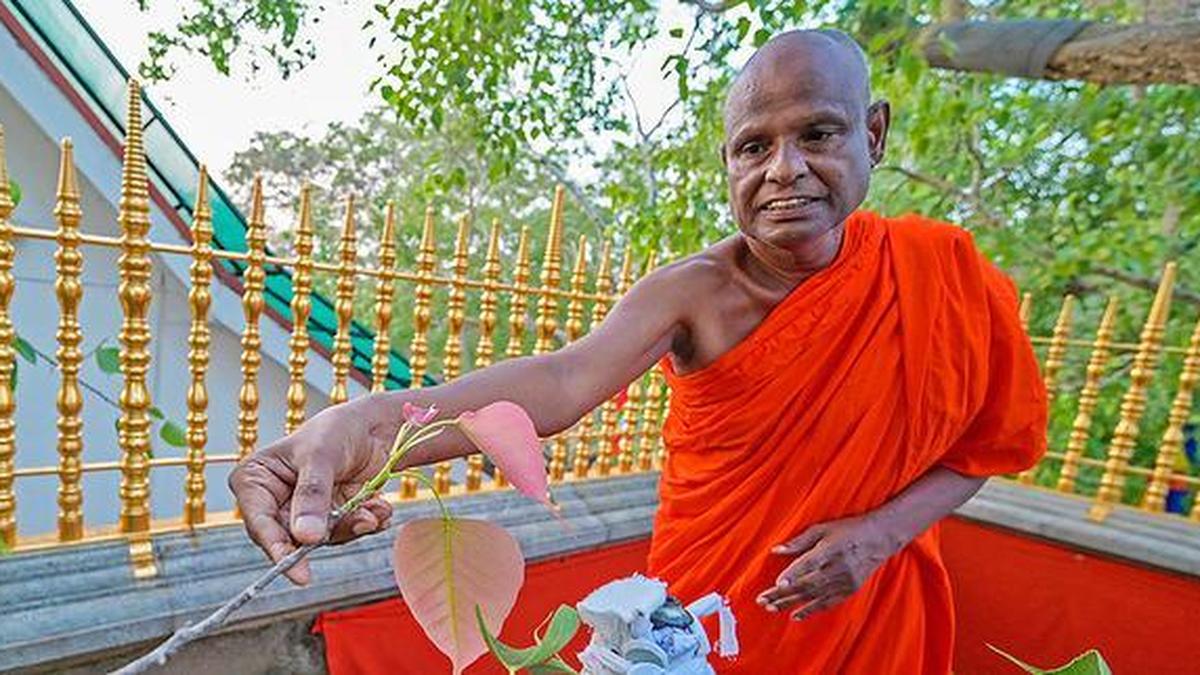
The suspension of venerable Pallegama Hemarathana by the Malwatte Chapter on May 30, 2026, marks the most explosive institutional reckoning in modern Sri Lankan history. As the chief custodian of the Jaya Sri Maha Bodhi—the sacred fig tree in Anuradhapura traced directly back to the historical Buddha—the 71-year-old monk held a position of near-absolute spiritual authority over the country's Sinhalese Buddhist majority. His official suspension follows a May 9 arrest regarding the alleged long-term sexual abuse of an underage girl. Yet, treating this case as an isolated anomaly obscures a far more systemic reality. Data newly obtained under freedom of information laws reveals that nearly 300 Buddhist monks have faced child abuse allegations in Sri Lanka over the past three years alone, exposing an institutional vacuum that shields powerful predators under the guise of protecting religious identity.
The Malwatte Chapter’s working committee acted only after weeks of escalating public fury and legal stagnation. For a hierarchy accustomed to operating above secular scrutiny, the suspension represents a rare, reluctant capitulation to civilian anger rather than a proactive moral cleansing.
The Fortress of Spiritual Impunity
To understand how an allegation could remain suppressed for years, one must understand the unique geopolitical and social architecture of Sri Lankan Buddhism. Monks are not merely religious leaders. They are cultural gatekeepers, political kingmakers, and highly influential community figures.
When the National Child Protection Authority began investigating Hemarathana for the statutory rape of a child, investigators ran directly into an unwritten wall of state deference. Following his initial arrest orders, the prelate immediately checked into a luxury private hospital in Colombo, a well-worn tactic for elite suspects seeking to evade a standard prison cell. He remained there for nearly two weeks until being quietly granted bail on May 22.
The state apparatus moves slowly when confronting the saffron robe. The legal officer for the child protection authority openly told an Anuradhapura court that investigators practically "had to take a stick and chase the police" to force the initial arrest. Local media outlets, terrified of sparking backlash from nationalistic factions who view any criticism of the clergy as a direct attack on the Sinhalese Buddhist identity, opted for total radio silence. International wires carried the story while domestic printing presses looked the way.
The Hidden Epidemic in Numbers
The arrest of a top cleric is a single symptom of a deeper, institutional rot. Data provided by the National Child Protection Authority to investigative journalists confirms the staggering scale of the issue.
- 285 Distinct Complaints: Law enforcement and child welfare agencies logged complaints against 285 different Buddhist monks between May 2023 and May 2026.
- 70 Percent Sexual Offences: Over two-thirds of these logged complaints involved direct allegations of sexual abuse or exploitation of minors.
- 27 Formal Charges: Despite nearly 300 cases being documented, only 27 of those instances have successfully resulted in formal legal indictments.
This massive statistical chasm between complaints and formal prosecutions highlights how effectively the system suffocates justice.
| Metric | Recorded Figures (2023–2026) |
|---|---|
| Total complaints against monastics | 285 |
| Percentage involving sexual offences | 70% |
| Cases reaching formal court charges | 27 |
The immense wealth tied to historic temples plays an undeniable role in this disparity. The Atamasthana, the collective of eight sacred sites overseen by Hemarathana, generates millions in donations from millions of pilgrims annually. Wealth buys premium legal counsel, secures political protection, and silences vulnerable families. In Hemarathana's case, police also arrested the victim's mother for aiding and abetting the abuse, pointing toward a grim reality where economic vulnerability is weaponized to gain access to children.
A Breaking Point for a Conservative Society
The Malwatte Chapter chose to announce the suspension on Vesak, the holiest day of the Buddhist calendar celebrating the birth, enlightenment, and passing of the Buddha. The timing was deliberate, designed as a damage-control mechanism to signal to a fracturing populace that the hierarchy takes the purity of the Sasana seriously.
But the public is growing weary of the contradiction. The moral authority of the clergy had already suffered heavy blows, including the April arrest of 22 monks caught smuggling 110 kilograms of cannabis through Colombo’s international airport.
For decades, the standard institutional defense mechanism was to accuse critics of orchestrating an organized campaign to sully the image of Buddhism. That defense no longer holds water when the calls for reform are coming from within the community itself. Monastic discipline cannot remain a closed-door affair managed entirely by elderly councils who only act when an international spotlight threatens their institutional survival.
True systemic protection for children will only occur when the Sri Lankan state treats the saffron robe as a garment of spiritual responsibility, not a shield against criminal prosecution. The Attorney General now weighs whether to file formal indictments before the High Court. What happens next in the courtrooms of Anuradhapura will decide if the rule of law applies to everyone, or if spiritual status grants permanent immunity.