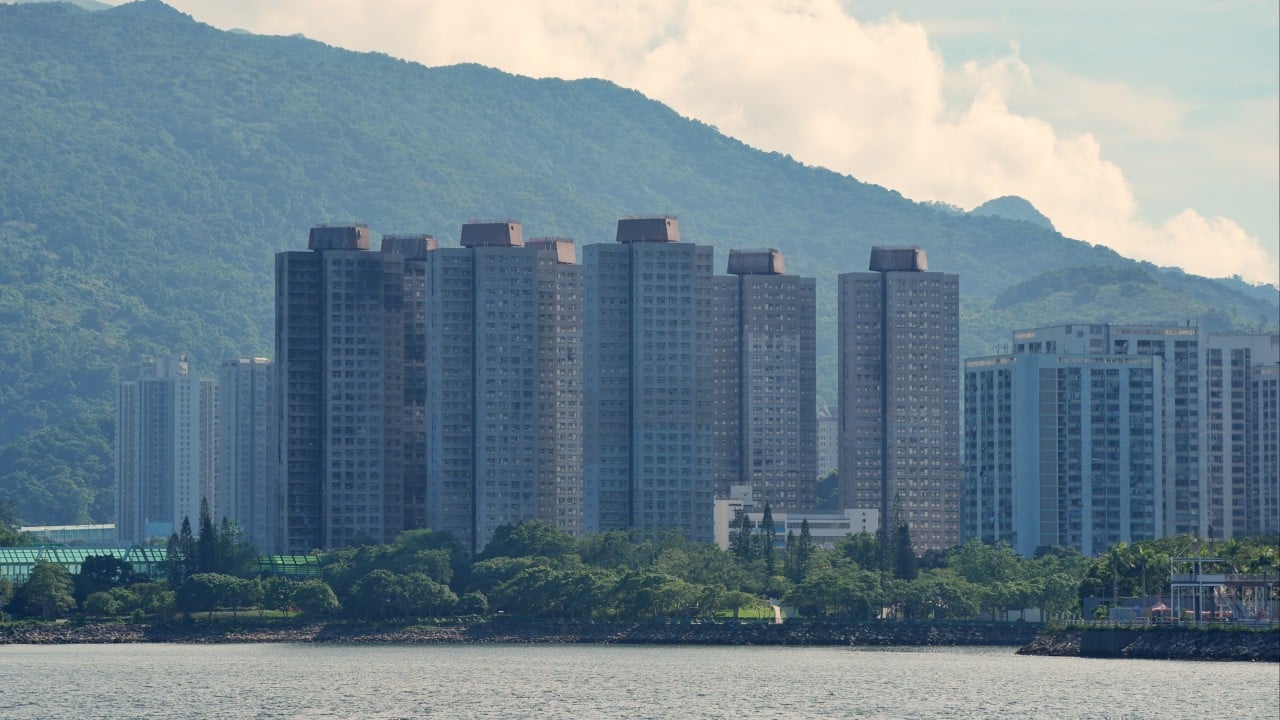
Hong Kong housing officials have removed flat resale restrictions for survivors of the deadly Wang Fuk Court fire in Tai Po, allowing affected homeowners to enter the buyback plan immediately without paying hefty premiums. The decision directly addresses the immediate financial gridlock gripping thousands of displaced residents by bypassing the standard Home Ownership Scheme lock-up periods and land premium penalties. However, beneath this administrative concession lies a deeper systemic crisis. The government’s HK$6.8 billion bailout package serves as an emergency band-aid on a regulatory framework that failed to protect these residents in the first place, exposing severe vulnerabilities in submarket building maintenance and institutional oversight.
The November 2025 inferno at Wang Fuk Court, which claimed 168 lives and gutted seven out of eight residential blocks, represents Hong Kong's deadliest building fire in decades. In the months following the tragedy, survivors found themselves trapped in a bureaucratic paradox. Because Wang Fuk Court was a subsidized Home Ownership Scheme estate, standard housing policies strictly prohibited owners from selling their flats on the open market without first paying a substantial land premium to the Housing Authority.
For an elderly, working-class population, paying millions of Hong Kong dollars to lift a restriction on a charred, uninhabitable piece of real estate was an impossibility.
By lifting these resale curbs, the government has cleared the path for the dynamic of its proposed buyback plan. Under the newly adjusted terms, the administration will acquire property rights directly from the victims at a set rate. Un-premiumed flats will be bought back at HK$8,000 per square foot, while those with premiums already settled will receive HK$10,500 per square foot.
While officials champion this move as a compassionate, fast-tracked route to resettlement, it functions more as a necessary legal shield for the state. By purchasing the ownership rights outright, the government avoids the politically radioactive and legally fraught process of trying to rebuild a heavily compromised estate under a complex multi-ownership structure.
The Illusion of Choice in Subsidized Housing
The administration has presented survivors with two main options: a straight cash buyout or a flat-for-flat exchange program involving newly constructed Home Ownership Scheme units. On paper, this looks like a comprehensive safety net. In reality, the mathematics of Hong Kong's property market tell a different story.
Consider the baseline market reality. The cash offer of HK$8,000 per square foot for un-premiumed flats reflects a historical valuation validated by the Hong Kong Institute of Surveyors based on pre-disaster conditions. But in the broader New Territories property market, replacing a three-bedroom family flat with an equivalent open-market property for that price is highly optimistic.
Survivors choosing the cash option are effectively priced out of their original neighborhoods, forced to relocate to more remote, less connected developments.
The flat-for-flat exchange program presents its own set of hurdles. The waitlist for subsidized housing in Hong Kong remains notoriously long. While the government promises priority allocation for Tai Po survivors, it cannot instantly conjure vacant apartments in desirable urban centers.
Displaced families, many of whom are currently residing in temporary youth hostels and short-term hotel rooms, face the prospect of prolonged transitional living while waiting for these replacement units to materialize.
The Smart Tender Loophole and Systemic Maintenance Failures
To truly understand why the Wang Fuk Court disaster occurred, one must look at the structural failures that preceded the first spark. The ongoing independent inquiry into the fire has revealed a terrifying breakdown in local building safety management, specifically targeting the Urban Renewal Authority’s Smart Tender scheme.
Wang Fuk Court was undergoing a massive, HK$180 million renovation project that began in July 2024. This initiative was supposed to modernize the aging 1983 estate. Instead, testimony from the inquiry indicates that the estate's fire safety systems were largely compromised during the construction process due to widespread human error and poor oversight.
- Outdated Inspection Protocols: Government surveyors were operating under old guidelines that did not require them to inspect ongoing renovation works in person.
- Unregulated Materials: The rapid spread of the fire across seven separate 31-story towers was fueled by the extensive use of flammable expanded polystyrene foam boards and safety netting that acted as direct accelerants.
- Contractor Collusion: The inquiry revealed that the Smart Tender system, designed to prevent bid-rigging and corruption in estate renovations, created a false sense of security. Independent consultants hired through the system lacked the authority or motivation to intervene when contractors colluded to recommend unnecessary or unsafe structural alterations.
The estate administrator, Hop On, recently announced a HK$127 million refund plan for the remaining balance of the renovation fund. This means households will claw back between HK$150,000 and HK$180,000 depending on the installments they paid.
But a refund cannot replace lost lives, nor does it absolve the regulatory bodies that allowed hazardous materials to wrap seven residential towers like tinder.
The Standout Block and the Compulsory Acquisition Shadow
While the focus remains on the seven ruined buildings, a distinct crisis is brewing at Wang Chi House, the eighth block of the complex that emerged from the 43-hour blaze relatively unscathed.
The government has extended its buyback offer to the owners of Wang Chi House, earmarking approximately HK$1 billion for the single tower. Initial surveys indicate that nearly 80 percent of these homeowners are willing to sell, driven by the profound trauma of the event and the looming financial burden of remaining.
For the remaining 20 percent who wish to stay, the future is bleak.
Maintaining a single, isolated tower on a ruined estate is economically unviable. The shared infrastructure of Wang Fuk Court, from water pumps to electrical grids, was deeply integrated across all eight blocks.
Housing officials have already signaled that if remaining owners reject the buyback, the maintenance costs passed down to them will be astronomical. Furthermore, authorities have hinted at the potential use of statutory land resumption laws to compulsorily acquire the remaining flats, effectively forcing the holdouts out of their homes under the guise of public safety and site redevelopment.
The site itself will not be rebuilt as housing. The government has ruled out on-site redevelopment, opting instead to convert the land into public parks and community facilities. This decision prevents the site from becoming a permanent monument to regulatory failure, but it also permanently reduces the city's available subsidized housing stock at a time when land supply is at a premium.
Funding the Fallout
The total fiscal impact of the buyback scheme is estimated at HK$6.8 billion. The financial architecture of this package relies heavily on a mix of public funds and emergency reserves.
The dedicated Support Fund for Wang Fuk Court will absorb HK$2.8 billion of the cost, a figure expected to be offset down the line by insurance payouts. The remaining HK$4 billion must be pulled directly from the public purse, a line item that has already been quietly absorbed into the 2026-27 Government Budget.
This massive expenditure highlights a structural flaw in how Hong Kong manages its aging building stock. When private management companies and submarket contractors fail to maintain basic safety standards, the ultimate financial liability defaults to the taxpayer.
The buyback scheme is a necessary humanitarian response, but it sets a dangerous precedent for an aging city where thousands of blocks are rapidly approaching their fifty-year lifespans under similarly weak oversight.
The true resolution of the Tai Po tragedy will not be found in the swift processing of buyback checks or the lifting of resale curbs. It will be determined by whether the government fundamentally rewrites its building management ordinances, closes the loopholes in its contractor tendering systems, and holds its own civil service accountable for the enforcement of modern fire safety standards. Until those systemic changes occur, the policy levers used to rescue the survivors of Wang Fuk Court remain a temporary fix for a much larger structural rot.


