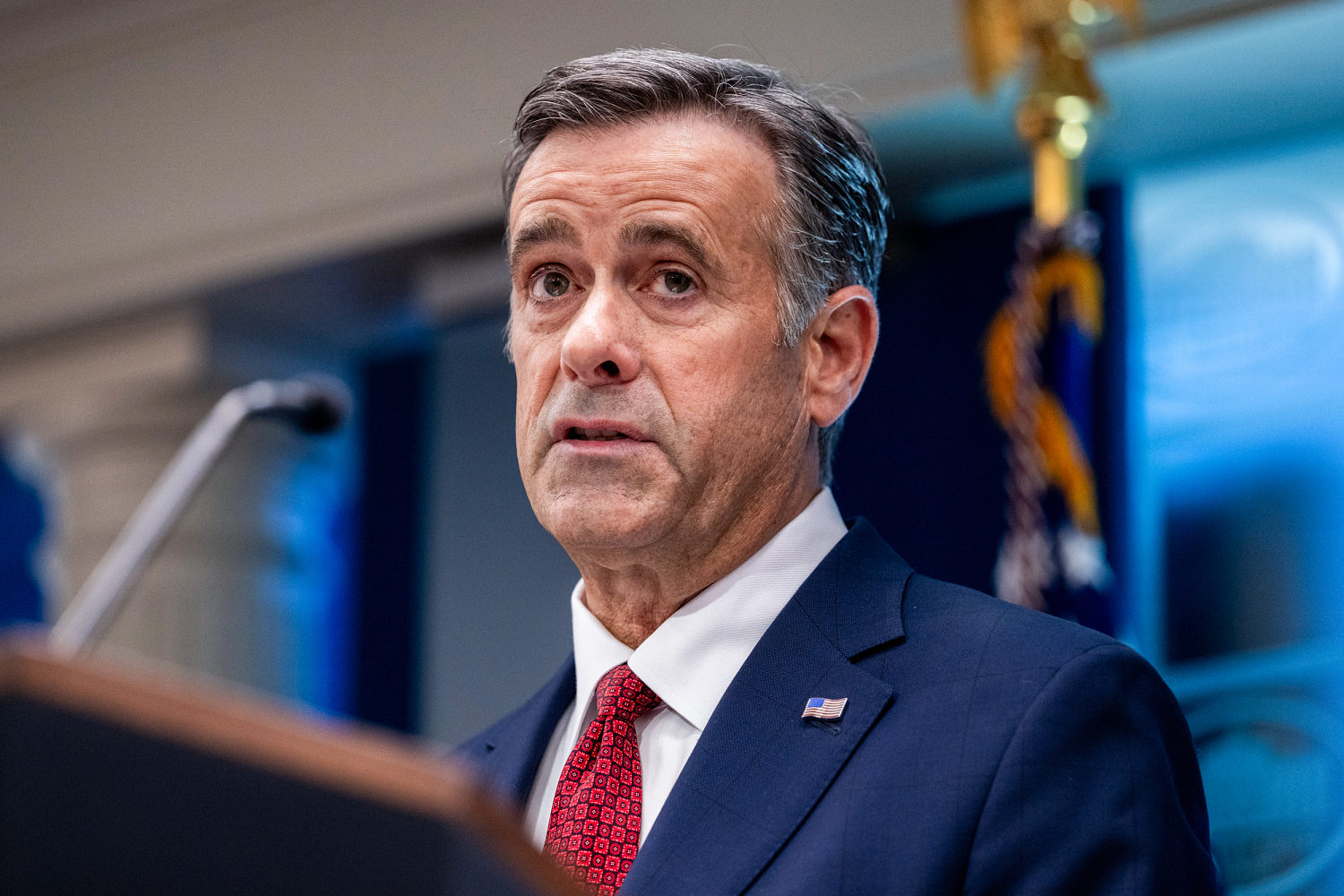
The physical presence of a Director of National Intelligence (DNI) in a non-treaty state represents a shift from passive monitoring to active intelligence diplomacy. While standard diplomatic channels often prioritize optics and public-facing narratives, high-level intelligence meetings function on a distinct logic: the exchange of non-public variables to prevent miscalculation. The meeting between DNI John Ratcliffe and Cuban officials in Havana should be analyzed through the lens of strategic signaling and the management of asymmetric threats rather than conventional statecraft.
The Mechanics of Intelligence Diplomacy
Intelligence diplomacy operates as a shadow layer of international relations. Unlike the State Department, which handles formal recognition and treaty obligations, the DNI's office manages the "Underlying Risk Matrix." In the context of Cuba, this matrix consists of three distinct operational layers:
- The Information Asymmetry Gap: Direct communication at the DNI level bypasses the filtration of traditional bureaucracy, allowing for the transmission of "red line" data—specific thresholds that, if crossed, trigger a proportional intelligence or kinetic response.
- The Verification Protocol: Face-to-face meetings serve as a baseline for human-intelligence (HUMINT) verification. In a digital age dominated by signals intelligence (SIGINT), the ability to gauge the sincerity and internal cohesion of a counterpart’s leadership is a critical data point that cannot be digitized.
- Backchannel Stability: These meetings provide a mechanism for crisis management that remains shielded from domestic political pressure. This allows both parties to discuss sensitive security concerns without the immediate need for public grandstanding.
Structural Tensions in the Caribbean Basin
The timing of this engagement suggests a response to specific shifts in the regional security architecture. Cuba remains a focal point for foreign intelligence activity, serving as a geographic hub for extra-hemispheric actors. The strategic logic of the Havana meeting is likely dictated by the following pressure points.
Technical Surveillance and SIGINT Proliferation
Cuba’s proximity to the United States mainland makes it the premier platform for signals collection. The expansion of listening posts—often suspected to be supported by secondary powers like China or Russia—creates a persistent data leak for U.S. northern-tier communications. A DNI-level visit functions as a direct notification that the technical capabilities of these installations have reached a level of sensitivity that the U.S. no longer deems tolerable.
The Anomalous Health Incident Variable
The persistent issue of Unidentified Health Incidents (UHI), colloquially known as Havana Syndrome, remains a primary friction point. From a clinical and intelligence perspective, the lack of a definitive smoking gun does not imply the absence of a threat. Instead, it suggests a failure of current detection paradigms. Ratcliffe’s presence forces a high-level discussion on the technical parameters of these incidents.
If these incidents are the result of directed energy or sophisticated surveillance technology, the meeting serves to quantify the "Cost Function." The U.S. objective is to communicate that the continued occurrence of these incidents will result in a cost—whether economic or through counter-intelligence measures—that exceeds any tactical benefit Cuba or its partners might gain from the data collected.
The Geopolitical Multiplier Effect
Cuba does not operate in a vacuum. Its intelligence apparatus is a force multiplier for larger adversaries. By engaging Havana directly, the DNI attempts to decouple Cuban domestic interests from the strategic objectives of Moscow and Beijing.
- The Russian Connection: Historical precedents show that Russia uses Cuban infrastructure for maritime and aerial surveillance. Disrupting this cooperation requires a mixture of pressure and "gray zone" incentives that only the DNI’s office can credibly offer.
- The Chinese Expansion: Recent reports of Chinese-backed electronic eavesdropping facilities in Cuba represent a significant escalation in the technical threat landscape. The DNI must determine if these facilities are under Cuban sovereign control or if they are essentially extra-territorial outposts for the Ministry of State Security (MSS).
Quantifying the Risks of Engagement
Every intelligence engagement carries an inherent "leakage risk." The danger for the DNI is providing the Cuban intelligence apparatus with insights into U.S. priorities or collection gaps through the very questions being asked.
- Exploitation of Legitimacy: High-level visits can be used by the host nation to signal international legitimacy, potentially undermining existing sanctions or isolation policies.
- Intellectual Property and Methodology: Conversations regarding UHI or SIGINT capabilities can inadvertently reveal the sensitivity or technical limits of U.S. detection equipment.
- The Misinterpretation Loop: If the DNI’s messages are perceived as an ultimatum without a clear de-escalation path, it may drive the host nation deeper into the orbit of U.S. adversaries.
The Shift Toward Technical Deterrence
The pivot in intelligence strategy under Ratcliffe emphasized the "China Threat" as the primary driver of global instability. Applying this framework to Cuba, the Havana visit is less about Cold War legacy and more about preventing the Caribbean from becoming a permanent node in a globalized Chinese surveillance network.
This requires a move from "Containment" to "Active Neutralization" of electronic threats. The DNI's objective is to establish a technical boundary. This involves the deployment of specialized counters—enhanced encryption, localized jamming, and passive monitoring—that render Cuban-based foreign surveillance assets less effective. By communicating the existence and efficacy of these counters, the DNI reduces the "Incentive Structure" for third parties to invest in Cuban infrastructure.
Assessing the Success of Intelligence Diplomacy
The success of such a mission is rarely measured in signed treaties or public declarations. Instead, it is found in the "Negative Space"—the events that do not happen.
- Reduction in UHI Reports: A cessation of anomalous health incidents among diplomatic personnel would indicate that the "Cost Function" message was successfully received and acted upon.
- Deceleration of Technical Expansion: A slowing of construction or upgrades at known SIGINT sites would signal a Cuban decision to prioritize domestic stability over foreign intelligence partnerships.
- Intelligence Reciprocity: The rare exchange of low-level operational data regarding non-state actors (e.g., drug trafficking or human smuggling rings) could serve as a confidence-building measure.
The intelligence landscape in Havana is no longer defined by traditional ideological battles. It is defined by the management of high-tech sensors, directed energy concerns, and the prevention of extra-hemispheric encroachment. The U.S. must maintain a presence that is simultaneously high-pressure and pragmatically open to backchannel communication.
The strategic play is to transform Cuba from a high-yield intelligence asset for U.S. adversaries into a high-risk liability. This is achieved by demonstrating that the U.S. intelligence community has not only mapped the existing threat but has also developed the specific technical and operational counters to neutralize it. Future resource allocation must prioritize the hardening of diplomatic facilities against directed energy and the deployment of mobile SIGINT-denial units within the region to erode the utility of foreign listening posts.