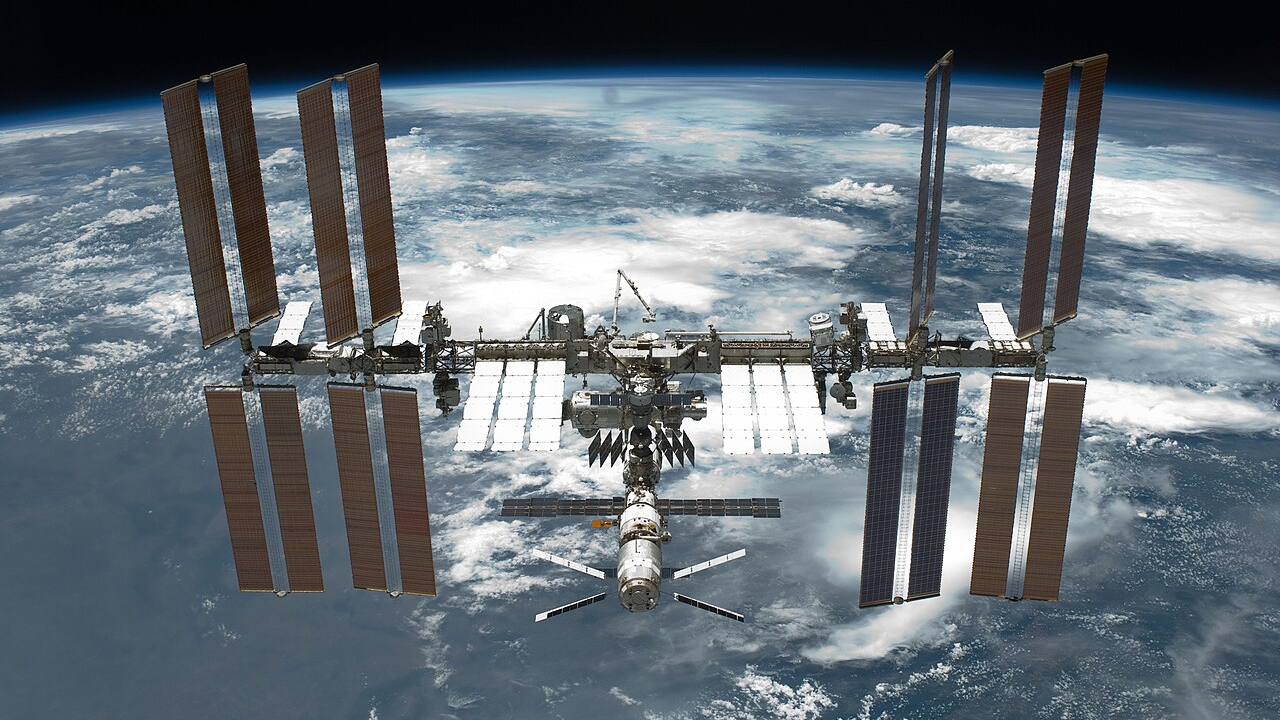
The collective mourning over the scheduled deorbit of the International Space Station is the most expensive bout of nostalgia in human history.
For months, legacy aerospace journalists and armchair futurists have been churning out eulogies. They wring their hands over the "end of an era" and panic about "losing our foothold in low Earth orbit." They treat the ISS like a sacred temple of human ingenuity that is irreplaceable.
They are entirely wrong.
The ISS was not a launchpad for the future. It was a diplomatic welfare project disguised as a laboratory. It swallowed over $150 billion in direct funding—and hundreds of billions more in operational logistics—to yield scientific returns that could best be described as microscopic.
We did not build the ISS to conquer the cosmos. We built it to keep post-Soviet rocket scientists from selling their skills to rogue states in the 1990s, and we kept funding it because Congress loves domestic manufacturing jobs disguised as cosmic ambition.
Its destruction is not a tragedy. It is a liberation.
The Myth of the Zero-Gravity Micro-Laboratory
Let’s dismantle the central premise of the ISS defense force: the idea that the station was a hotbed of revolutionary scientific discovery.
If you ask an aerospace bureaucrat what the ISS actually achieved in its quarter-century of existence, they will rattle off a list of vaguely inspiring buzzwords. They will talk about protein crystal growth, three-dimensional tissue printing, and the development of exotic materials like ZBLAN optical fibers.
I have tracked these promises for two decades. The actual output is an embarrassment.
Most "space-bound breakthroughs" are parlor tricks that could have been simulated on Earth or executed at a fraction of the cost via automated, uncrewed satellites.
- Protein Crystallization: We were promised perfect crystals to cure cancer. Decades later, structure-based drug design happens almost exclusively on Earth using AI-driven folding models and high-throughput synchrotron radiation facilities. The space station added noise, not signals.
- Material Science: Manufacturing ZBLAN fiber in microgravity supposedly yields flawless data transmission. What they omit is the brutal reality of economic scaling. Shipping raw materials up at thousands of dollars per kilogram, processing them in tiny batches, and bringing them down via capsule makes the end product so prohibitively expensive that no commercial telecom entity can actually use it at scale.
We built an orbital lab that requires human beings to act as highly overpaid lab techs. A massive chunk of an astronaut's daily schedule on the ISS isn’t spent peering through microscopes or inventing the future. It is spent repairing the station’s plumbing, wiping down mold from the walls, and running on treadmills so their bones don't turn into chalk.
We sacrificed genuine scientific efficiency to keep humans in a tin can 250 miles up, solely for the optics of having humans in a tin can 250 miles up.
The Astronaut Bureaucracy and the Cost Disease
NASA’s current strategy is to transition from the ISS to Commercial Low Earth Orbit Destinations (CLDs)—private space stations built by companies like Axiom, Vast, or Blue Origin. The panic merchants argue that private industry isn't ready, that we will face a "space station gap" similar to the shuttle retirement gap, and that American dominance will cede to China’s Tiangong.
Good. Let the gap happen.
The obsession with maintaining a continuous human presence in low Earth orbit is a textbook example of path dependency. We do it because we've always done it, not because it makes financial or strategic sense.
Consider the raw math of NASA's budget allocation. Maintaining the ISS consumes roughly $3 billion annually. That is money spent purely on life support, cargo resupply runs, and orbital boosting to keep a decaying 450-ton hunk of scrap metal from burning up prematurely.
Imagine a scenario where that $3 billion is redirected entirely toward deep-space propulsion, automated lunar manufacturing, or next-generation space telescopes.
ISS Annual Maintenance: $3,000,000,000
Result: 6 humans floating in a low-altitude orbit doing middle-school science experiments.

Alternative Allocation: $3,000,000,000
Result: Funding multiple deep-space robotic missions, heavy-payload landers, and genuine infrastructure on the lunar surface.
By insisting on keeping humans in low Earth orbit, we are trapped in Earth's gravitational backyard. The ISS acted as a financial black hole, anchoring human spaceflight to a region of space that we mastered in 1965.
Dismantling the "People Also Ask" Delusions
The public discourse around the ISS retirement is flooded with flawed premises. If you look at the core questions driving public anxiety, the rot in the mainstream perspective becomes undeniable.
"Will the loss of the ISS destroy space-based medical research?"
This question assumes the ISS was a functional medical research center. It wasn't. The primary subject of medical research on the ISS was the astronauts themselves. We spent twenty-five years learning that microgravity destroys the human cardiovascular system, degrades vision, melts bone density, and scrambles DNA via cosmic radiation.
We do not need another decade of testing to confirm that space is hostile to human biology. We know the parameters. Continuing to fund a low Earth orbit station to study human degradation without actively building the artificial gravity systems required for deep-space travel is a circular exercise in futility.
"Can't we just boost the ISS to a higher orbit or park it on the Moon?"
This is the ultimate armchair engineer fantasy. The ISS is not a modular Lego set. It is an aging, structurally fatigued web of aluminum and pressurized modules that has been pelted by micrometeoroids and stressed by thermal cycles for over twenty years.
Moving it would require an propulsion system it doesn't possess and structural integrity it no longer holds. Trying to push the ISS into a higher graveyard orbit would likely result in the station tearing itself apart, creating an unmitigated space debris disaster that would ruin low Earth orbit for generations. It cannot be saved, and it should not be saved.
The Private Sector Won't Save the Vision—It Will Kill It
The mainstream media presents the transition to commercial space stations as a seamless passing of the torch. They envision a corporate version of the ISS where private researchers, sovereign astronauts, and space tourists mingle in sterile, corporate-sponsored modules.
This vision is fundamentally flawed, and the private space companies know it.
The economics of a purely commercial space station do not close if you try to replicate the ISS model. No pharmaceutical giant is going to fund a billion-dollar corporate lab in orbit when they can get better, faster data using automated orbital free-flyers.
The true future of commercial low Earth orbit is not human-centric; it is autonomous.
The companies that survive the post-ISS transition will not build sprawling habits for humans. They will build unpressurized, automated factories and satellite servicing depots. Humans are toxic to high-precision orbital manufacturing. We vibrate. We breathe. We outgas moisture. We demand massive, heavy systems just to keep us alive, which drives up launch costs exponentially.
Remove the human requirement, and the cost of operating in space plummets by orders of magnitude. The "commercial space stations" of the 2030s will be silent, automated platforms processing semiconductors and server farms, visited only occasionally by repair drones or robotic tugs.
The downside to my contrarian view is obvious: it lacks romance. It replaces the inspiring image of astronauts floating in the Cupola window with the cold reality of automated capital assets spinning in the dark. It means the era of the photogenic, guitar-playing orbital explorer is coming to an end.
But if our goal is to become a genuine spacefaring civilization rather than a society that plays at one on television, romance is the first luxury we need to discard.
Stop Looking Down, Start Moving Out
The panic over the ISS retirement reveals a profound failure of imagination. We have become comfortable with the compromise of low Earth orbit. We accepted a ceiling 250 miles above our heads and called it the frontier.
The International Space Station was an evolutionary dead end—a highly expensive detour that stalled our progress toward the rest of the solar system for a generation. It kept our best minds focused on the logistics of orbital survival rather than the architecture of true exploration.
Dropping the ISS into the Pacific Ocean isn't a funeral. It is a eviction notice. It forces NASA back into the dangerous, uncomfortable business of deep space exploration. It forces the private sector to prove whether space is a viable economic domain or just a playground subsidized by taxpayers.
Stop mourning the scrap metal. Let it burn.