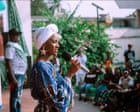
Singing a song or making a speech shouldn't land you in a maximum-security prison. Yet, that's exactly where Sierra Leonean superstar Zainab Sheriff is sitting right now. In April, a court handed her a staggering sentence of four years and two months behind bars. Her crimes? Incitement and using threatening language.
The real story is much darker. This isn't a simple legal matter. It's a calculated political move to shut down dissent.
If you're watching West African politics, you need to pay attention to this case. It sets a dangerous precedent. When a country's most visible celebrities are locked up for speaking their minds, it means regular citizens don't stand a chance.
The Speech that Sparked a Four Year Sentence
Zainab Sheriff didn't pull any punches. Known across Sierra Leone for her music and reality TV stints, she transitioned into a fierce political opposition figure. The trouble started with a video recorded in January where she criticized the government.
The prosecution used that very video to convict her. During the trial, the prosecution failed to show that her words led to any actual violence or public disorder. It didn't matter. The court denied her bail repeatedly, treated her like a violent threat, and sent her straight to Freetown's maximum-security facility.
This heavy-handed approach screams political intimidation. Freetown Mayor Yvonne Aki-Sawyerr, a member of the opposition All People’s Congress, didn't mince words about the situation. She pointed out that the government is using Sheriff as a high-profile example. The goal is simple: make people terrified to open their mouths.
A Legal System Turned Weapon
The law should protect people, not muzzle them. In Sierra Leone, civil society groups are watching the legal system transform into a political weapon. Willietta Hughes, a legal manager at the rights organization AdvocAid, openly called Sheriff's trial a "show trial" and labeled the sentence completely ridiculous.
"We have seen people who have said far worse than what she said and they were either not prosecuted or were given a very low term."
- Willietta Hughes, AdvocAid Legal Manager
What makes this situation so hypocritical is the country's recent history. Back in 2020, President Julius Maada Bio made headlines by repealing the colonial-era criminal libel laws. He claimed he wanted a more open, accountable democracy. Fast forward to today, and his administration is using new tools, like the Cybersecurity and Crime Act of 2021, to achieve the exact same censorship.
The Broader Pattern of Silencing Women
Sheriff’s case isn't an isolated incident. It’s part of a disturbing trend targeting vocal women in Sierra Leone. Just last year, social media influencer Hawa Hunt was arrested on live television. Her offense was posting a video criticizing President Bio and the First Lady, Fatima Bio. Hunt spent two months in detention just for speaking out.
Go back a bit further, and the pattern gets even worse. In 2023, United Nations experts had to write directly to President Bio to demand answers about the detention of more than 40 people—mostly women. They were locked up for protesting skyrocketing living costs and economic mismanagement.
When you look at the timeline, the strategy becomes clear:
- July 2022: Mass arrests of women protesting economic hardship.
- May 2023: Hawa Hunt arrested on live TV for criticizing the first family.
- February 2026: Zainab Sheriff arrested, denied bail, and hit with a four-year prison sentence.
This isn't law enforcement. It's a systematic effort to clean the public square of any critical voices.
What This Means for West African Democracy
International observers are growing increasingly worried about Sierra Leone's trajectory. During the 2023 elections, organizations like the US-based Carter Center flagged serious concerns about transparency, particularly regarding how votes were tabulated.
When an administration lacks electoral legitimacy, it often turns to force to keep control. By locking up Sheriff, the government is signaling that it won't tolerate scrutiny from anyone, no matter how famous they are.
If you want to support free speech and human rights in the region, don't let this story fade away. Pressure works. Share the stories of detained creators, support local legal defense funds like AdvocAid, and keep the international spotlight firmly fixed on Freetown.