The coffee in Havana always tastes like survival. It is thick, sweet, and stretched so thin with roasted chickpeas that the locals joke it belongs in a carpentry shop rather than a porcelain cup. If you sit on a crumbling balcony in Centro Habana, the sound of the city hits you before the heat does. It is a symphony of friction. The rattle of a 1950s Chevrolet held together by Soviet tractor parts and sheer willpower. The rhythmic slap of dominoes on a plastic table down the alley. The low, exhausting hum of a refrigerator struggling against the daily blackouts.
For decades, Washington has operated on a theory of physics that looks beautiful on paper but turns brutal on the ground. The theory is simple: squeeze the top until the bottom breaks.
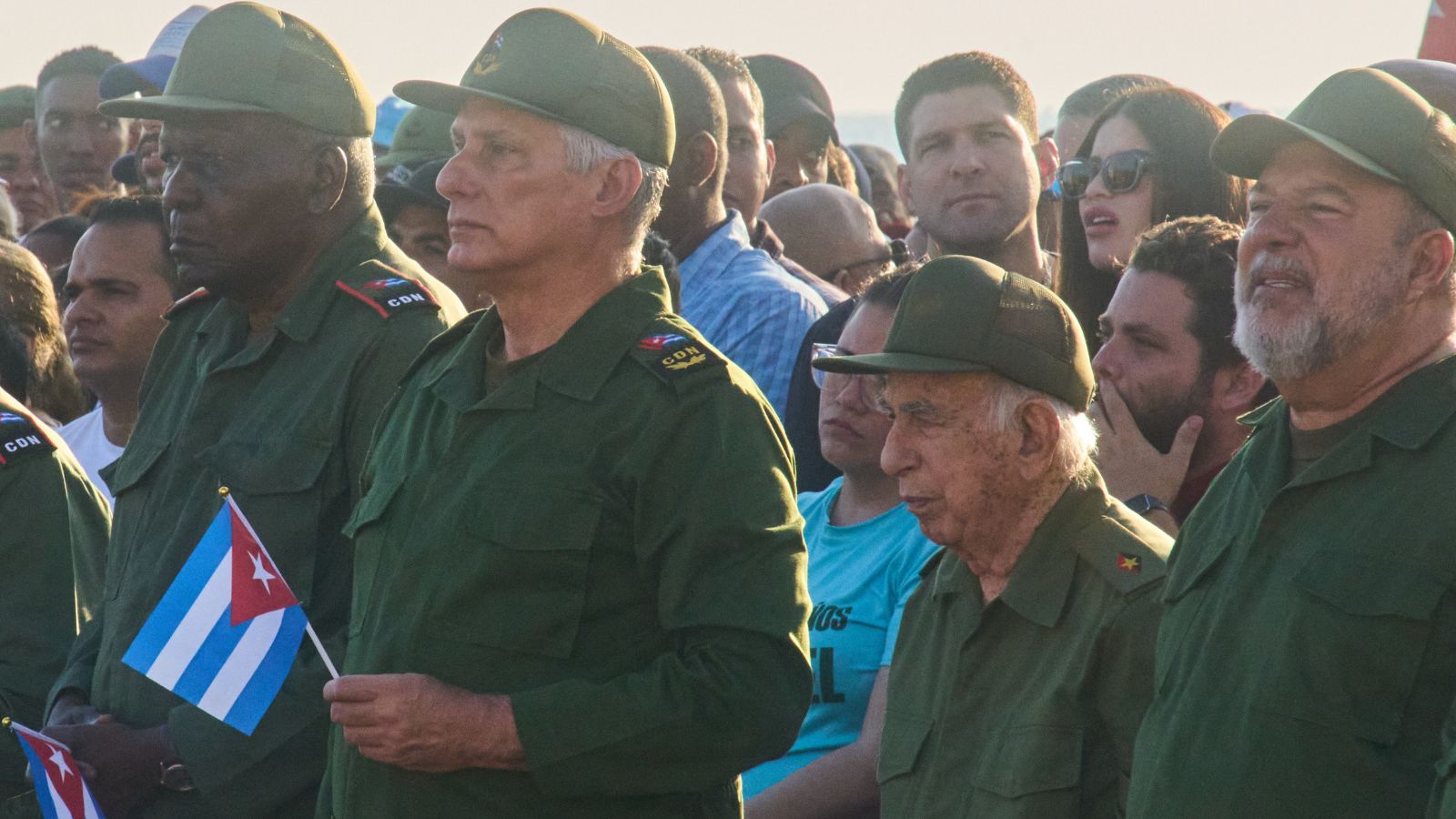
The latest turn of the vise arrived on a Tuesday, wrapped in the sterile language of bureaucratic decrees. The United States Treasury Department blacklisted Cuban President Miguel Díaz-Canel, freezing any assets he might hold under American jurisdiction and locking him out of the global financial system. On the evening news broadcasts in Washington, it was framed as a targeted strike against tyranny. A surgical incision designed to paralyze the mechanism of oppression without harming the soul on the street.
But geopolitical surgery is a myth.
When a superpower cuts off a president, the blood flows all the way down to the kitchen tables of Miramar and the tobacco fields of Pinar del Río. The ink on a sanctions document dries in seconds, but the stain spreads across generations.
To understand how a financial ledger in Washington translates into a quiet tragedy in Havana, you have to look past the political theater and watch the hands of a woman named Elena.
Elena is forty-two, though her eyes carry the fatigue of sixty. She does not care about ideological purity, Marxist rhetoric, or the Monroe Doctrine. She cares about eggs. Specifically, she cares about the fact that a carton of thirty eggs now costs more than her official monthly government pension as a former schoolteacher. Elena runs an illegal, unregistered bakery out of her kitchen, using an old oven that smells faintly of kerosene every time it heats up.
Consider what happens when the United States blacklists the head of a state. The sanction itself is narrow, targeting Díaz-Canel’s personal ability to move money through Western banks. But the psychological ripple effect is massive. International banks, terrified of the multi-million-dollar fines Washington hands out for doing business with sanctioned regimes, don't bother reading the fine print. They simply slam the door on Cuba entirely.
It is called over-compliance. It is the invisible wall.
Suddenly, a European shipping company decides it is too risky to carry grain to the port of Havana. A South American dairy cooperative cancels a contract for powdered milk because they cannot find a bank willing to process the payment from a Cuban entity. The state-run distribution system, already hollowed out by corruption and incompetence, collapses a little further into the dust.
For Elena, this means the line outside the state ration bodega grows longer, and the shelves grow emptier. When she can buy flour on the black market, the price has doubled because the smuggler had to take three different detours through Panama and Spain to hide the money trail.
Every political decision made in a wood-paneled room in the District of Columbia behaves like a stone thrown into a still pond. The splash happens at the center—at the palace doors of Díaz-Canel—but the wave travels outward, growing larger and more destructive until it crashes over the poorest doorsteps on the island.
The architect of this policy will tell you that the misery is the point. The strategy relies on a cold, behavioral equation: Maximize the suffering of the population until the pressure becomes unendurable, forcing them to rise up and tear down the system from within.
But history is a stubborn witness.
We have watched this experiment play out for over sixty years under eleven different American administrations, and the result remains stubbornly unchanged. The elites at the top do not starve. Miguel Díaz-Canel will not go without his morning coffee. His lights will stay on while the rest of Havana plunges into a humid, mosquito-ridden darkness at 8:00 PM. The embargo does not dismantle the police state; it provides it with an eternal alibi. Every failure of the revolution, every instance of state mismanagement, every broken promise of the communist dream is conveniently blamed on the bloqueo—the American blockade.
By targeting the leadership so publicly, Washington hands the regime its favorite weapon: the narrative of the David and Goliath struggle. It allows Díaz-Canel to stand before the United Nations and wrap himself in the flag of national sovereignty, deflecting attention from his own government’s disastrous economic policies and its brutal crackdown on domestic dissent.
The real problem lies in the disconnect between strategic intent and human reality.
Imagine a bridge. On one side stands the Cuban government, rigid, defensive, and deeply dug into its ideological trenches. On the other side stands the United States, wielding sanctions like a heavy hammer, swinging blindly in the hope of hitting a vital nerve. In the middle of that bridge are eleven million people, trying to walk from Monday to Tuesday without falling through the cracks.
The human cost of this stalemate is measured in departures.
When the economic asphyxiation becomes too intense, the youth do not take to the streets with rocks and banners. They have seen what happens to those who do; the prisons are full of the poets and protestors who marched during the hot summer of 2021. Instead, they look at the sea. Or they look at a plane ticket to Nicaragua, the starting point for a dangerous, thousands-of-miles trek northward toward the Rio Grande.
The sanctions intended to pressure the regime end up emptying the country of its future. The doctors, the engineers, the musicians, the young bakers—the very people who would be required to rebuild a democratic Cuba—are the ones packing their lives into a single backpack and leaving. The island is becoming a land of the very old and the very lonely, populated by grandparents waiting for a Western Union remittance that may or may not clear the latest financial hurdle.
The city of Havana is beautiful in the way a shipwreck is beautiful. The grand, neoclassical facades of the Paseo del Prado are peeling like sunburned skin, revealing the raw coral stone beneath. There is a melancholy that hangs over the salt spray of the Malecón seawall, where lovers sit in the dark because the streetlights are dead.
It is easy to look at Cuba from a distance and see a caricature. A communist theme park frozen in time, or a totalitarian nightmare devoid of light. But when you walk through the doors of a home in Old Havana, the caricature vanishes. You find people who are fiercely creative, absurdly resilient, and deeply tired of being used as pawns in a chess game that began before they were born.
They are caught in a double bind. They are squeezed from within by a government that views economic freedom as a counter-revolutionary threat, and they are squeezed from without by a foreign power that views their daily hardships as a necessary price for a political victory that never arrives.
The sun sets over the Florida Straits, turning the water into a sheet of hammered copper. Ninety miles away, the lights of Key West are beginning to twinkle, connected to a world of infinite abundance and frictionless commerce. In Havana, Elena turns off her kerosene oven. Her hands are white with the dust of scarce flour. She counts her pesos, then counts them again, knowing the math will not work out tomorrow.
The sanctions against the president have been logged into the federal register. The press releases have been archived. The politicians have moved on to the next crisis, confident that they have sent a powerful message to the dictators of the world.
And on the island, the strings just keep snapping, one by one, in the dark.


