A shipping container sits on a rain-slicked pier in Seattle. It looks entirely unremarkable. It is a rusted steel box, corrugated and cold, identical to thousands of others stacked like giant Lego bricks along the Pacific rim. Inside are microchips, or perhaps heavy machinery components, or maybe just the cheap consumer goods that anchor modern daily life.
If you stand close enough to these ports, you can hear the hum of the global economy. It is a heavy, mechanical drone. But underneath that noise is a fragile quiet. For nearly a decade, that quiet has felt less like peace and more like a breath held in anticipation of a blow.
When Washington and Beijing sit down to talk about trade, the language they use is deliberately bloodless. They talk about "tariffs." They talk about "ceilings." They discuss "commitments" and "reciprocity."
These words are meant to sound like mathematics. They are designed to make you believe that global commerce is a machine governed by logic, levers, and gears.
It is not. It is a psychological drama. It is a game of chicken played with massive ships and the livelihoods of millions of people who will never see the inside of a negotiating room.
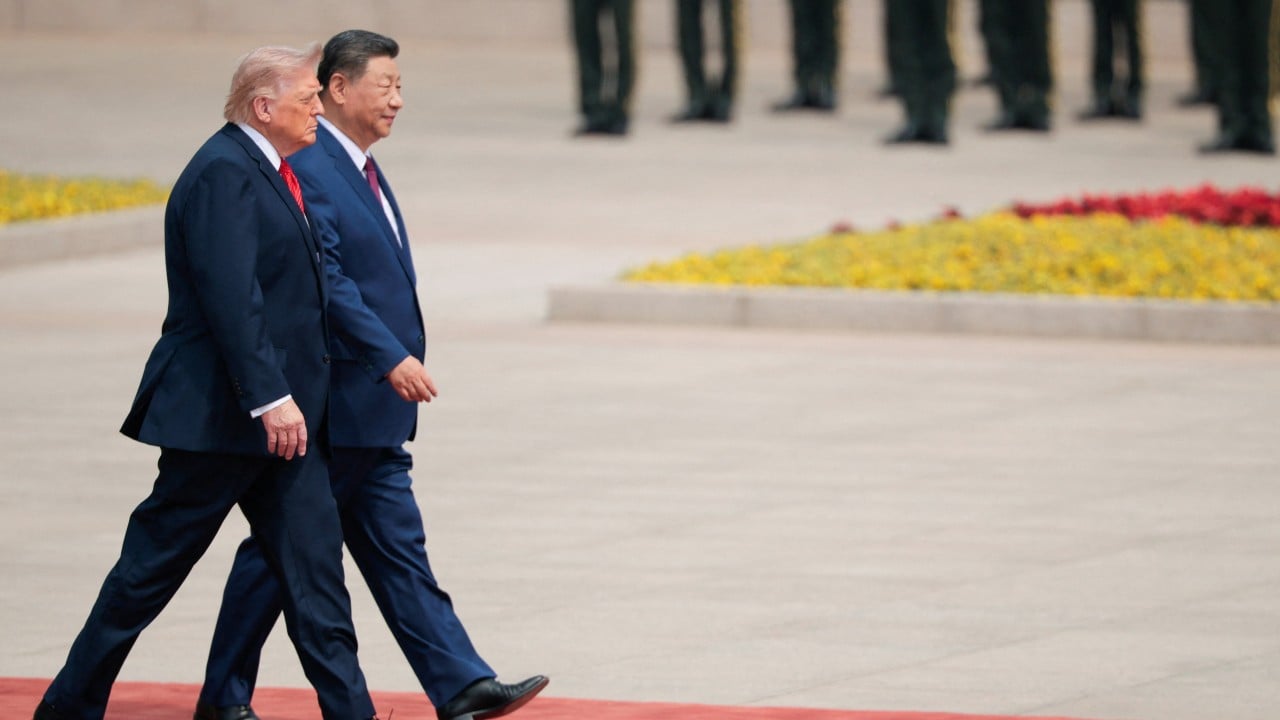
The recent breakthrough in US-China trade talks—where Washington finally committed to a hard cap, a ceiling on the tariffs it imposes on Chinese goods—is not just a technical adjustment to a customs schedule. It is a blinking light in the dark. It is a moment where two giants, after years of throwing punches, decided to draw a line on the floor and agree not to cross it.
To understand why this matters, you have to look past the press releases issued by Beijing. You have to look at the factory floor in Guangdong, or the soy farm in Iowa, where the abstract percentages discussed in air-conditioned rooms turn into real, human anxiety.
The Anatomy of the Standoff
For years, the trade relationship between the world's two largest economies has felt like a slow-motion car crash. One side levies a tax. The other retaliates. The numbers climb from ten percent to twenty-five percent.
To the average person, a tariff sounds like a tax paid by the exporting country. It is a common misconception, one that politicians on both sides frequently exploit. But the reality is far more intimate. A tariff is a tax paid by the importer. It is paid by the logistics manager trying to keep a supply chain moving. It is paid by the consumer at the checkout counter.
Imagine a mid-sized electronics manufacturer in Ohio. Let us call the purchasing manager Sarah. Sarah does not think about geopolitics when she wakes up. She thinks about lead times and component costs. For years, her business relied on a specific type of specialized aluminum casing manufactured in Shenzhen.
When the trade war began, those casings suddenly became twenty-five percent more expensive overnight. Not because the Chinese supplier raised their prices, but because the US government demanded a cut at the border.
Sarah’s company faced a choice that thousands of businesses faced. Do you absorb the cost and watch your profit margins evaporate? Do you fire workers to balance the ledger? Or do you pass the cost on to the American hospital that buys your medical devices?
This is the invisible friction of a trade war. It acts as a sandstorm inside the engine of global commerce. It slows everything down. It breeds deep, paralyzing uncertainty.
When companies do not know what a product will cost next month, they stop investing. They stop hiring. They wait.
That waiting is what Beijing sought to end. By securing a commitment from Washington to place a ceiling on tariffs—a promise that the taxes will not climb any higher, and may indeed come down—the negotiators did not just change a policy. They bought certainty.
The Currency of Face
In Western diplomacy, conversations often center on contracts, metrics, and enforceable clauses. In Eastern diplomacy, particularly within the political culture of Beijing, there is an equal emphasis on status, respect, and predictability.
For China, the open-ended nature of American tariff policy was not just an economic burden; it was a strategic insult. It allowed Washington to use the threat of economic disruption as a permanent lever, a sword of Damocles hanging over the Chinese economy.
The announcement from Beijing regarding the tariff ceiling is significant because of how it is framed. It is presented as a concession won through persistence. It is a statement to the domestic audience, and to the wider world, that China cannot be pushed past a certain point.
Consider the perspective of a policymaker in Beijing. Over the past decade, they have watched the West sour on globalization. They saw the rise of industrial policy in the US, the tightening of export controls on semiconductors, and the growing consensus in Washington that economic engagement with China had failed.
From that viewpoint, the tariff ceiling is a fence built around American volatility. It is an agreement that says, We can compete, we can argue, but we must agree on the boundaries of the arena.
But agreements are only as good as the trust that underpins them. And trust is the scarcest commodity in the world today.
The Illusion of Decoupling
There has been a fashionable narrative circulating through financial capitals for the last few years. It is called "decoupling." The idea is simple, clean, and entirely unrealistic. It suggests that the Western world can neatly untangle its economy from China, moving factories to Vietnam, India, or back home to the rust belt.
It sounds beautiful on a PowerPoint slide. In practice, it is messy, painful, and often impossible.
The supply chains built over the last forty years are not like plumbing fixtures. You cannot simply unhook a pipe in Shanghai and attach it to Mumbai. They are organic ecosystems. They are composed of thousands of deeply specialized tier-three and tier-four suppliers, master craftsmen, localized logistics networks, and decades of accumulated institutional knowledge.
If you move a smartphone assembly plant to another country, you quickly realize that the screws, the glue, the packaging, and the specialized lenses are still being made in the same Chinese industrial parks. You have not decoupled. You have just added another stop on the shipping route.
This reality is the silent partner at the negotiating table. Both Washington and Beijing know it, even if their public rhetoric suggests otherwise. The American economy needs Chinese manufacturing capacity to keep inflation at bay and store shelves full. The Chinese economy needs American consumer demand to keep its massive industrial machine running and its population employed.
They are like two mountaineers tied together by a single rope on a treacherous rock face. They might dislike each other intensely. They might shout, curse, and threaten to cut the cord. But they both know that if one slips, the other is dragged into the abyss.
The View from the Soil
To understand the stakes of these high-level discussions, it helps to step away from the coastlines and the capital cities. Travel instead to the American Midwest, where the fields stretch out in flat, green ribbons under a massive sky.
Here, the trade war is not an abstract concept discussed in editorials. It is written into the price of grain.
When the US first leveled tariffs on Chinese goods, Beijing struck back where it hurt most politically: American agriculture. Sorghum, pork, and, most importantly, soybeans were hit with retaliatory duties. China is the world's largest consumer of soybeans, using them primarily as animal feed for its massive swine herds. Almost overnight, American farmers saw their biggest market evaporate.
Imagine a third-generation farmer staring at a smartphone screen in the cab of a combine harvester, watching the futures market plummet. The crop is in the ground. The diesel has been paid for. The bank loan is due. The geopolitics of the South China Sea or intellectual property rights suddenly feel very close and very hostile when they dictate whether you can keep the family farm afloat for another season.
The US government stepped in with multi-billion-dollar bailout packages to cushion the blow for agriculture. But ask any farmer, and they will tell you the same thing: they want a market, not a subsidy. They want a customer, not a government check.
The commitment to a tariff ceiling offers these communities a glimpse of daylight. It signals that the retaliatory spiral might finally be grinding to a halt. It suggests that the rules of the road, however damaged, are being re-established.
The Hidden Price of Peace
There is no triumph in this agreement. It is an exercise in damage control. The tariffs that remain in place—even under a cap—still represent a massive tax on global consumption. They still distort markets, encourage inefficiency, and raise costs for ordinary people.
We have entered an era where the old dream of borderless capitalism is dead. It is not coming back. The future will not be characterized by free trade, but by managed trade. It will be an era of hard choices, where economic efficiency is constantly weighed against national security and geopolitical resilience.
The achievement of a tariff ceiling is simply that it replaces chaotic risk with calculated risk. It allows businesses to plan for a bad scenario rather than an unpredictable one. In the world of international commerce, a known negative is always preferable to a question mark.
The negotiations will continue. There will be further disputes over green technology, electric vehicles, and data privacy. The fundamental tension between an established superpower and a rising one cannot be resolved by a single document or a ministerial meeting.
But for now, the shipping containers will keep moving. The cranes at the ports will continue their heavy, rhythmic dance. The rain will fall on the Seattle docks, and the people who manage the supply chains, grow the crops, and buy the goods will breathe just a little bit easier.
The giants have not put down their weapons. They have simply agreed on how high they are allowed to raise them.