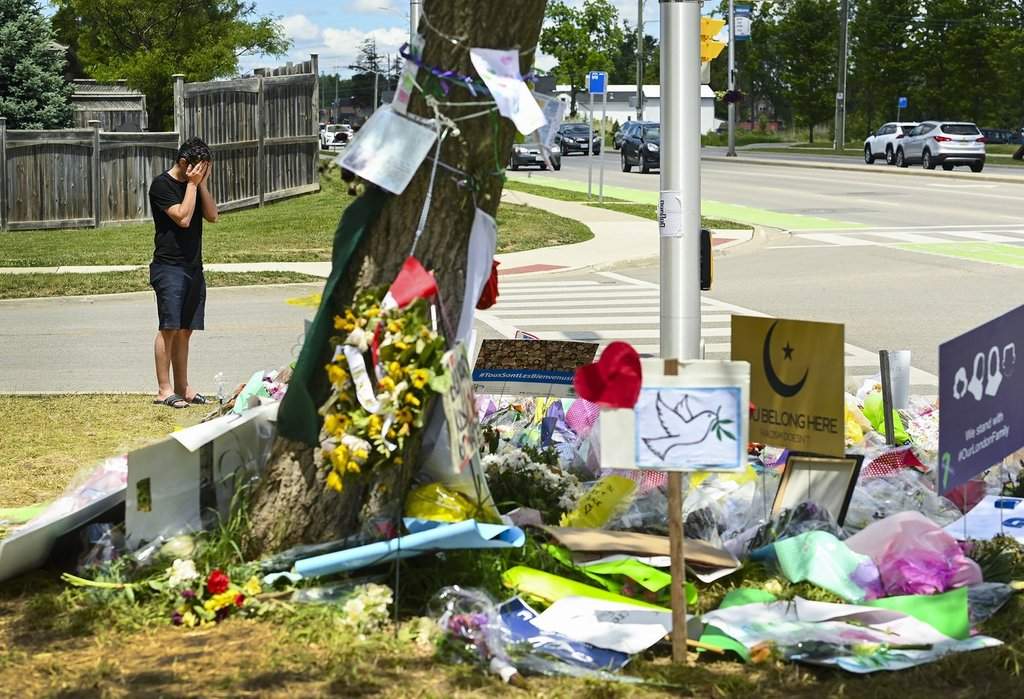
Five years haven't erased the tire marks from the intersection of Hyde Park Road and South Carriage Road. They haven't dimmed the memory of three generations of the Afzaal family wiped out in a single evening walk. On June 6, 2021, a white nationalist rammed his black pickup truck into five Canadian Muslims. He compressed the gas pedal fully. He did not hit the brakes.
Salman Afzaal, 46, his wife Madiha Salman, 44, their 15-year-old daughter Yumnah, and her 74-year-old grandmother Talat were killed because of how they dressed and what they believed. Only a nine-year-old boy survived, left to carry the physical and psychological scars of an entire family lost.
Today, Londoners are marching again. They're gathering at the site of the impact, walking towards Oakridge Secondary School where Yumnah was an honor-roll student. But five years later, the conversation has shifted from raw shock to an uncomfortable truth. Symbolic gestures aren't working anymore. Racism and online vitriol are still part of the daily reality for Muslim Canadians. You can't just say problem solved.
The Terror Verdict and What it Actually Changed
When Nathaniel Veltman was convicted in 2023 of four counts of first-degree murder and one count of attempted murder, it was a legal milestone. It marked the first time in Canadian history that a jury heard a first-degree murder trial framed around domestic terrorism laws. The judge ruled that this self-described white nationalist committed an act of terrorism.
That legal victory felt substantial at the time. It validated what the community knew instantly. It called the crime by its real name.
But a courtroom victory doesn't fix a broken culture. Right now, Veltman's legal team is appealing the case, challenging the admission of his white supremacist manifesto, "A White Awakening." The legal battle drags on, keeping the trauma fresh for survivors, first responders, and the broader community.
Meanwhile, Muslim advocacy groups say the political momentum has stalled. Khaled Al-Qazzaz, executive director of the Canadian Muslim Public Affairs Council (CMPAC), recently took to Parliament Hill to voice a common frustration. Despite federal summits, endless studies, and public commitments, real policy changes to protect marginalized groups from targeted violence remain scarce.
The Myth of the Isolated Tragedy
The biggest mistake people make when looking back at the London truck attack is treating it like an anomaly. It wasn't.
- The same underlying ideology fueled the 2017 Quebec City mosque shooting that killed six worshippers.
- The same rhetoric echoed in the 2020 fatal stabbing of Mohamed-Aslim Zafis outside a Toronto mosque.
- The same patterns show up in global far-right manifestos from New Zealand to the United States.
Islamophobia doesn't just materialize out of thin air at a traffic light. It builds up over months of online radicalization, unmonitored hate forums, and everyday casual racism that people choose to ignore. Local leaders like Imam Abd Alfatah Twakkal point out that Muslim Londoners face subtle discrimination on a regular basis. Online comments sections on local news stories still fill up with hate. The echo chambers that created the 2021 attacker are still fully operational.
What Real Solidarity Looks Like Beyond Lawn Signs
The City of London has handed out free purple and green lawn signs. They fly the "Our London Family" flag at City Hall. They light up the building facade. These symbols are nice, but they don't keep people safe on the sidewalk.
True allyship requires introspection. It means looking at implicit biases and challenging hate when it shows up in casual conversations at work or home. It means forcing tech platforms to take digital hate speech seriously instead of letting it hide behind the guise of free expression.
If you want to move past symbolic mourning, start supporting concrete anti-racism initiatives. Look at the Islamophobia handbook recently launched by CMPAC, which provides guidelines for municipal and federal governments to move from words to action. Talk to your local representatives about how hate crimes are tracked and handled. Pay attention to how funding is allocated for community safety grants. Dismantling hate starts locally, and it requires a lot more than showing up for a march once a year.
Keep the momentum going. Read the policy recommendations from organizations on the ground. Push your local school boards to implement robust anti-racism curricula. Don't let the memory of the Afzaal family fade into a historical footnote.