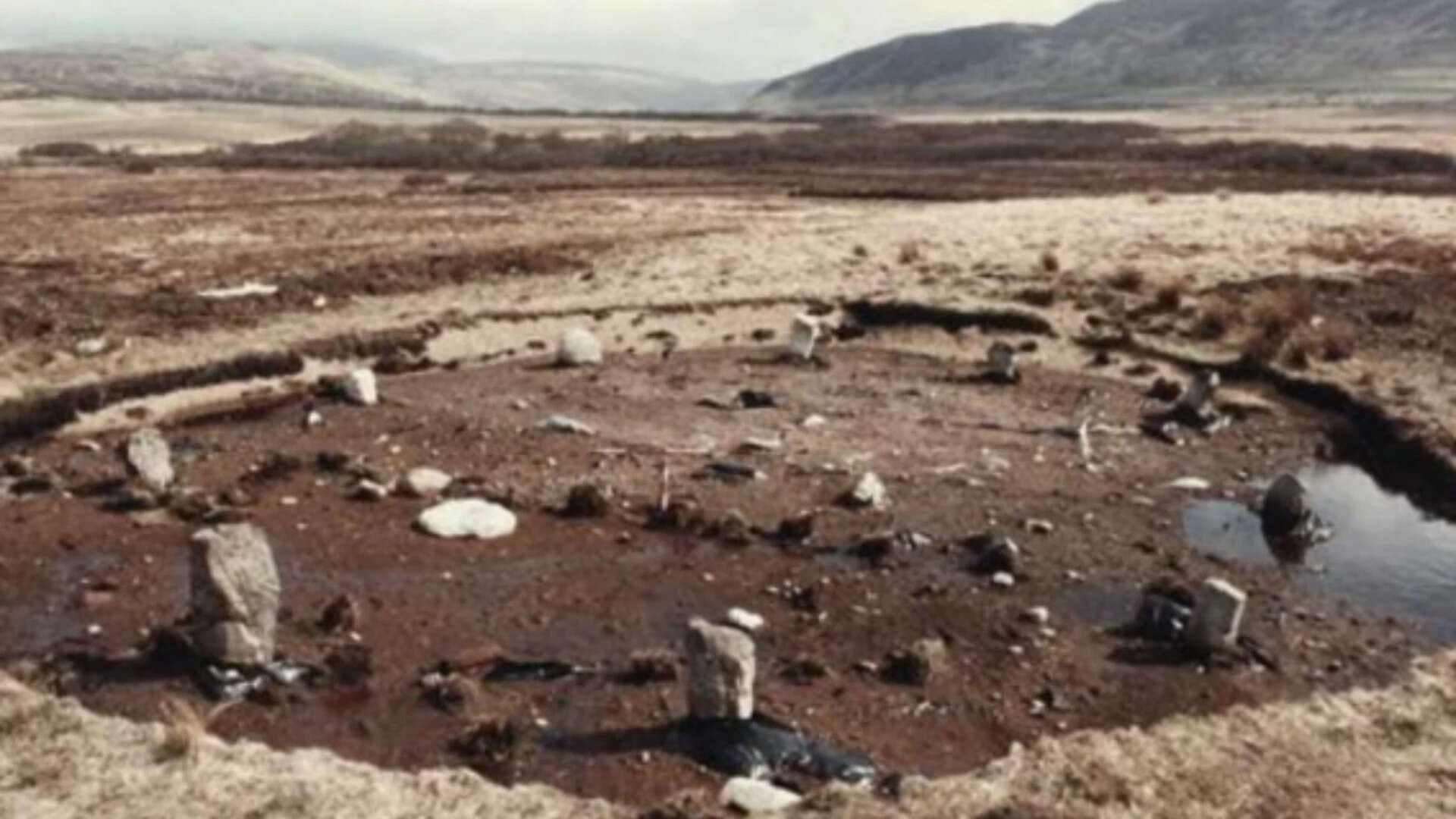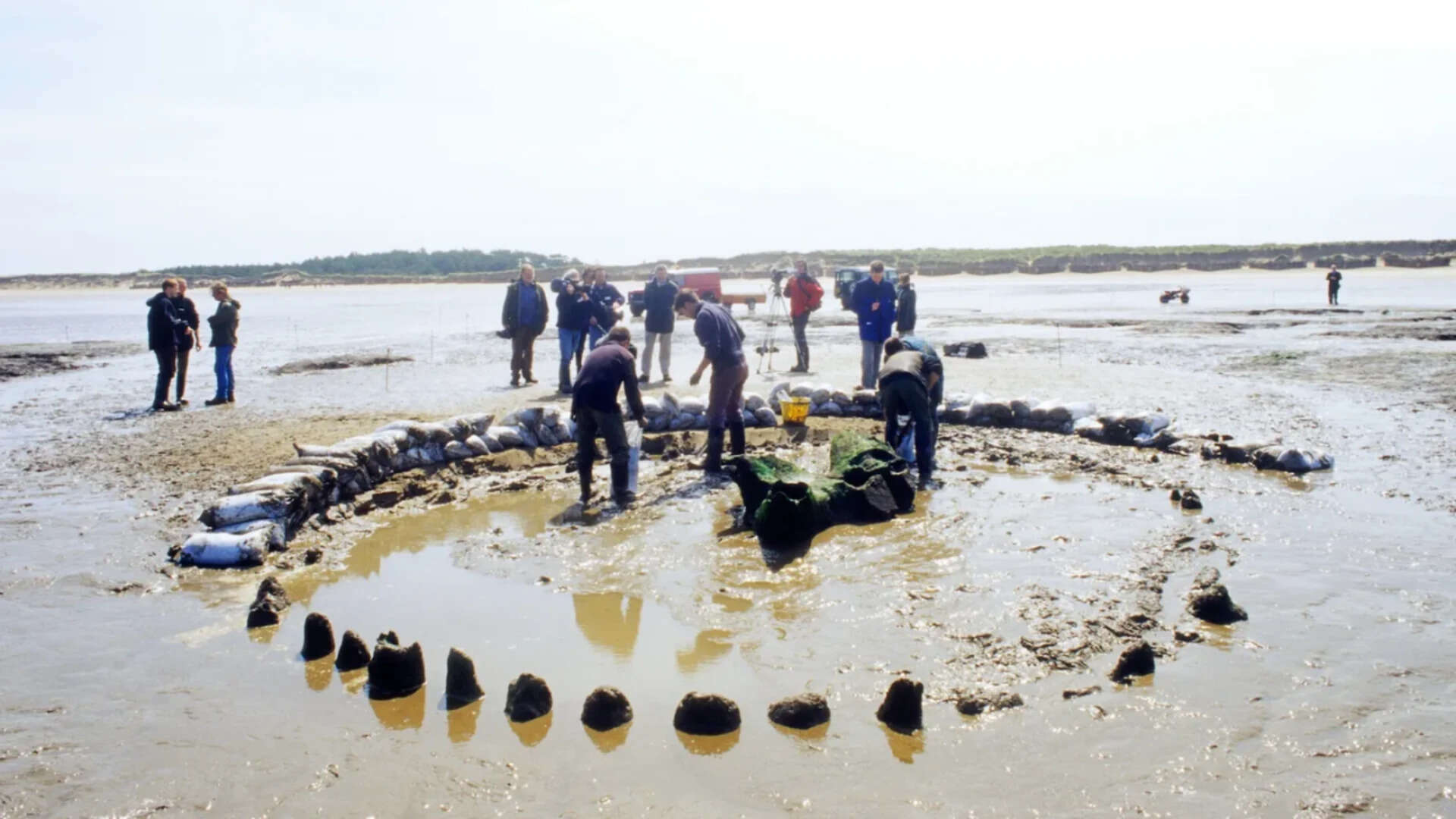
The mud of the Norfolk coast does not give up its secrets easily. For four thousand years, the gray, salt-heavy tides of the North Sea washed over a patch of sand at Holme-next-the-sea, hiding a desperate act of prehistoric engineering. When the wind blew hard from the north and the water finally retreated in the late twentieth century, it revealed something haunting. Fifty-five oak posts, split from massive trunks, stood in a tight, precise circle. In the very center lay the roots of a giant oak tree, buried completely upside down, its gnarled base pointing toward the sky like a clenched fist.
Archaeologists called it Seahenge.
To the modern eye, it looks like a beautiful, abstract monument to the ancient dead. But to the people who dragged those timbers through the freezing mire in the twenty-first century before Christ, it was something entirely different. It was a machine. It was a frantic, sacred attempt to solve a terrifying ecological crisis. They were trying to catch the sun and hold it hostage.
To understand why they did it, we have to look past the sterile museum displays and step into the shivering reality of a world gone cold.
Let us name one of them. Call him Elan. He is not a king or a mythic hero, just a man with cracked hands and a child whose ribs are beginning to show through her skin. For generations, Elan’s people followed a predictable rhythm. The summer brought green pastures, fat cattle, and the sweet warmth of the sun on the salt marshes. Winter was always lean, but it was a temporary adversary. You survived it, you buried your elders, and you waited for the earth to wake up.
But in the year we now know as 2049 BC, the earth did not wake up.
A sudden, brutal shift in the global climate had gripped the northern hemisphere. The summers grew short, damp, and choked with fog. The crops failed to ripen. The cattle, the literal currency of life in the Bronze Age, grew thin and stopped producing milk. Imagine the slow-creeping dread of July afternoon that feels like November. Imagine watching the sun skim low across the horizon, pale and cast in a sickly yellow hue, never rising high enough to dry the dampness from your bones.
The community was staring into an abyss. They did not have global weather models or satellite data to tell them about volcanic winters or solar minimums. They only knew that the sky god was dying, and if the sun slipped away entirely, they would follow it into the dark.
Fear breeds desperate innovation.
Elan and his neighbors gathered at the edge of the salt marsh where the land met the sea. They needed a ritual so profound, an architecture so inversionary, that it would force the cosmos to correct its course. Recent breakthroughs by researchers analyzing the timber rings and local folklore suggest that the circle was built during a period of extreme, unseasonable cold. The construction was not a leisurely spiritual pastime. It was an emergency intervention.
They chose a massive oak, a tree that had stood for centuries and drank a thousand summers of sunlight. They felled it with bronze axes, a grueling task that required hundreds of hours of muscle-straining labor. Then came the strangest part of the plan. They did not erect the tree as a pillar. They turned it completely upside down.
Consider the logic of the ancient mind. If the warmth of the world is draining away, where is it going? It must be sinking into the earth, retreating into the underworld where the ancestors dwell. By burying the top of the tree and leaving the roots splayed open to the sky, they were creating a cosmic funnel. They were building a cage to trap the fleeing summer.
The fifty-five outer posts were aligned to form a solid wall, completely enclosing the inverted root. There was only one narrow entrance, and it faced the exact point on the horizon where the sun rose during the summer solstice.
The work would have been brutal. The mud at Holme is a thick, sucking clay that pulls the shoes from your feet and numbs your limbs within minutes. The wind off the North Sea cuts through wool and leather like a blade. Picture dozens of people, their breath pluming in the freezing air, hauling a four-ton tree trunk across the marsh using ropes made of braided honeysuckle. Their feet sank deep into the freezing silt. Every muscle ached. The stakes were absolute. If they failed to complete the circle before the solstice, the sun might never return.
They built a second circle nearby, just a few meters away, centered around a flat wooden boardwalk enclosing a burial. New evidence suggests this sister monument was dedicated to a different, darker aspect of the same crisis. If the first circle was meant to extend the summer, the second may have been a place to house the spirit of a sacred leader whose life was offered up to appease the bitter frost.
When the structure was complete, they did not leave it as a passive temple. They used it.
We can imagine Elan standing inside that tight wooden ring on the longest day of a very cold year. The walls of split oak shut out the howling wind of the marsh, creating a strange, heavy silence. The only light came through the narrow eastern gap, striking the upturned roots of the central tree. Perhaps they poured libations of milk or blood into the hollows of the roots. Perhaps they sang songs that had been handed down since the ice first retreated thousands of years before.
They were begging the warmth to stay.
It is easy for us, sitting in comfortably heated rooms with food delivery apps on our phones, to look back at these rituals with a patronizing pity. We know that an upside-down tree cannot alter the tilt of the Earth’s axis or dispel a volcanic ash cloud. We know that the weather operates on massive, indifferent systems of pressure and currents.
But there is a profound human beauty in their defiance. Faced with an invisible, existential threat that they could neither see nor comprehend, they did not simply lie down in the mud and freeze. They used their hands, their tools, and their shared stories to build a fortress against the dark. They bet everything on the idea that human effort and sacred intent could bend the universe back toward life.
Eventually, the tide came in.
The climate did not instantly fix itself, but the human race survived the cold snap. Over decades, the salt marsh slowly reclaimed the monument. Silt washed over the oak posts. Peat built up over the upturned roots, sealing them away from the oxygen and the bacteria that would have rotted them into nothingness. The people moved on, following the changing coastline, leaving their wooden machine buried under the sand.
When Seahenge was finally uncovered in the late 1990s, it sparked a fierce modern conflict. Pagans and local residents fought to keep the timbers in the sea, viewing them as a sacred, undisturbed grave. Archaeologists argued that the rising tides would destroy the fragile wood within a few years if it wasn't preserved in a museum.
In a way, both sides were recognizing the same truth. Those ancient logs were not just old wood. They were a physical manifestation of human hope, preserved in amber.
Today, the conserved timbers sit inside a quiet museum in King's Lynn, miles away from the crashing waves and the salty wind. The wood is dark, cracked, and completely dry. Visitors walk past it, checking their watches, reading the small plastic informational placards that explain the bronze-age migration patterns and the dendrochronological dating methods.
But if you look closely at the center of the exhibit, at the massive, twisted knot of the oak root that once pointed defiantly at the Bronze Age sky, you can still feel the chill of that ancient winter. You can see the phantom marks of the bronze axes. You can smell the wet mud, hear the desperate chanting over the roar of the sea, and feel the terrifying, beautiful weight of a people who refused to let the summer die.