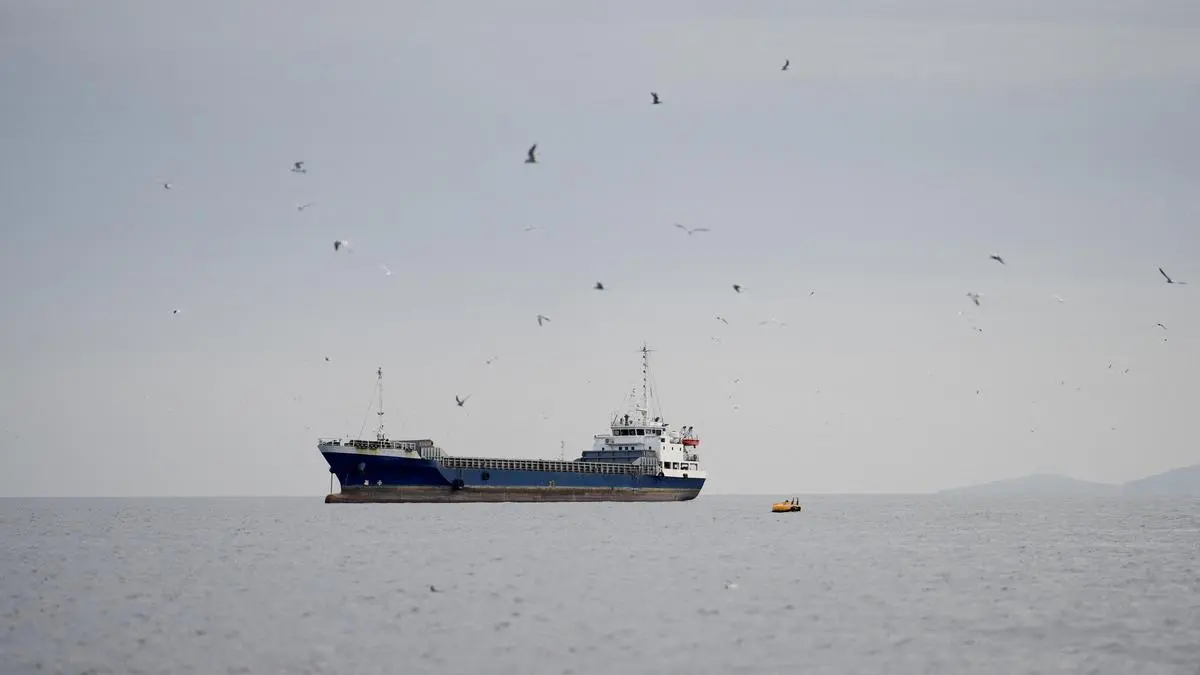
The United States Department of the Treasury and the Department of State have shifted their maritime enforcement strategy from passive monitoring to an active seizure-and-interdiction model. This transition targets the "Ghost Fleet"—a decentralized network of aging tankers utilizing deceptive shipping practices to circumvent primary and secondary sanctions. To understand the impact of this expansion, one must deconstruct the logistical mechanics of the Iranian oil trade and the specific economic friction points created by these new enforcement protocols.
The Architecture of Non-Compliant Maritime Trade
Iranian petroleum exports rely on a specific ecosystem of maritime assets that operate outside the standard oversight of the International Maritime Organization (IMO) and Western insurance markets. The expansion of U.S. crackdown measures targets the three structural pillars of this trade:
- Vessel Provenance and Flag State Arbitrage: Sanctioned entities frequently utilize "flags of convenience" from jurisdictions with minimal oversight. U.S. pressure now focuses on de-flagging vessels, which effectively renders a ship "stateless" and legally vulnerable to seizure in international waters or upon entering territorial seas for refueling.
- The Insurance Gap: Ships carrying Iranian crude lack Protection and Indemnity (P&I) insurance from the International Group of P&I Clubs. This creates a massive environmental and financial liability for any port state that allows these vessels to dock. By highlighting this risk, the U.S. forces port authorities to choose between the marginal revenue of a tanker docking fee and the catastrophic cost of an uninsured oil spill.
- Technological Deception (AIS Spoofing): The primary mechanism for concealment is the manipulation of the Automatic Identification System (AIS). Vessels transmit false coordinates to appear in one location while conducting Ship-to-Ship (STS) transfers in another. Enhanced U.S. satellite imagery and radio frequency (RF) monitoring now provide a real-time overlay that identifies discrepancies between reported and physical locations.
The Cost Function of Sanctions Evasion
The expansion of seizure warnings increases the "risk premium" associated with Iranian oil. In a standard commodity market, price is dictated by supply and demand. In a sanctioned market, the price is dictated by the Cost of Evasion (CoE).
The U.S. strategy aims to push the CoE toward a point of diminishing returns through several mechanisms:
- Discounting Requirements: Because the risk of seizure is high, Iran must offer its crude at a significant discount—often $10 to $30 per barrel below Brent benchmarks—to incentivize independent refineries (principally in East Asia) to accept the cargo.
- Asset Degradation: As the U.S. targets the "Ghost Fleet," the available pool of tankers shrinks. To maintain export volumes, Iran must utilize older, less efficient vessels. The capital expenditure required to purchase and maintain these "shadow" assets increases as the U.S. sanctions the middle-man ship brokers in Dubai and Singapore.
- Transaction Friction: Every seizure or blocked transaction forces the use of more complex, multi-layered front companies. Each layer takes a percentage of the revenue, further eroding the net profit reaching the Iranian treasury.
Operational Frameworks for Seizure and Interdiction
The warning of "worldwide seizures" signals a shift toward a more aggressive legal and physical posture. This is not merely a verbal threat but an application of the Civil Forfeiture Framework. Under U.S. law, if a vessel or its cargo is involved in a transaction that touches the U.S. financial system—even through a U.S. dollar-denominated wire transfer that briefly passes through a correspondent bank—the U.S. can claim jurisdiction.
The Mechanism of Extraterritorial Jurisdiction
The U.S. utilizes the following steps to execute a seizure:
- Trace the Financing: Federal investigators identify U.S. dollar payments used to fund the vessel's fuel (bunkering), crew wages, or insurance.
- Seizure Warrants: A U.S. District Court issues a warrant for the cargo or the ship itself.
- Diplomatic and Kinetic Execution: The U.S. coordinates with regional allies or utilizes its own naval assets to redirect the vessel. The cargo is then offloaded and sold, with proceeds often directed to the United States Victims of State Sponsored Terrorism Fund.
The Technological Arms Race in Maritime Surveillance
The effectiveness of the crackdown is tethered to the advancement of maritime domain awareness (MDA). The "cat and mouse" game of AIS spoofing has evolved into a data-science conflict.
Synthetic Aperture Radar (SAR) technology allows for the tracking of vessels through cloud cover and at night, regardless of whether their AIS transponders are active. By comparing SAR data with AIS signals, analysts identify "dark vessels." Furthermore, Optical Character Recognition (OCR) from high-resolution satellite imagery can now identify ships that have had their names and IMO numbers painted over or altered.
The second technological hurdle involves the De-anonymization of Ownership. The U.S. Treasury (OFAC) is increasingly applying "look-through" logic to identify the ultimate beneficial owners (UBO) of shell companies. When a ship is registered to a company in the Marshall Islands that is owned by a holding company in Hong Kong, which is controlled by an entity in the UAE, the U.S. now maps these networks to sanction the entire chain simultaneously.
Strategic Bottlenecks and Systemic Risks
While the expansion of seizures creates immediate pressure, it also introduces systemic risks into the global shipping industry.
- The Problem of Vessel Abandonment: When the U.S. issues a seizure warning or sanctions a ship, the crew often finds themselves in a legal vacuum. If the owner stops paying wages or fuel costs, the vessel may be abandoned in international waters, creating a navigational hazard and an environmental risk.
- Escalation in Chokepoints: Increased pressure on Iranian shipping often results in asymmetrical responses in the Strait of Hormuz. The risk of "tit-for-tat" seizures of Western-affiliated tankers increases, which in turn drives up global maritime insurance premiums for all commercial shipping, not just the sanctioned fleet.
- Fragmentation of the Maritime Registry: There is a growing trend toward "sovereign" shipping registers that explicitly ignore U.S. sanctions. If enough nations move toward these alternative frameworks, the centralized power of the global maritime oversight system may weaken.
Identifying the Break Point in the Ghost Fleet Logic
The long-term viability of the Iranian export model depends on its ability to maintain a fleet faster than the U.S. can sanction it. However, the U.S. has identified a critical bottleneck: Dry Docking and Maintenance.
Large tankers require periodic maintenance in dry docks to remain seaworthy and retain their classification. Most high-capacity dry docks are located in jurisdictions that are sensitive to U.S. sanctions (e.g., China, Singapore, South Korea). By targeting the providers of maritime services—repair yards, bunkering hubs, and engine part suppliers—the U.S. is moving from "hunting ships" to "starving the fleet." An unmaintained tanker has a finite operational lifespan, typically decreasing rapidly after 20 years of service. Most of the Ghost Fleet is already approaching or exceeding this age.
The Shift Toward Multi-Lateral Enforcement
The U.S. is no longer acting in isolation. The integration of "Operation Prosperity Guardian" and other maritime task forces indicates a move toward a collective security model. This creates a "network effect" for enforcement. As more nations provide data and port access for interdiction, the geographical "safe zones" for Iranian-linked ships shrink.
The strategic objective is the Logistical Isolation of the Iranian energy sector. This is achieved not through a total blockade, which would be an act of war, but through the systematic increase of friction until the trade becomes economically non-viable for the private actors—the ship owners, the captains, and the refineries—who facilitate it.
The final move in this strategy involves the Monetization of Information. The U.S. government is increasingly offering rewards for information leading to the seizure of sanctioned assets. This transforms every crew member and harbor pilot into a potential informant, further degrading the internal trust required to operate a clandestine shipping network.
The immediate tactical play for maritime operators is clear: rigorous "Know Your Customer" (KYC) and "Know Your Vessel" (KYV) protocols are no longer optional compliance hurdles; they are the only defense against the total seizure of assets and the permanent loss of access to the global financial system. The era of the "blind" maritime middleman is effectively over.