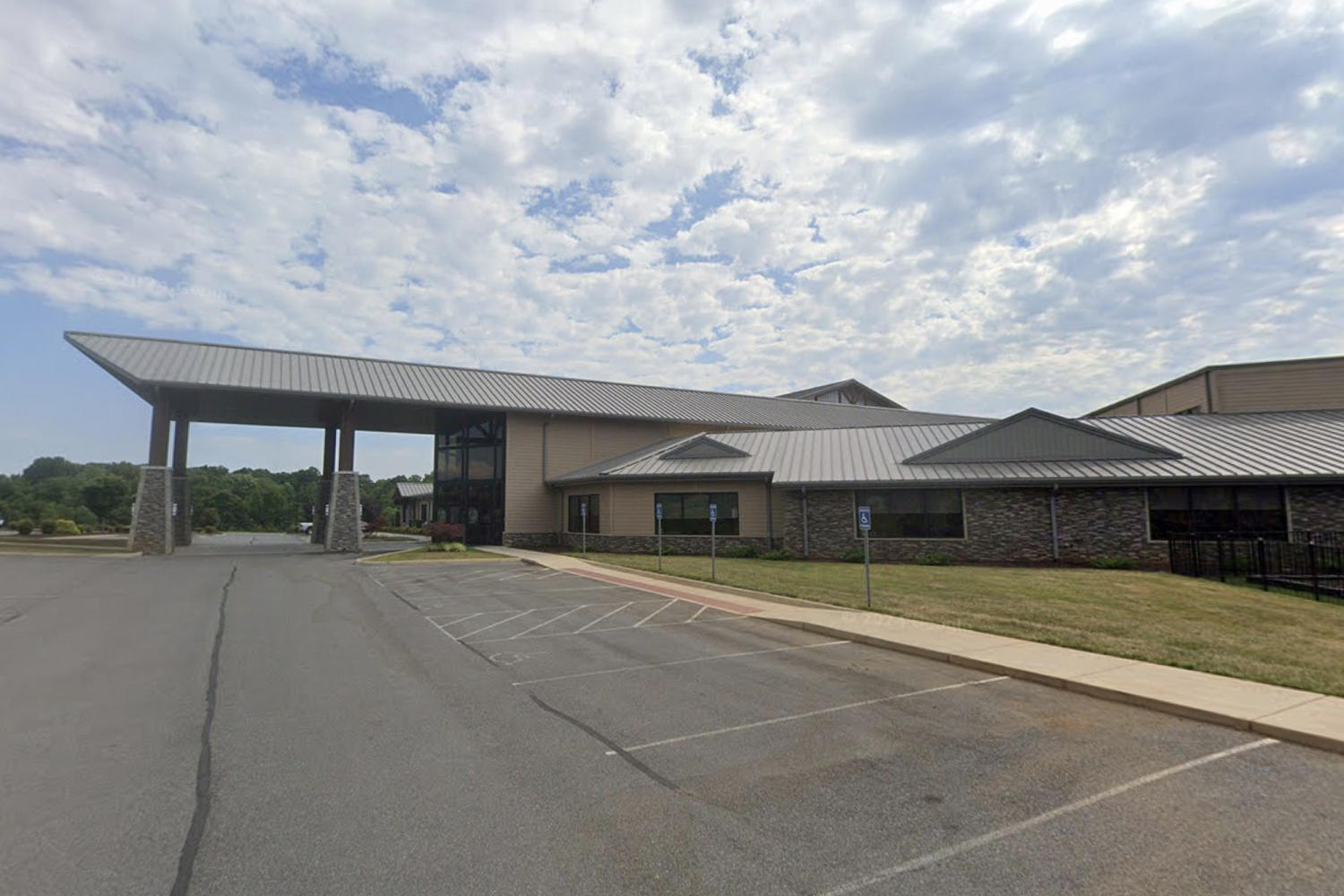
The fatal collapse of a church tent during a high-wind event in Virginia isolates a critical vulnerability in temporary infrastructure management: the miscalculation of dynamic aerodynamic forces against structures lacking rigid foundations. When a temporary assembly space fails, it is rarely a single component issue. Instead, it represents a systemic failure across three distinct vectors: structural engineering limits, real-time meteorological monitoring, and operational evacuation protocols.
To prevent these incidents, life-safety operations must treat temporary structures not as passive shelters, but as highly sensitive aerodynamic profiles subject to immediate failure when specific environmental thresholds are breached.
The Aerodynamic Vulnerability of Temporary Enclosures
Temporary fabric structures, commonly categorized as tension membrane structures, operate under different structural mechanics than permanent buildings. Permanent facilities rely on dead weight and rigid frames to transfer loads vertically into a foundation. Temporary tents rely entirely on prestress tension, staking friction, and guy-wires to maintain equilibrium against lateral forces.
Anatomy of a wind-induced collapse involves a precise sequence of structural failures:
- Aerodynamic Uplift: As high-velocity wind strikes the windward side of a tent, it is forced upward and over the peak. This creates a localized drop in pressure on the roof's exterior, while air entering open sides or leaking through seams increases internal pressure. The resulting pressure differential creates a massive upward lift force perpendicular to the fabric plane.
- Staking and Anchor Failure: The total uplift force transfers directly to the guy-wires and perimeter stakes. Soil composition, moisture levels, and stake driving angles dictate holding capacity. When wind gusts exceed the friction threshold of the soil-stake interface, anchors pull free sequentially, causing an instantaneous redistribution of load to remaining anchors, triggering a domino-effect failure.
- Structural Instability and Catastrophic Deflection: Once anchoring points fail, the fabric loses its tension. The loss of geometric rigidity allows the wind to catch loose fabric flaps, transforming the tent into a sail. The internal framework—typically lightweight aluminum or steel tubing—is subjected to bending moments and compressive forces far exceeding its engineering specifications, leading to immediate structural buckling.
The Wind-Load Calculation Gap
A primary failure point in managing these structures is the reliance on static wind ratings rather than dynamic, gust-adjusted calculations. A tent rated for a sustained wind speed of 40 miles per hour can easily fail during a 50 mile per hour gust.
The kinetic energy of wind increases exponentially with its velocity, governed by the fluid dynamics formula where pressure is proportional to the square of the wind speed. A 50 mph gust exerts more than 1.5 times the force of a 40 mph sustained wind.
P = 0.00256 * V^2
In this equation, $P$ represents the wind pressure in pounds per square foot (psf), and $V$ represents the wind velocity in miles per hour (mph). This exponential scaling means minor escalations in weather severity yield disproportionately destructive structural forces.
Compounding this risk is the localized microclimate effect. When temporary structures are erected near treelines, hills, or permanent buildings, wind can funnel through narrow gaps, accelerating velocity via the Venturi effect. A regional weather report indicating safe conditions may mask highly dangerous, hyper-local wind shears at the specific site of the gathering.
Structural Mitigation Framework
Eliminating the risk of catastrophic failure requires strict adherence to an operational engineering framework that treats the structure as a highly volatile asset.
Anchor Verification and Soil Mechanics
Staking plans must never assume uniform soil integrity. Clay, loose loam, sand, and asphalt offer wildly variable extraction resistance. Ground anchors must be tested using a tension jack to verify actual holding capacity against calculated uplift forces. If soil conditions are compromised by recent rainfall, holding capacity can drop by over 50 percent, necessitating the use of dead-weight concrete ballasts rather than traditional stakes.
Perimeter Sealing and Wind Deflection
To minimize internal pressurization—the primary driver of uplift—the windward sidewalls of a temporary structure must remain completely sealed during high-wind events. If walls are left open on the side facing the oncoming wind while the leeward walls are closed, the tent acts as a parachute, trapping air and maximizing structural stress. Conversely, if high winds are anticipated, dropping all sidewalls entirely to allow the wind to pass through the framing can reduce the aerodynamic profile, provided the internal framework is sufficiently cross-braced against lateral racking.
The Operational Breakdown: Decision-Making Under Pressure
The engineering safety factor of a temporary structure is only as effective as the human decision-making matrix governing its use. In many cases, organizers fail to evacuate a structure because they rely on visual cues—waiting to see structural deformation before initiating an exit. By the time a tent frame visibly bends or stakes begin to pull loose, the structure has entered a state of irreversible failure, leaving a zero-margin window for safe egress.
The breakdown typically follows a specific operational bottleneck:
[Delayed Weather Alert] ➔ [Subjective Risk Assessment] ➔ [Crowd Inertia] ➔ [Catastrophic Structural Failure]
This bottleneck is broken by establishing objective, non-negotiable operational triggers based on hard data rather than real-time human consensus.
Implementing an Inviolable Evacuation Protocol
To eliminate human error and cognitive bias during weather emergencies, event management must deploy an automated, threshold-based evacuation protocol. This system removes subjectivity from life-safety decisions.
| Wind Speed Threshold (Gusts) | Required Action | Responsibility |
|---|---|---|
| 0 - 25 mph | Normal Operations; Continuous Monitoring | Site Safety Officer |
| 26 - 34 mph | Alert Status; Secure loose components; Close windward walls | Facilities Team |
| 35 - 44 mph | Pre-Evacuation; Order structural clearing; Move vulnerable populations | Incident Commander |
| 45+ mph | Full Evacuation; Immediate structure abandonment to permanent shelter | All Personnel |
The execution of this protocol relies on three operational pillars.
First, localized telemetry must be established. Relying on smartphone weather applications or distant airport radar data is insufficient. A calibrated, digital anemometer must be mounted on-site at the highest point of the structure, configured to send instantaneous SMS and audio alerts to safety personnel the moment a gust crosses predefined thresholds.
Second, a designated shelter-in-place or evacuation destination must be pre-identified. A temporary fabric structure is never a safe shelter during a severe weather warning. Attendees must be transitioned to permanent, engineered masonry or steel structures, or directed to evacuate to personal enclosed vehicles well before the wind velocity nears the structure’s maximum rating.
Third, the chain of command must be legally and operationally absolute. The individual designated as the Site Safety Officer must possess unilateral authority to order an evacuation, completely independent of event schedules, financial considerations, or speaker timelines.
Predictive Modeling and Proactive Risk Deflection
The ultimate defense against temporary structure failures lies in predictive operational modeling. Before a single stake is driven into the ground, organizers must cross-reference the manufacturer’s structural wind-loading charts with historical regional weather data and real-time convective outlooks from national meteorological agencies.
If the convective outlook indicates a 5 percent or greater chance of damaging microbursts or severe thunderstorms within a 25-mile radius, the operational posture must shift immediately from standard usage to high-alert monitoring.
The final strategic play for any organization utilizing temporary infrastructure is the institutionalization of a hard abort clause. When environmental variables intersect with structural engineering limits, the event must be terminated or moved indoors. Relying on the structural margin of safety of a canvas tent during a high-wind event is an unacceptable exposure to catastrophic liability and loss of life. Safety compliance demands treating every temporary installation with the same rigorous aerodynamic scrutiny as a commercial aviation asset.