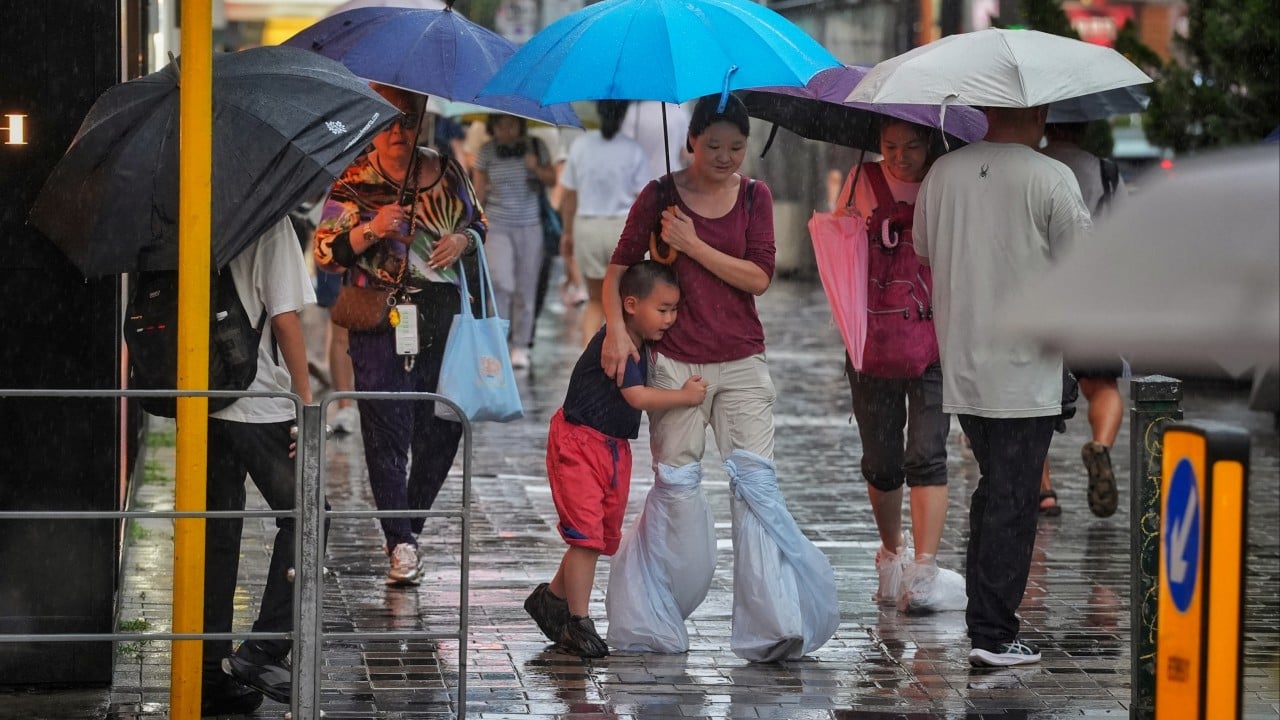
Hong Kong's recurring weekend precipitation anomalies are not merely meteorological inconveniences; they are stress tests for high-density subterranean infrastructure. When localized low-pressure systems interact with monsoonal troughs across the South China Sea, the resulting precipitation profile shifts from steady, manageable rainfall to high-intensity, short-duration convective bursts. Managing this phenomenon requires analyzing the structural and economic bottlenecks that occur when a top-tier metropolitan drainage network operates at its absolute hydraulic limits.
The core issue rests on a binary challenge: the velocity of surface runoff versus the static capacity of intercepting structures. Urban centers built on steep, mountainous terrain encounter a compounding kinetic problem. Gravity accelerates stormwater down highly urbanized slopes, converting potential energy into destructive kinetic force before the volume even reaches primary drainage channels.
The Tripartite Framework of Urban Hydrological Failure
To evaluate the impact of heavy rain and thunderstorms on a coastal metropolis, the system must be disaggregated into three distinct operational vectors: the catchment efficiency, the subterranean transit capacity, and the tidal counter-pressure.
[Catchment Efficiency] ---> [Subterranean Transit] <--- [Tidal Counter-Pressure]
(Surface Runoff Velocity)      (Network Bottlenecks)         (Sea Level Elevation)
1. Catchment Efficiency and Surface Impermeability
As precipitation falls on highly developed urban surfaces, the infiltration rate approaches zero. The natural topsoil has been entirely replaced by asphalt and concrete, creating a near-perfect runoff coefficient ($C \approx 0.95$ in the rational method formula $Q = CIA$). This means 95% of all falling mass immediately converts into surface volumetric flow.
The immediate structural bottleneck occurs at the gully inlet level. Street-level grates are frequently compromised by biomass, urban detritus, and plastic waste swept along by the initial surge. When these inlets clog, the effective drainage area of a street drops exponentially, turning roadways into impromptu canals and forcing water into low-lying commercial basements and mass transit portals.
2. Subterranean Transit Capacity and Choke Points
Once stormwater passes street level, it enters a complex network of urban drainage channels, storm relief tunnels, and underground storage tanks. The system relies on gravity-fed attenuation. However, when a thunderstorm delivers more than 70 millimeters of rain per hour—the threshold for a black rainstorm warning—the volume exceeds the design capacity of older urban networks.
The primary structural bottleneck occurs at the junctions where localized secondary pipes feed into the massive primary trunk sewers. These intersecting nodes experience extreme hydraulic turbulence. The sudden convergence of high-velocity streams creates backpressure, slowing down the evacuation of water from uphill districts and causing systemic backups in mid-level neighborhoods.
3. Tidal Counter-Pressure and Estuary Backflow
The ultimate discharge point for Hong Kong’s stormwater is Victoria Harbour. This creates a critical external dependency: the system's output efficiency is tied directly to the tidal cycle.
During a high tide event, the sea level rises above the physical elevation of the low-lying drainage outfalls. This reduces the hydraulic gradient—the slope that allows gravity to pull water out of the city. Without a sufficient gradient, seawater pushes back into the drainage tunnels, meeting oncoming stormwater. This counter-pressure stops the flow, forcing the water upward through manholes and storm drains into the lowest urban zones, regardless of how clean or clear the upstream pipes are.
Quantifying the Economic Bottlenecks of Weather Disruption
The direct cost of a wet weekend extends beyond immediate property damage. The economic friction manifests across three measurable vectors: retail contraction, transit logistical failure, and workforce immobility.
The Retail and Foot Traffic Deficit
The modern service economy relies on predictable patterns of weekend consumer transit. High-intensity rainfall alters consumer behavior by instantly shrinking the physical footprint of commerce. While indoor mega-malls connected directly to transit hubs maintain stable foot traffic, street-level retail, open-air markets, and food and beverage venues experience immediate revenue drops. This redistribution of consumer capital creates localized cash-flow crises for small and medium enterprises that lack the resilience to absorb consecutive weekends of zero foot traffic.
Transit System Stress Metrics
A city relying on public transportation requires absolute predictability. The strategic vulnerability during a severe thunderstorm lies in the transition points between surface transport and underground rail networks.
- Bus networks experience velocity degradation due to reduced visibility, hydroplaning risks, and surface pooling, which slows general traffic flow.
- The underground rail system faces the threat of water ingress through entrances, ventilation shafts, and escalator bays.
- Mechanical failures escalate as moisture compromises track switching equipment and power delivery systems, causing cascading delays across interconnected lines.
Strategic Mitigations for Climate-Resilient Infrastructure
Fixing this problem cannot be achieved by simply laying larger pipes under every street. The cost of tearing up dense urban centers is financially and logistically impossible. Instead, cities must adopt a dual strategy of mechanical diversion and active retention.
       [Stormwater Runoff]
               |
      +--------+--------+
      |                 |
      v                 v
[Stormwater Tunnels]   [Subterranean Storage]
(Divert to Sea)        (Hold & Release Post-Peak)
Strategic Stormwater Interception Tunnels
The most effective way to protect low-lying urban areas is to stop water from reaching them in the first place. This is achieved by constructing massive, deep-cement stormwater interception tunnels high up the mountain slopes. These tunnels catch rainwater as it runs off the hillsides, bypassing the urban drainage system entirely and diverting the volume directly into the sea via gravity. By intercepting the flow early, the system reduces the volumetric load on the dense, low-lying street networks by up to 40%, keeping the remaining urban pipes well below their critical failure thresholds.
Subterranean Attenuation and Storage Chambers
To handle the remaining water that falls directly onto the city, engineers must construct large underground storage tanks beneath public parks, sports fields, and parking structures. These attenuation chambers act as a temporary buffer during peak rainfall intensities.
- During the peak of a thunderstorm, when the main drainage pipes are full, excess surface water is directed into these underground holding tanks.
- The water is held securely below ground, preventing street-level flooding.
- Once the storm passes and the primary drainage network has emptied, pumps are activated to safely drain the stored water back into the main system at a controlled, manageable rate.
Systemic Vulnerabilities and Structural Limits
While these engineering solutions significantly reduce flood risks, they are not infallible. Every infrastructure asset is bound by strict design limitations, usually calibrated to historical 50-year or 100-year storm events.
The primary vulnerability of this strategy is the shifting baseline of extreme weather. If climate instability increases the frequency of storms that exceed these historical benchmarks, then even advanced attenuation tanks will reach capacity before a storm ends. Once a storage chamber is completely full, the system loses its buffering capability, and any additional rainfall immediately reverts to dangerous surface runoff.
Furthermore, these systems require continuous, intensive maintenance. A buildup of silt, garbage, or structural debris within the deep interception tunnels can cause sudden blockages, reducing their carrying capacity and creating unpredictable failures during high-stakes weather events.
Operational Protocol for Real-Time Hydrological Management
To maintain city stability during consecutive high-volume rain events, municipal authorities must move away from reactive emergency responses and adopt a predictive, data-driven operational model.
- Deploy high-frequency IoT sensors across all critical drainage junctions, catchpits, and storage tanks to track water levels and flow velocities in real time.
- Integrate live sensor data with predictive meteorological models to identify which specific neighborhoods will experience peak runoff volume 30 to 45 minutes before it happens.
- Use automated mechanical gates to dynamically route stormwater away from overcapacity pipelines and into underutilized storage chambers across the urban network.
- Position rapid-response clearing crews at high-risk, street-level choke points ahead of time, ensuring grates are kept free of debris before the heaviest rain arrives.
- Sync municipal transit schedules directly with real-time hydrological data, slowing down surface bus routes and sealing vulnerable subway portals before water reaches critical flooding levels.