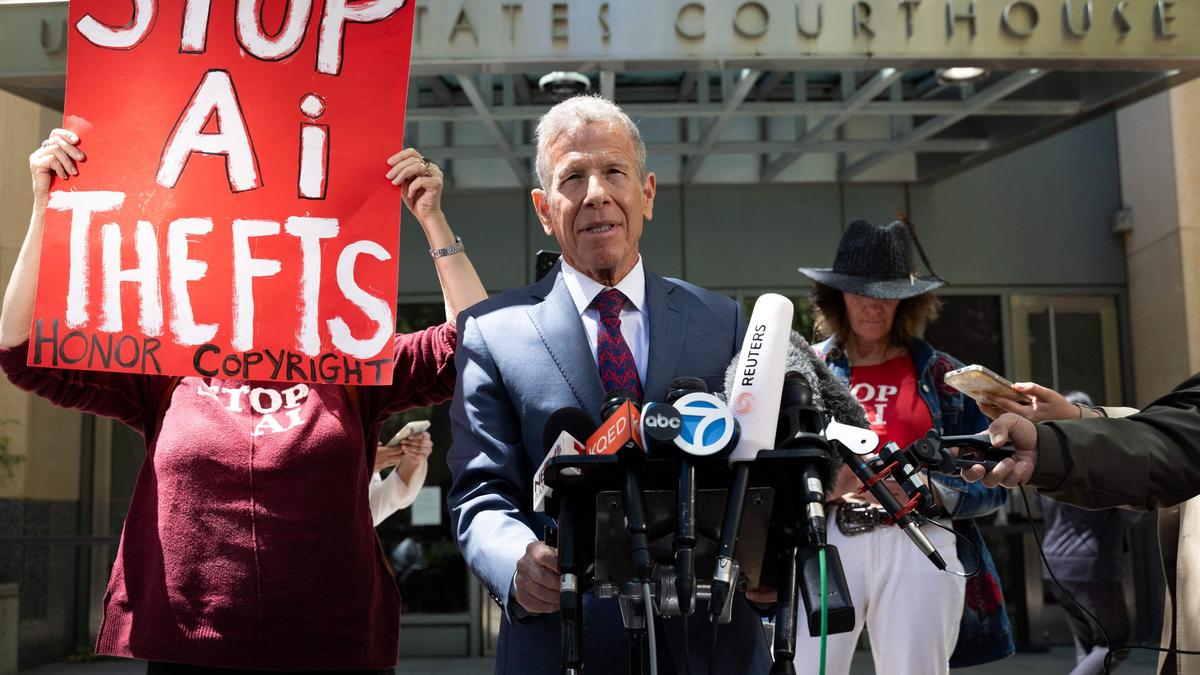
Elon Musk just lost his massive legal war against Sam Altman, and he didn't even get the dignity of a dramatic ideological defeat. On May 18, 2026, a nine-member federal jury in Oakland, California took less than two hours to throw out Musk’s $150 billion lawsuit against OpenAI. They didn't rule on whether Altman "stole a charity" or breached a sacred contract to build safe, open artificial general intelligence.
They looked at the clock and told Musk he was too late.
The unanimous verdict boiled down to a basic statute of limitations. The jury found that Musk missed the three-year window to sue, agreeing with OpenAI that he knew about the pivot toward big-money commercialization as early as 2017. Judge Yvonne Gonzalez Rogers accepted the finding on the spot, dismissing the case and clearing OpenAI's path toward a massive $1 trillion public offering later this year.
Musk immediately took to X, claiming the decision was a mere "calendar technicality" and promising an appeal. But framing this as a minor procedural glitch misses the point entirely. The trial didn't settle the soul of AI. It exposed the cold reality that the idealistic, humanity-saving era of tech philanthropy is completely dead, replaced by a brutal fight for market dominance.
The Billion Dollar Calendar Mistake
If you look past the courtroom drama and the spicy public mudslinging, Musk's legal team fell apart on a fundamental rule of civil litigation. OpenAI’s defense lawyers successfully proved that Musk sat on his hands while the company transformed from an open-source non-profit into a commercial juggernaut heavily backed by Microsoft.
Under California law, the clock starts ticking when a plaintiff reasonably suspects that wrongdoing has occurred. OpenAI poured over hundreds of internal emails showing that Musk was not only aware of the plan to create a for-profit arm but actively pushed to control it himself before walking away in 2018.
By the time Musk filed his lawsuit in 2024, the timeline was shot. OpenAI's lead attorney, William Savitt, didn't hold back outside the courthouse, calling the lawsuit a "hypocritical attempt to sabotage a competitor." He told the press that Musk's claims were just stories, not facts.
Musk’s legal team tried to spin the loss as a moral victory, claiming they exposed Altman’s corporate maneuvering to the public. That's a comforting thought for an expensive legal team, but it doesn't change the scorecard. OpenAI walked away completely unscathed, while Musk is left with a massive legal bill and an increasingly distracted AI venture of his own.
Why the Non Profit Dream Was Dead From the Start
The trial brought OpenAI’s early history back into the spotlight, reminding everyone how far the company has drifted from its 2015 roots. Founded as an open research lab to counter Google’s monopoly, the initial charter promised open-source code and a focus on safety. Musk put in around $38 million of his own money to get it off the ground.
But building frontier AI models isn't like writing an app. It's a black hole for capital.
OpenAI's Historical Trajectory:
2015: Founded as non-profit -> Pledged $1B to build open-source AGI
2019: Created capped-profit wing -> Secured $1B initial Microsoft investment
2022: Launched ChatGPT -> Sparked global commercial AI boom
2026: Wins Musk lawsuit -> Clears path for $1T IPO
By 2019, training these neural networks required billions of dollars in specialized hardware and electricity. A pure non-profit model couldn't survive at the cutting edge. Altman created a capped-profit subsidiary to pull in institutional wealth, kicking off a relationship with Microsoft that eventually topped $13 billion.
The moment GPT-2 was held back from full open-source release in 2019 due to "safety concerns," the original deal changed. By the time ChatGPT launched in late 2022, OpenAI was operating like a hyper-growth Silicon Valley enterprise. The brief 2023 coup where the non-profit board fired Altman—only for employees and investors to force him back into power five days later—proved that commercial momentum had already crushed the original governance structure.
The Reality Behind xAI Struggles
It’s impossible to separate this verdict from Musk’s current position in the AI race. He founded xAI in 2023 to compete directly with OpenAI, positioning his Grok chatbot as an anti-woke, truth-seeking alternative. But the trial actually ended up highlighting the systemic issues plaguing Musk's own AI ambitions.
During a combative cross-examination on April 30, Musk made a damaging admission under oath. He conceded that xAI "partly" trains its models on the outputs of OpenAI's models, suggesting that every company does it. While common among lagging operations trying to close a gap quickly, top-tier Western labs like Anthropic or Google DeepMind don't rely on competitor data to train their flagship systems.
The trial wrapped up at a terrible time for xAI. Consider what's happening behind the scenes right now:
- Brain Drain: More than 50 key employees recently left xAI for rivals like Meta and Thinking Machines Lab.
- User Slump: Grok app downloads dropped by 60% since January, and less than 1% of its user base pays for a subscription. By comparison, roughly 6% of ChatGPT users pay for premium access.
- Infrastructure Shifting: On May 6, xAI announced a massive data center deal where Anthropic took over compute capacity at the Colossus 1 facility, signaling a major hardware reshuffle as xAI moves to its newer site.
Musk used to trash Anthropic as "woke" and "evil," but he completely reversed course on X as the deal closed, praising their competence. It looks a lot like a founder realizing he can't fight a multi-front war while his primary legal weapon against Altman disintegrates.
What Happens Next for the AI Industry
With the legal threat gone, OpenAI can move forward with its plans to completely restructure its business and go public. Wall Street is already eyeing a potential $1 trillion valuation, a number that would have been completely impossible if Judge Rogers had granted Musk’s demand to strip Altman of power and force the company to return $150 billion to its non-profit roots.
If you're building a company or investing in technology, stop waiting for courts or regulators to force AI back into an open-source, non-profit box. That ship has sailed. The major players are behaving like traditional defense contractors and enterprise giants, locking down proprietary models and fighting for exclusive data access.
Your next move shouldn't rely on the outcome of Musk's promised appeal. It’s a dead end. Instead, focus on building independent data pipelines and deploying hybrid models that don't leave your infrastructure entirely dependent on any single tech billionaire's corporate ecosystem. The Oakland jury proved that in the world of high-stakes technology, capital and contracts matter far more than original intentions. Keep your code adaptable, protect your own data, and stop treating these AI labs like public charities. They aren't.


