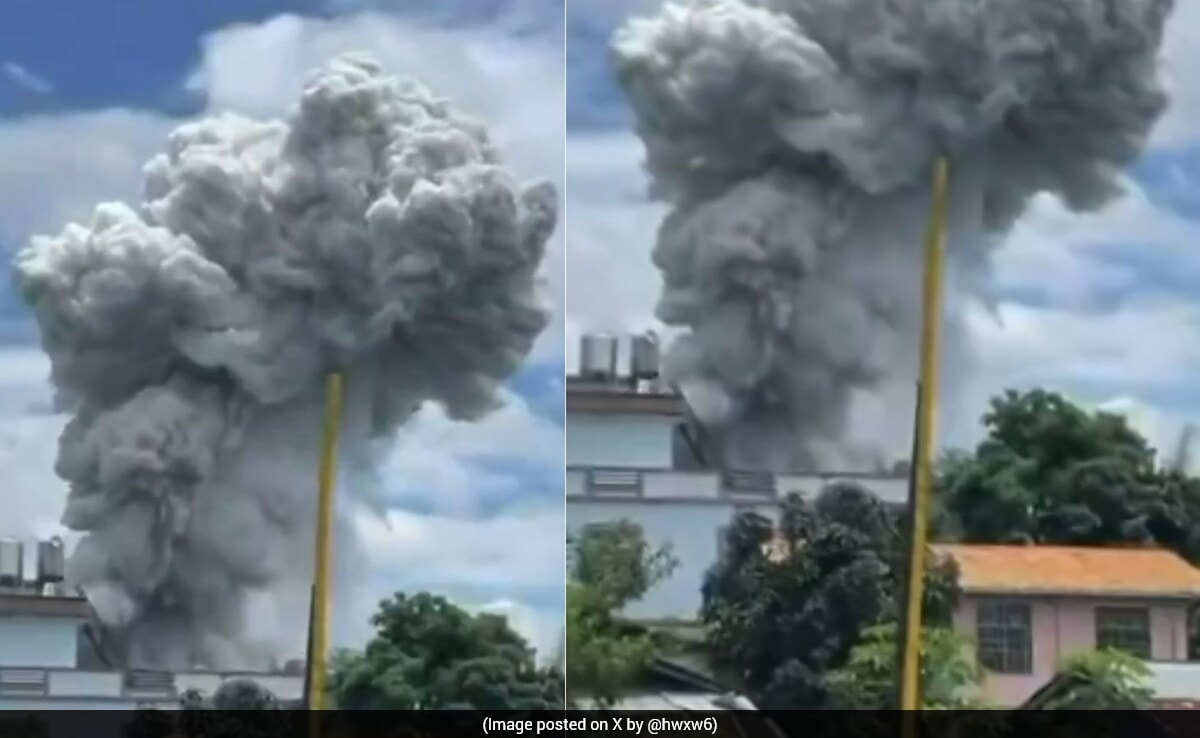
A massive explosion ripped through a building in northeastern Myanmar today, leaving at least 46 people dead, including six children. Over 70 others are currently clinging to life in a local hospital. This wasn't a sudden military airstrike or a drone attack, which have unfortunately become common occurrences across the war-torn country. It was an industrial accident involving commercial mining explosives that went horribly wrong.
The blast happened right around noon in Kaungtup, a small village in Namhkam township. It sits just three kilometers south of the Chinese border. The sheer force of the detonation flattened structures and sent shockwaves through the local community, damaging more than 100 homes in the immediate area. Local rescue workers, speaking anonymously due to severe security risks, confirmed they are still recovering bodies from the debris.
It's a stark reminder that while the world watches the political and military conflict in Myanmar, a parallel crisis of loose regulations, unstable munitions, and hazardous resource extraction is quietly killing civilians.
What Actually Triggered the Namhkam Explosion
The building at the center of the disaster wasn't a military bunker. It was a depot holding industrial explosives intended for local mining and stone quarrying. The Ta'ang National Liberation Army (TNLA), an ethnic armed rebel group that controls this specific border region, released a statement acknowledging that its economic department stored gelignite at the site.
If you aren't familiar with mining operations, gelignite is a highly effective material for blasting through rock. But it has a nasty reputation. Over time, or when exposed to improper storage conditions like high humidity and fluctuating temperatures, gelignite becomes incredibly unstable. It leaks nitroglycerin. When that happens, the slightest friction, spark, or rise in temperature can trigger a catastrophic detonation without warning.
Local independent media outlets, like Shan State's Shwe Phee Myay news agency, suggest the death toll might actually climb as high as 55 as rescue teams dig through the rubble. Thick plumes of black smoke were visible from across the Chinese border, prompting Chinese state broadcaster CCTV to report on the heavy damage inflicted on adjacent residential blocks.
The Reality of Rebel Controlled Border Zones
To understand why large quantities of unstable commercial explosives are sitting in residential villages, you have to look at the ground reality of Myanmar's current civil conflict. The TNLA is part of the Three Brotherhood Alliance. They took full control of Namhkam in late 2023 after a massive offensive against the central military junta.
When rebel groups secure these territories, they don't just inherit land; they inherit the local economy. Mining and quarrying are lucrative revenue sources used to fund governance and ongoing military operations.
But resource extraction in active conflict zones rarely follows international safety standards. There are no rigorous government inspectors checking on shelf lives or storage temperatures. When an armed group manages both the business and the law, basic safety rules get ignored. The civilians living next door pay the ultimate price.
The Growing Danger of Counterfeit and Poorly Stored Munitions
This incident highlights a broader, terrifying trend across Myanmar. The country is awash with weapons, mining chemicals, and improvised explosives. Because international sanctions restrict the flow of standard commercial goods, local factions rely on unregulated black-market chemicals or poorly manufactured domestic alternatives.
This creates a ticking time bomb for local communities. Whether it's artillery shells stored in hidden rebel depots or gelignite kept in a village warehouse, the proximity of volatile materials to civilian populations is a systemic issue.
Local rescue teams are completely overwhelmed. Namhkam township hospital is currently struggling to handle the influx of 74 severely injured patients. Many have sustained traumatic blast injuries, severe burns, and respiratory damage from the toxic smoke.
If you want to support the communities directly impacted by these frequent crossfires and industrial disasters in Shan State, consider directing your attention and resources toward verified mutual aid networks operating along the Thailand-Myanmar and China-Myanmar borders. Grassroots groups like the Free Burma Rangers or local community-based emergency medical services often bypass the paralyzed state infrastructure to deliver direct medical supplies, food, and shelter assistance to displaced families who have lost everything in a matter of seconds.