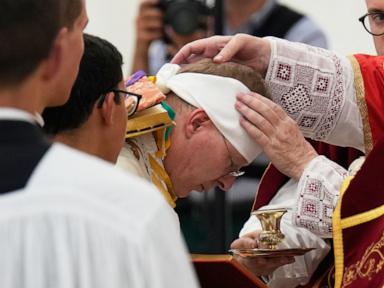
The mainstream religious press is suffering from a severe bout of historical amnesia. Read any major headline about the traditionalist block defying Pope Leo XIV to forge ahead with their illicit episcopal consecrations, and you will see the same panicked vocabulary. They scream about an impending "catastrophic schism." They paint a picture of a radical fringe group leaping off an ecclesiastical cliff into total isolation.
They are fundamentally misreading the mechanics of institutional power.
What we are witnessing is not a chaotic splintering of the Catholic Church. It is a highly calculated, legally sophisticated consolidation of power. The narrative that these rebel bishops are cutting themselves off from Rome ignores how canon law actually works and how the Vatican operates as a political bureaucracy. The establishment media treats this as a sudden crisis of rebellion. In reality, it is a structural necessity for both sides.
The Flawed Premise of Absolute Papal Centralization
The standard commentary assumes that papal authority operates like a modern corporate hierarchy. The CEO issues an edict, and any regional manager who disobeys is instantly fired and erased from the corporate directory.
Catholic ecclesiology does not work this way.
When a bishop is consecrated without a papal mandate, mainstream commentators rush to declare them "outside the Church." They confuse regularity with validity. Under the foundational mechanics of sacramental theology, a consecration performed by a validly ordained bishop in the apostolic succession is indelible. It cannot be undone by an administrative decree. The newly consecrated traditionalist bishops possess the full spiritual and governing faculties of the episcopacy, regardless of whether the Roman Curia signs off on their paperwork.
Historically, the Vatican knows this. When Archbishop Marcel Lefebvre consecrated four bishops at Écône in 1988 against the express orders of Pope John Paul II, the immediate reaction was a declaration of automatic excommunication. Yet, look at what happened over the subsequent decades. The Vatican spent years negotiating with the Society of Saint Pius X (SSPX). They granted them faculties to hear confessions and perform marriages. Rome eventually lifted the excommunications.
Why? Because a validly ordained parallel hierarchy is a permanent structural reality that the central bureaucracy cannot simply wish away.
The Currency of Canonical Necessity
To understand why this defiance is a calculated move rather than a reckless gamble, one must look at the legal defense the traditionalist faction is utilizing. They are not rejecting the papacy. Instead, they are invoking a specific loophole within canon law: the state of necessity.
Under Canon 1323 of the Code of Canon Law, a person who violates a law out of a perceived state of necessity or grave inconvenience is exempt from a penalty. The traditionalists argue that the systematic suppression of the ancient liturgy and traditional doctrine constitutes an existential threat to the preservation of the faith.
- The Subjective Loophole: The brilliance of this legal strategy lies in its subjectivity. The law states that if someone believes they are acting out of necessity, even if they are mistaken, the penalty is mitigated or avoided entirely.
- The Stalemate: By executing these consecrations under the umbrella of Canon 1323, the traditionalists force Rome into a structural stalemate. The Vatican can issue declarations of excommunication, but the traditionalists can simply counter that the penalties are legally null due to the emergency.
This creates a parallel legal reality. It is a sophisticated game of chicken where the rebels use the Church’s own legal code to insulate themselves from the consequences of their defiance.
Rome Needs a Rebel Fringe
The most counter-intuitive aspect of this entire conflict is that the central authority in Rome actually benefits from the existence of a defiant traditionalist wing.
Every centralized institution requires an internal opposition group to define its own boundaries and justify its consolidation of administrative power. If the traditionalists did not exist, the current administration would have to invent them.
By having a visible, vocal group of traditionalist bishops acting outside regular canonical structures, the Vatican can position itself as the moderate, reasonable center. It allows the Roman Curia to enforce stricter conformity among the mainstream dioceses under the guise of maintaining unity against extremism. The rebels serve as a convenient lightning rod, absorbing the discontent of conservative Catholics globally while keeping that discontent outside the immediate walls of diocesan administration.
Furthermore, the traditionalists provide the Vatican with a vital insurance policy. The history of the Church is a pendulum that swings between hyper-papal centralization and decentralized local governance. When the current theological experimentation eventually burns itself out, the Vatican will need a preserved repository of traditional practice and theology to rebuild its institutional identity. The traditionalists are effectively operating as an outsourced preservation vault for the Roman rite, funded entirely by their own donors, while Rome officially pretends to deplore their existence.
The Myth of Total Isolation
Commentators love to predict that these new, unauthorized bishops will find themselves running an irrelevant cult, starved of resources and flocking believers.
I have watched religious organizations navigate these structural fractures for decades. The exact opposite occurs.
When an ecclesiastical group definitively breaks from a centralized bureaucracy, they experience an immediate surge in operational agility. They are no longer bogged down by diocesan assessments, bureaucratic red tape, or the need to appease a hostile local bishop. Every dollar raised stays within their local communities. They build schools, seminaries, and chapels at a fraction of the cost of official diocesan projects.
Consider the data on priestly vocations. While mainstream Western dioceses are shuttering parishes and consolidating due to a catastrophic lack of priests, traditionalist seminaries are consistently filled to capacity. By providing a clear, uncompromising theological identity, they attract a highly committed, younger demographic. The defiance of Pope Leo XIV does not isolate them; it codifies their status as a resilient, self-sustaining counter-culture.
The risk of a true schism—where an alternative Pope is elected or an entirely separate church structure is permanently formed—is practically zero. Neither side wants that. The traditionalists need the papacy to maintain their identity as Roman Catholics, and the papacy needs the traditionalists to act as the outer boundary of its authority.
Stop reading the sensationalized accounts of an ecclesiastical civil war. This is an elaborate, highly ritualized dance of institutional self-preservation. The consecrations will proceed, the decrees of condemnation will be issued, and both sides will continue to rely on each other to survive.