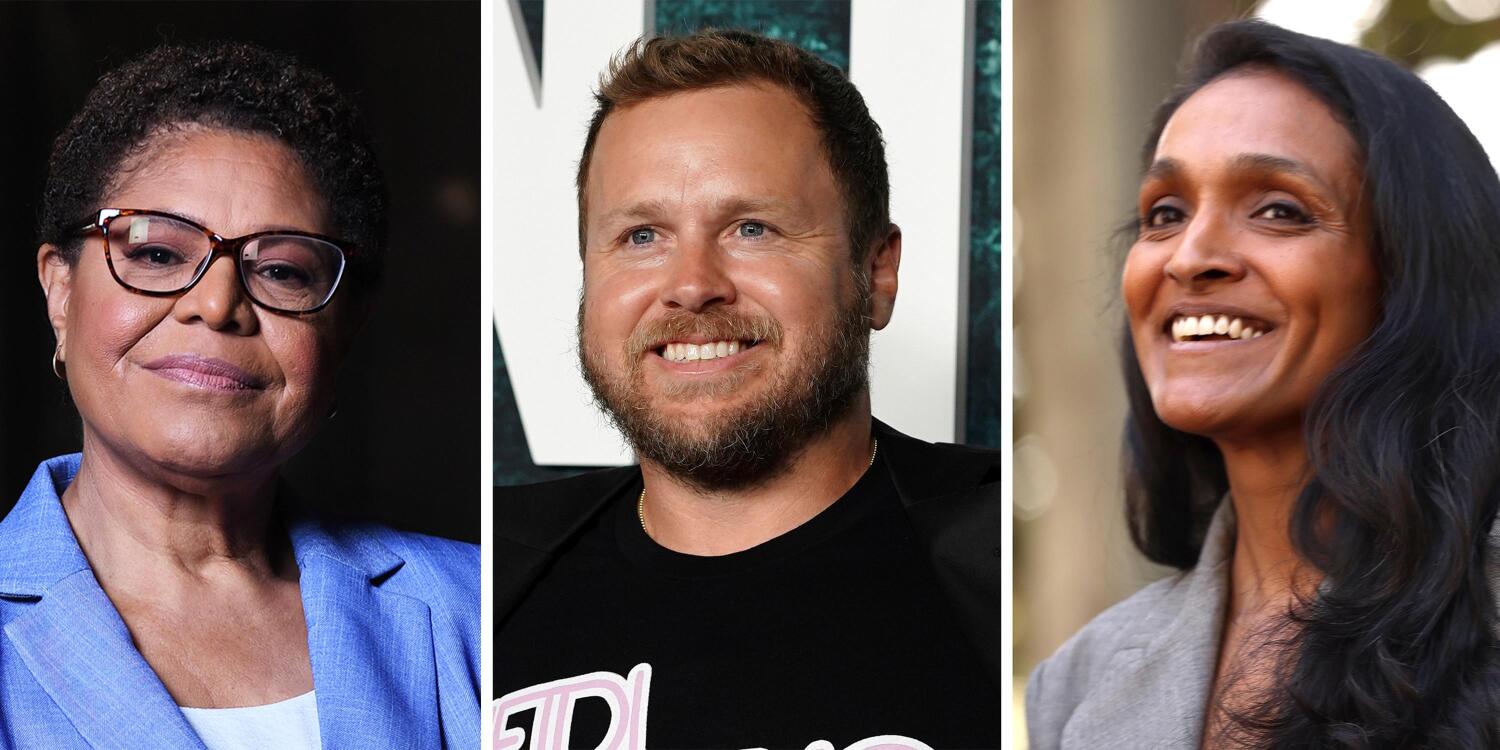
The ashes of Pacific Palisades do not care about Nielsen ratings. When the canyon fire roared through the hills, it devoured stucco, memories, and the multi-million-dollar sanctuary of a man who once built an empire entirely out of noise. Spencer Pratt stood on the blackened earth where his home used to be, looked at the ruins, and saw a stage.
Most people see a wildfire as a tragedy of shifting climates and overburdened infrastructure. Pratt saw an origin story. One year after the embers cooled, he stepped in front of the cameras to announce his candidacy for Mayor of Los Angeles.
It feels like a fever dream. The man who spent the mid-2000s orchestrating the most deliciously toxic plotlines on The Hills is now on a primary ballot, locked in a strange, high-stakes battle for the soul of America’s second-largest city. He is running to the right of incumbent Mayor Karen Bass, armed with endorsements from national Republicans, a viral AI video casting him as Batman, and a promise to turn Los Angeles into Dubai within eight years.
To dismiss this as a mere joke is to misunderstand the profound, simmering exhaustion of the people who actually live here.
The Five Fractures of the Angelenos
Step away from the campaign rallies and look at the quiet realities of the city. Walk down the Venice boardwalk early in the morning or try to navigate the labyrinthine permitting office downtown. The exhaustion is tangible. It is the fuel powering an election that has left an unprecedented forty percent of likely voters completely undecided just days before the ballot boxes close.
The city is suffering from a deep, systemic vertigo, defined by five critical pressure points.
The True Premium of Safety
Public safety has ceased to be an abstract policy point discussed in air-conditioned chambers. It has become a daily, exhausting math problem for small business owners and residents alike. When a candidate promises to flood the streets with police officers and crack down on street takeovers, it resonates because people are tired of feeling vulnerable.
Consider the small, family-owned pupuseria in mid-city or the independent bookstore in Echo Park. They are not thinking about macroeconomic trends. They are thinking about the broken glass they swept up last Tuesday. When the local film crews operating in the heart of the city quietly pay local street gangs for "protection" just to keep their cameras rolling without incident, the social contract has not just frayed. It has snapped.
The Illusion of the Horizon
Drive through Los Angeles and you will see a paradox built of canvas and steel. Millions of dollars pour into homelessness initiatives, yet the tents remain pitched on the sidewalks outside elementary schools. The failure is not for a lack of money; it is a failure of velocity.
The current administration approaches the crisis with the slow, deliberate care of an academic institution, forming committees to study task forces. Meanwhile, the crisis mutates. The arrival of highly potent, cheap synthetic stimulants has fundamentally altered the nature of street addiction, turning public parks into open-air wards. The human tragedy is immense, but the political fallout is simple: voters are beginning to value a blunt instrument over a slow blueprint.
The Exodus of the Dream Factory
Hollywood used to be an economy. Now, it feels increasingly like a museum. The soundstages that built the middle class of the San Fernando Valley are quiet, losing productions not just to Georgia, but to Massachusetts.
The entertainment industry is bleeding because the city has made it impossibly expensive, bureaucratic, and physically unpleasant to shoot here. When a production executive looks at the red tape of securing a permit in Los Angeles versus the open arms and fat tax incentives of Boston, the choice is purely logistical. If the cameras stop rolling for good, the tax base that funds every single social program in the city vanishes with them.
The Bureaucracy of Rebuilding
After the fires or the mudslides, the real disaster begins at the Department of Water and Power. The tragedy of losing a home is quickly replaced by the agony of trying to rebuild it.
Homeowners find themselves trapped in a purgatory of city fees, conflicting environmental regulations, and endless paperwork. It can take years just to get permission to pour concrete on a lot you already own. This bureaucratic paralysis does not just hurt the wealthy in the hills; it suffocates the creation of affordable housing across the basin. When building anything becomes a literal impossibility, the entire city begins to stagnate under its own weight.
The Collapse of the Center
The most telling statistic of this entire mayoral race is not who is winning, but how many people are waiting. A recent UCLA Luskin School of Public Affairs poll revealed that nearly half of the electorate is staring at their ballots with a sense of profound paralysis.
The old political machinery is failing to spark anything resembling hope. Incumbent Karen Bass offers the steady, predictable hand of an institutional insider. Her challengers from the progressive left offer a vision of systemic overhaul. But for millions of ordinary citizens, the middle ground feels hollow. They are caught between a status quo that feels indifferent and alternatives that feel experimental.
The Villains We Create
This brings us back to the reality television star standing on the debate stage, comparing his grassroots appeal to that of Barack Obama while insisting he is a modern-day Robin Hood.
It is easy for political purists to mock Spencer Pratt’s lack of traditional policy credentials. They point out the wild inconsistencies in his messaging—how he can pledge to protect religious communities and support trans youth while simultaneously campaigning on platform points that sound like a hard-line authoritarian dream.
But the caricature is exactly why he is dangerous to the establishment. Pratt is a master of the attention economy. He understands that in a city defined by Hollywood, visibility is a form of currency. When his campaign boosts a viral, AI-generated video framing the city's top Democrats as comic-book villains, it taps into a very real, very human desire for simplicity.
People are tired of complex explanations for why their streets are dirty, why their businesses are failing, and why their parks feel unsafe. They are hungry for a protagonist.
But a city cannot be governed by a script. The tragedy of reality television is that the cameras eventually turn off, leaving the cast members to deal with the wreckage of whatever they destroyed for the sake of a high-rated finale. Turning Los Angeles into Dubai with a forest of construction cranes sounds magnificent on CNBC, but it ignores the delicate, human reality of the communities living beneath those hypothetical shadows.
The primary election approaches on June 2, and the city stands before a mirror, trying to decide which version of itself it wants to believe. We can choose the exhausting, slow-moving reality of an imperfect democracy trying to fix its machinery piece by piece. Or we can choose the neon mirage of a savior who promises to fix everything with a single, dramatic sweep of his hand.
Whatever the choice, the bill will eventually come due. And as the residents of the hills already know, when the fire comes, it does not care who is watching the show.