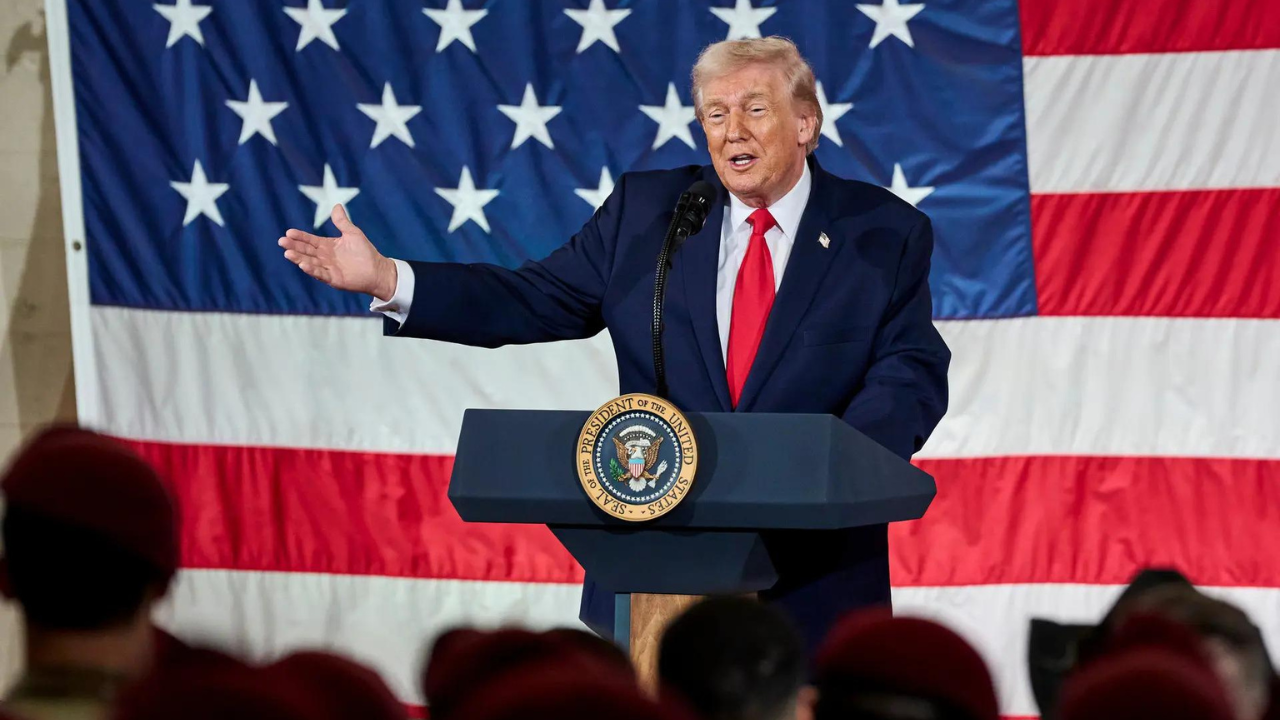
The green room of a late-night talk show smells of expensive hairspray, cheap catering, and low-grade anxiety. On a Tuesday evening, a writer sits hunched over a laptop, frantically deleting a joke about the tax code. It is too dry. It requires the audience to think. Instead, the writer replaces it with a bit about the President of the United States tripping on the steps of Air Force One.
An hour later, millions of people watch the host deliver that exact joke. The laugh from the studio audience is instant, loud, and entirely unthinking. It feels good to laugh. It feels democratic, even.
But out in the darkness of the American heartland, a citizen named Marcus sits on his couch, watching the same monologue. He does not laugh. Marcus works forty-five hours a week at a logistics firm. He watches his grocery bills climb, his local school board descend into screaming matches, and the roads in his town crack into deep potholes. When he turns on the television for a sense of direction, he finds that the leader of his nation is no longer treated as a statesman, or even as an ideological adversary.
The president is treated as a meme. A clown. A malfunctioning piece of software.
This shift from fierce political debate to cruel, reflexive mockery is not just a change in comedy styles. It is a slow-motion catastrophe for self-governance. When we transform the highest office in the land into a joke, we do not disarm the powerful. We disarm ourselves.
The Evolution of the Presidential Roast
American politics has always been loud, dirty, and deeply disrespectful. Thomas Jefferson’s camp called John Adams a "hideous hermaphroditcal character." Lincoln was drawn as a gorilla in contemporary newspapers. Satire is the lifeblood of a free society.
Something shifted, however, with the birth of twenty-four-hour cable news and the internet. Mockery stopped being a tool used to expose policy failures and became the policy itself.
Consider the difference between Richard Nixon and modern leaders. When Nixon was caricatured, it was for his paranoia, his secret tapes, and his abuse of constitutional power. The mockery was a response to his immense, terrifying authority. The joke was: Look at what this dangerous man is doing with his power.
Today, the joke is: Look at how stupid this person is.
We have shifted from satirizing power to weaponizing incompetence. It is a subtle distinction with devastating consequences. When we convince ourselves that a president is simply a bumbling fool, we stop looking at the structural machinery running behind them. We ignore the executive orders, the judicial appointments, and the foreign policy shifts. Why dissect a complex trade agreement when you can just watch a six-second clip of the president fumbling his words on loop?
The Neurological Comfort of the Punchline
Political scientists often look at voting data to understand the electorate, but psychologists look at stress. The modern political world is loud, confusing, and constantly threatening.
Imagine a hypothetical voter named Sarah. Sarah is trying to understand the nuances of a new foreign intervention. She reads three different news outlets and gets three conflicting narratives. She feels helpless, small, and anxious.
Then, she opens a social media app. She sees a video of the president mispronouncing the name of a foreign city, set to circus music.
Suddenly, the anxiety evaporates. Sarah does not need to understand complex geopolitical history anymore. The problem isn't a tangled web of international relations; the problem is just that the guy in charge is an idiot.
Mockery simplifies the world. It provides a dopamine hit of moral and intellectual superiority. By laughing at the leader, the voter feels elevated above the mess. It is a defense mechanism disguised as political commentary.
The danger is that this comfort is an illusion. Cynicism is not sophistication. Believing that everyone in Washington is a moron does not make a voter informed; it makes them lazy. It allows citizens to abdicate their responsibility to engage with difficult truths. If the entire system is a circus, then the citizens are just spectators, absolved of any blame for how the show turns out.
When the White House Leans Into the Joke
The tragedy accelerates when the politicians themselves realize that being a punchline is safer than being a target.
In the past, a president caught in a gaffe would spend weeks trying to correct the record with serious policy speeches. Today, communications teams lean directly into the absurdity. They create official TikTok accounts using the very memes designed to mock them. They trade dignity for reach.
If the public wants a character, the politician will play one.
This creates a feedback loop that degrades the entire ecosystem. The media covers the president like a reality television star, tracking ratings, social media engagement, and public meltdowns. The president acts like a reality star to guarantee coverage. The public consumes it like entertainment, completely forgetting that the person on screen has the authority to launch nuclear weapons and alter the global economy.
Think about the physical reality of the presidency. The nuclear football—a black leather briefcase containing the codes for unimaginable destruction—is never more than a few feet away from the commander-in-chief. It accompanies them on vacations, on foreign trips, and down the steps of helicopters.
Now juxtapose that terrifying, solemn reality with a digital culture that treats the holder of that briefcase as a goofy uncle who can't figure out how to use an umbrella. The cognitive dissonance is staggering. We are trivializing the most dangerous job on earth because we lack the collective maturity to face the stakes of our own choices.
The Silence of the Serious
What happens to the people who want to talk about reality?
They are drowned out. In a media environment optimized for the loudest laugh and the sharpest dunk, nuance is a death sentence. A senator who wants to give a forty-minute presentation on the solvency of social security cannot compete with a five-second clip of their colleague getting caught in a revolving door.
The incentive structure is completely broken. Young politicians entering the arena quickly learn that they do not need to master the art of governance; they need to master the art of the clapback. They need to become content creators who happen to vote on legislation.
This leaves people like Marcus, our logistics worker, completely stranded. He does not want content. He wants a functional supply chain. He wants to know if his pension will exist in twenty years. He wants to know why his utility bills are doubling. But when he looks to the national stage for answers, all he sees is a theater troupe performing for an audience that has stopped caring about the plot.
The High Cost of Cheap Laughs
We like to think that our institutions are solid, made of marble and iron, capable of withstanding any amount of ridicule. They are not. They are made of human belief.
A democracy only functions if its citizens believe that the outcomes matter. The moment we decide that the entire enterprise is a joke, the glue that holds the society together begins to dissolve.
Trust does not vanish overnight. It erodes, grain by grain, every time we choose a laugh over an argument, every time we prioritize a gaffe over a policy, and every time we treat the leader of our nation as a court jester rather than a public servant.
The writers in the late-night green rooms will keep writing their jokes. The social media algorithms will keep elevating the stumbles and the stutters. The politicians will keep smiling through the mockery, trading their authority for a few more clicks.
But tomorrow morning, the sun will rise on a nation with real, unyielding problems. The roads will still be broken. The families will still be struggling. And no amount of laughter will ever change the fact that the joke is ultimately on us.