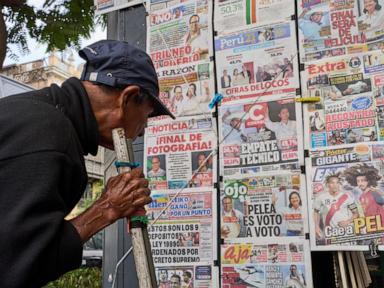
Peru is trapped in a political loop that feels impossible to break.
Right now, the country is staring at a razor-thin margin in its presidential runoff election. With 96% of the ballots counted, nationalist congressman Roberto Sánchez holds 50.055% of the vote. Right behind him is conservative political veteran Keiko Fujimori at 49.945%. The gap between them is less than 20,000 votes out of more than 17.8 million cast.
If you think this means Peru is deeply passionate about two competing visions for its future, you are reading the situation completely wrong.
This isn't an election driven by hope or fierce ideological loyalty. It's an exercise in collective exhaustion. The voter turnout in Lima was visibly lower than usual, even though voting is mandatory for citizens aged 18 to 70. People are showing up simply to avoid a $32 fine, not because they believe in the names on the ballot.
The Anatomy of an Extreme Political Split
To understand how the nation reached this dead heat, look at the opening round in April. Peruvians had to choose from an absurdly bloated field of 34 candidates. Neither Sánchez nor Fujimori managed to secure even 20% of the vote. It actually took electoral authorities over a month just to finalize who would advance to the runoff.
This narrow split has created a nightmare scenario for a country desperate for stability. The National Office of Electoral Processes (ONPE) has to process physical tally sheets from remote Andean villages, Amazonian outposts, and embassies in 63 different countries. Because of strict laws requiring every single disputed ballot to be transported to regional centers for formal judicial review, the chief electoral authority, Roberto Burneo, warned that an official declaration could take up to 30 days.
This prolonged delay is a dangerous waiting game. It leaves a massive vacuum where conspiracies and accusations of fraud can easily thrive.
Two Candidates Nobody Really Wants
The real tragedy of this election is that both options represent past political chapters that most Peruvians would rather forget. Whoever takes the oath of office on July 28 will become Peru's ninth president in just ten years. That is a terrifying statistic for any democracy.
Keiko Fujimori is making her fourth run for the presidency. For a huge segment of the population, her surname is synonymous with the authoritarian regime of her late father, Alberto Fujimori, who ruled in the 1990s. While her supporters credit her father with crushing the violent Shining Path insurgency and fixing a broken economy, detractor groups remember the human rights abuses, death squads, and forced sterilizations. Keiko has kept her message simple: promise a heavy-handed crackdown on crime, build prison labor camps, and protect the free-market, mining-friendly policies that her family established.
On the other side stands Roberto Sánchez. He is a prominent ally of former President Pedro Castillo, the rural schoolteacher who rocked the political establishment in 2021 before trying to dissolve Congress in late 2022. Castillo was swiftly impeached and jailed, but Sánchez still wears the wide-brimmed peasant hat gifted by his former boss. Sánchez has tapped into rural frustration by promising to rewrite the constitution, increase state control over the highly profitable mining sector, and pardon Castillo. To many urban voters, he represents a return to the chaotic governance that saw dozens of cabinet changes in less than two years.
The Invisible Hand Driving the Anger
The mainstream conversation focuses heavily on Left versus Right, but the real driver behind voter fury is everyday survival.
Extortion and violent crime have surged across the country. Walk down the streets of Lima or Trujillo and you will hear local business owners talking about the daily threats they face. Political analysts tie this rise in organized crime directly to the soaring profits of illegal gold mining in the Andes and the Amazon.
Criminal networks have expanded their reach, and the state has failed to stop them. Fujimori thinks the answer is militarizing the borders and deploying the army to high-risk areas. Sánchez claims he will purge the corrupt police force and let the military assist with domestic security while leaning on Chinese infrastructure investment to spark job growth.
The hard truth is that the next president will have to work with a highly fractured, hostile Congress. Fujimori's Popular Force party holds the largest number of seats, but it doesn't have an outright majority. If Sánchez wins, he faces a legislature that will likely try to impeach him at the first opportunity. It's the same toxic dynamic that broke previous administrations.
What Happens Next on the Ground
Don't expect a quick resolution or a sudden wave of nationwide unity. The country is stuck in a holding pattern while electoral judges fight over contested ballots.
If you are tracking this situation or doing business in the region, prepare for a month of intense market volatility. The Peruvian sol will likely fluctuate heavily against the US dollar as the lead shifts by fractions of a percent. Watch the mining regions in the southern Andes closely. If Sánchez's lead holds and Fujimori challenges the results, we could see immediate blockades along critical copper transport routes.
Keep an eye on the official ONPE updates, but don't buy into early victory speeches from either campaign. The legal challenges over individual voting records will decide this race, not the initial counts. Peru is in for a long, tense winter, and the underlying political crisis isn't going anywhere.



:max_bytes(150000):strip_icc():focal(665x0:667x2)/gettyimages-50733149-2000-8b129a2475974982a915418ce92a73d8.jpg)