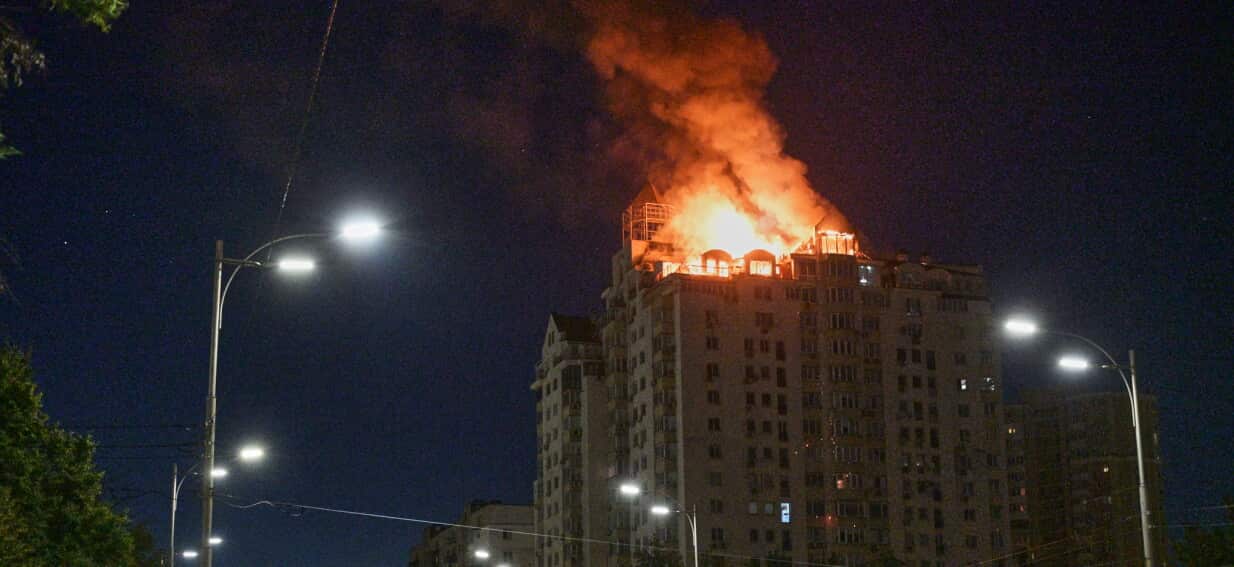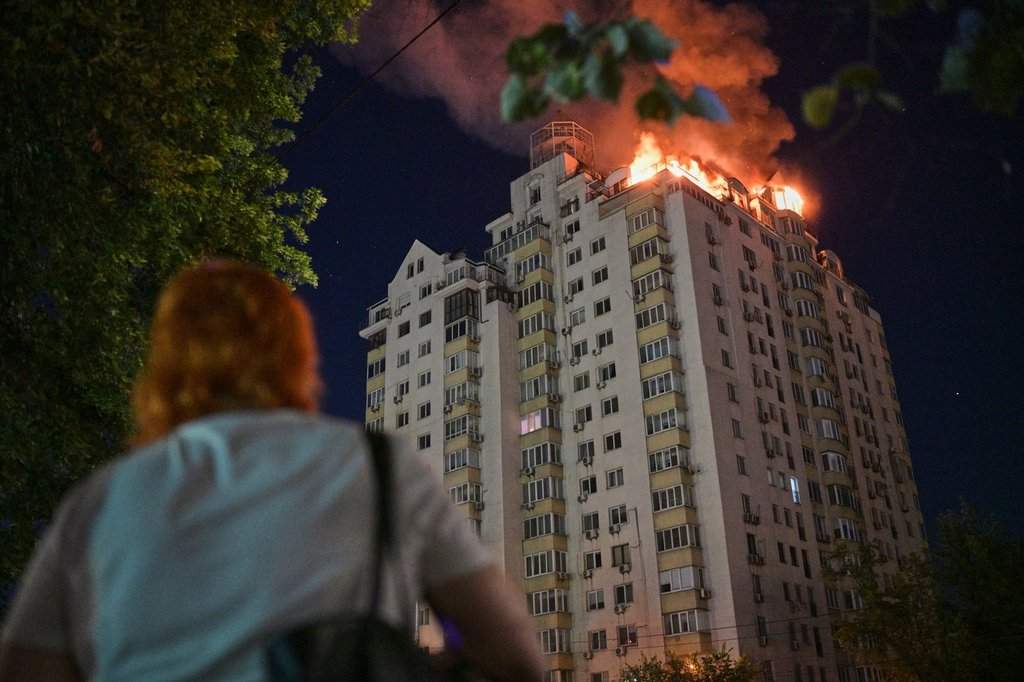
The mainstream media is stuck in a loop of predictable, superficial analysis. Every time a drone strikes a refinery in Russia or a missile hits a building in Kyiv, the headlines follow the exact same script: "Strategic Blow to the Economy" or "Devastating Retaliation." It is lazy journalism. It assumes that blowing up a multi-million-dollar piece of steel translates directly into geometric shifts on the front lines.
It does not.
The recent escalation—where a Russian strike claimed 17 lives in Kyiv while Ukrainian drones swarmed Moscow’s energy sector—is a masterclass in strategic misdirection. Both sides are burning through finite, high-end munitions to achieve outcomes that look dramatic on a map but do almost nothing to alter the structural math of this war. We are witnessing a high-stakes theater of attritional optics, not a decisive shift in military capability.
The Myth of the Crippled Refinery
Let us dismantle the Western fixation on Ukraine’s strategy of striking Russian oil infrastructure. The prevailing consensus among casual observers is that hitting distillation columns will starve the Russian war machine of cash and fuel. This view ignores basic industrial engineering and global economics.
I have analyzed supply chains in heavily sanctioned environments for years. Russia is not a fragile Western democracy where a 5% spike in domestic fuel prices triggers a political crisis. It is a command economy with massive, deeply redundant refining capacity. When a Ukrainian drone hits an atmospheric distillation unit at a refinery near Moscow or St. Petersburg, it makes for incredible video footage. The column burns bright. Twitter celebrates.
But here is what actually happens next:
- Redundancy kicks in: Most large Russian refineries operate with significant overcapacity. If one unit goes offline, production is rerouted to secondary facilities or domestic consumption is prioritized by state decree.
- The crude still flows: Hitting a refinery does not stop crude oil extraction. If Russia refines less petroleum domestically, it simply exports more raw unrefined crude to India or China, which is then refined and often sold right back to the West.
- The fuel reached the front weeks ago: The tanks, infantry fighting vehicles, and logistics trucks operating in the Donbas do not rely on just-in-time delivery from a refinery outside Moscow. They rely on deeply buried, heavily defended strategic fuel depots.
By celebrating these strikes as "game-ending blows," analysts overlook the opportunity cost. Every long-range drone sent to scratch the paint on a Siberian energy hub is a drone not being used to obliterate a Russian air defense radar, a command bunker, or a bridge along the critical rail bottlenecks leading into Crimea. Ukraine is choosing economic harassment over raw tactical denial.
Russia’s Terror Bombing is a Structural Failure
On the flip side, Moscow's reliance on mass missile salvos against Kyiv and other urban centers is equally flawed, driven by a bankrupt strategic doctrine. The killing of 17 civilians in Kyiv is a tragedy, but from a purely cold-blooded military perspective, it represents a catastrophic waste of Russian precision-guided munitions.
Strategic bombing has a zero percent success rate when it comes to breaking the political will of a determined population. The British did not surrender during the Blitz. The Germans did not quit when Dresden was leveled. The North Vietnamese did not sue for peace during Operation Linebacker.
Yet, Russia continues to empty its arsenals of Kh-101 cruise missiles and Kinzhal ballistics into residential blocks and power grids.
Consider the math:
- A single Kinzhal missile costs millions of dollars to manufacture, requiring Western-made microchips smuggled through labyrinthine supply networks.
- Russia launches ten of them.
- Eight are intercepted by Western-supplied air defense systems like Patriot and IRIS-T.
- The remaining two hit non-military targets, causing horrific human suffering but leaving Ukraine’s operational brigade structures completely untouched.
This is not a sign of a military superpower executing a calculated campaign. It is the action of a military command that lacks the real-time reconnaissance and targeting capabilities required to hit moving military targets. They hit static cities because cities do not move, and because they cannot find the Ukrainian artillery brigades or command posts hiding in the forests of the east.
The Misdirection of Air Defense Allocation
The real danger of this dynamic is not the immediate physical destruction; it is the forced misallocation of strategic resources.
By launching spectacular, terrifying attacks on Kyiv, Russia forces Ukraine to keep its most advanced air defense systems stationed around the capital to protect civilians and political infrastructure. This is the exact outcome Moscow wants. If Patriot batteries are tied down defending government buildings in Kyiv, they are not on the front lines setting up ambushes for Russian Su-34 fighter-bombers.
Ukraine’s strikes on Russian oil infrastructure trigger a mirrored pathology. They force Russia to pull Pantsir and Tor air defense systems away from the front lines to guard oil depots deep inside the motherland.
We are looking at an air defense shell game. Both sides are using long-range strikes to pull the opponent's shields away from the actual battlefield. The side that wins this war will not be the one that burns down the most oil tanks or shatters the most apartment windows. It will be the side that refuses to take the bait, consolidates its air defense, and focuses its strike assets exclusively on destroying the enemy’s forward logistics, artillery, and troop concentrations.
Stop looking at the smoke rising over Moscow or Kyiv as a metric of victory. It is a metric of distraction. Every explosion away from the frontline is a confession by both commands that they cannot find a way to break the bloody stalemate where it actually matters. There are no shortcuts through an oil terminal. There are no shortcuts through a terrorized city. There is only the brutal, grinding reality of the trenches, and right now, both sides are burning precious capital on fireworks.