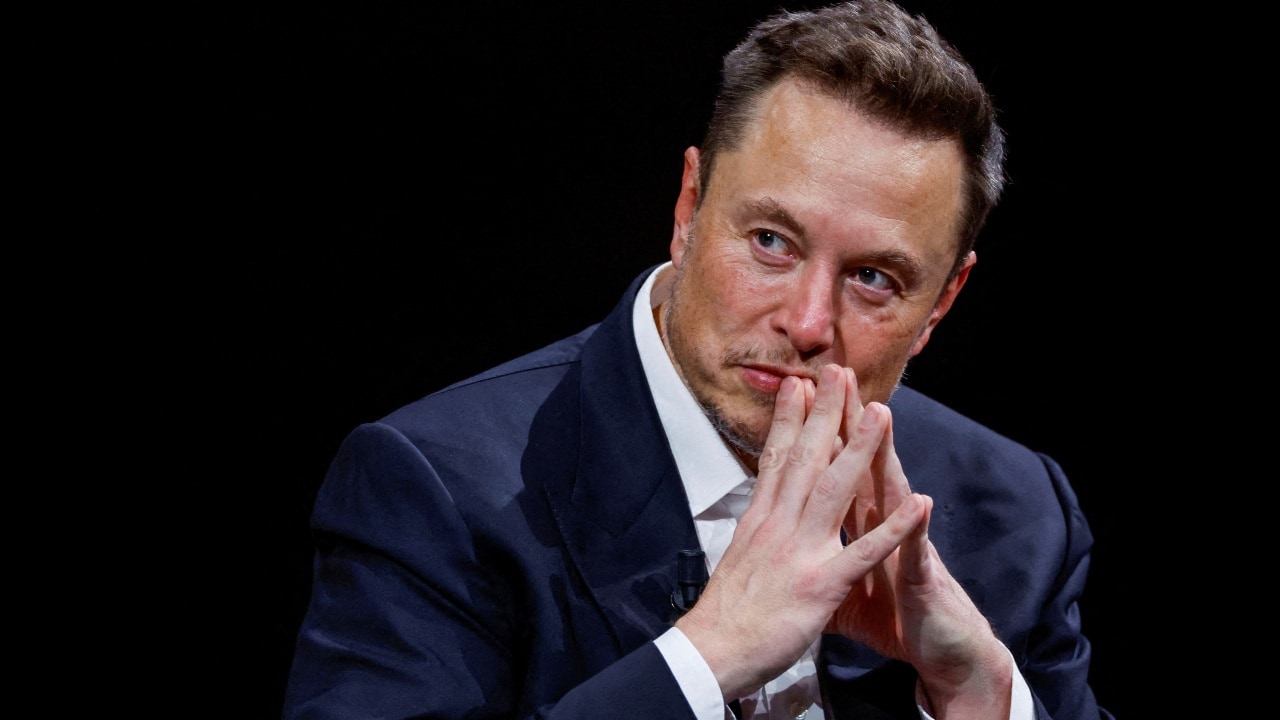
Wall Street has never seen anything like the paperwork that hit the Securities and Exchange Commission on Wednesday. SpaceX filed its S-1 prospectus, charting a course for a June 12 listing on the Nasdaq under the ticker SPCX. The numbers are intentionally staggering. The company wants to raise $75 billion at a valuation of $1.75 trillion. If it works, this will be the largest initial public offering in history, easily trampling Saudi Aramco’s $29 billion record. It will also instantly push Elon Musk’s net worth past the 13-figure mark, minting him as the world's first trillionaire.
But if you think this flotation is just about building rockets and sending wealthy tourists to the Moon, you missed the real story hidden inside those 200,000 words.
The casual observer sees SpaceX as a launch provider that happens to run a satellite internet company called Starlink. The S-1 reveals something totally different. SpaceX has mutated into a capital-hungry bet on artificial intelligence infrastructure. Musk isn't just seeking Mars money; he’s trying to build a computing monopoly that leaves Earth behind entirely.
The Math Behind a Five Billion Dollar Loss
Retail investors looking for a clean, profitable balance sheet are going to panic when they look at the financial core of this filing. In 2025, SpaceX brought in $18.67 billion in revenue. That's a healthy 33% jump from the previous year. But the bottom line tells a violent story: a net loss of $4.9 billion.
Where is all that cash going? It isn't just evaporating into exploding Starship prototypes in south Texas.
Capital expenditure doubled to $20.7 billion last year. A massive $12.7 billion of that went straight into AI hardware and computing infrastructure. Musk is building massive terrestrial data centers, like the Colossus cluster, and he spent billions buying up chips to train AI models. The rocket business is essentially subsidizing a massive computing buildout.
To be fair, the underlying consumer engine is incredibly healthy. Starlink crossed 10 million subscribers and the connectivity segment actually posted a $1.19 billion profit last quarter. But instead of letting that cash flow pool on the balance sheet, Musk is shoving it right into the AI burn pit.
The prospectus reveals that SpaceX is pitching a total addressable market of $28.5 trillion. Here is how they break down that absurd number:
- AI Infrastructure: $26.5 trillion encompassing enterprise applications, orbital data centers, and consumer subscriptions.
- Connectivity: $1.97 trillion covering Starlink broadband and mobile satellite services.
- Space Solutions: The remainder, consisting of traditional launch services and government defense contracts.
Data Centers in the Vacuum of Space
Terrestrial data centers are facing a massive bottleneck: power and water. Running high-density AI clusters on Earth requires millions of gallons of water for cooling and strains regional electrical grids to the breaking point.
Musk's solution is to take the servers off the planet.
The S-1 lays out a plan to launch a vast constellation of orbital data centers. The concept relies on the massive payload capacity of the 35-story Starship rocket to lift heavy server racks into low-Earth orbit. Up there, cooling is free, courtesy of the ambient vacuum of space, and power is generated constantly by massive solar arrays unhindered by cloud cover or night cycles.
It sounds like science fiction, but the revenue generation has already started on the ground. The filing revealed that Anthropic, a direct AI competitor, signed a deal to pay SpaceX $15 billion a year to lease computing space inside the terrestrial Colossus data centers. That single agreement brings in $45 billion through 2029. It proves that even if Musk’s own Grok chatbot fails to capture the market, the hardware infrastructure itself is highly liquid.
If you buy shares in SPCX, you aren't buying a traditional aerospace manufacturer. You are buying CoreWeave in the sky.
The Trillion Dollar Governance Trap
If you buy into this IPO, you need to understand that you have zero say in how the company is run. Musk isn't giving up an inch of control.
The dual-class share structure leaves Musk with 85.1% of the total voting power despite owning roughly 41% of the economic shares. He can pivot the company’s entire strategy on a whim, use SpaceX capital to fund his other ventures, or change corporate goals overnight without board interference.
Look at the compensation package buried in the prospectus. The board outlines 15 separate tranches of stock options triggered in $500 billion valuation increments. The final milestone requires SpaceX to hit a $7.5 trillion market cap and establish a permanent human colony on Mars with at least one million residents. It's an unprecedented governance structure that binds a public utility and global internet provider to the personal, sci-fi ambitions of one man.
There are also massive political entanglements to weigh. SpaceX has secured over $6 billion in active federal contracts from NASA and the Pentagon. At the same time, Donald Trump Jr. holds a notable pre-IPO stake through his venture firm, 1789 Capital. The potential for immense conflicts of interest is baked right into the stock.
Evaluating the Valuation
Is a company making $18.6 billion in revenue worth $1.75 trillion? By any traditional financial metric, the answer is absolutely not.
To put this in perspective, Nvidia and TSMC trade at high multiples, but they generate tens of billions in pure net profit. SpaceX is coming to market at roughly 60 times its forward 2026 revenue while losing billions. You are paying a massive premium for growth that might not materialize for a decade.
If you want to participate in the SPCX listing when trading begins on June 12, don't chase the opening morning pump. Retail investors rarely get access to the actual IPO price during a historic flotation like this; you will be buying in the open market after institutional investors have already bid up the price.
The smartest move is to wait for the post-listing volatility to settle. Read the full S-1 amendments when the roadshow starts on June 4. Watch the subscription growth numbers for Starlink over the next two quarters. If those numbers slow down before the orbital data centers are online, the stock will face a harsh correction, offering a much safer entry point for long-term investors.