The tech media loves a miracle cure, especially when it sounds like science fiction.
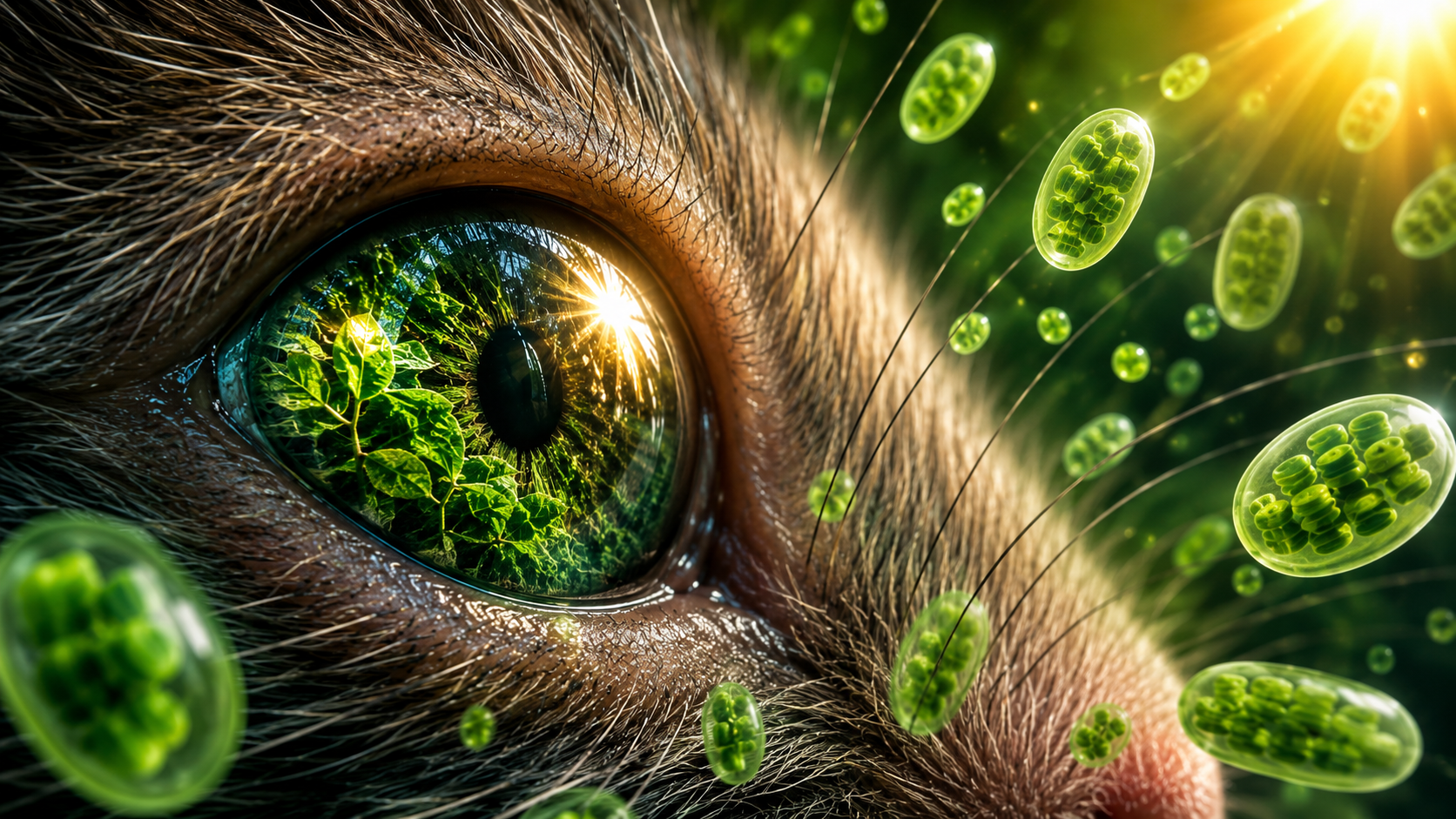
Recently, a wave of breathless coverage hit the internet celebrating an experiment where researchers supposedly got mouse eyes to perform photosynthesis. The narrative was instant and predictable: we are on the verge of a green breakthrough that will cure blindness, eliminate macular degeneration, and transform eye care.
It is a beautiful story. It is also completely wrong.
Feeding the retina with light and carbon dioxide ignores the brutal realities of mammalian biochemistry. I have spent years tracking tissue engineering and ocular therapies, watching venture capitalists pour millions into flashy, headline-grabbing biology that ignores basic thermodynamics. This isn't a breakthrough. It is a biological dead end.
To understand why, we have to look past the hype and look at the actual mechanics of how the eye consumes energy.
The Retinal Energy Crisis
The human retina is an energy hog. Ounce for ounce, it consumes more oxygen and glucose than any other tissue in the human body, including the brain.
Photoreceptors—the rods and cones that let you see—are constantly pumping ions across their membranes to reset themselves after being struck by photons. This process requires a massive, uninterrupted supply of adenosine triphosphate (ATP), the chemical energy currency of the cell.
The mainstream consensus argues that if we can engineer retinal cells to express chlorophyll or plant-like structures, we can use ambient light to generate this ATP locally. They picture a self-sustaining eye that powers itself.
They are missing a fundamental math problem.
Plants are notoriously inefficient at converting light into usable chemical energy. Most plants convert only about 1% to 2% of incident sunlight into biomass or chemical energy. Even under optimal conditions, the absolute maximum theoretical efficiency of photosynthesis tops out at around 11%.
Mammalian vision operates on an entirely different scale. The flux of energy required to keep a human retina alive and functioning during daylight hours cannot be met by a handful of engineered chloroplasts catching stray light through a pupil.
Imagine a scenario where you replace the engine of a high-performance sports car with a tiny solar panel. It doesn't matter how advanced the solar panel is; it simply cannot generate the raw horsepower needed to turn the wheels.
The Toxic Reality of Green Eyes
Even if you could scale up the efficiency, the subproducts of photosynthesis would kill the eye within days.
Photosynthesis produces oxygen as a byproduct. In a plant leaf, that oxygen escapes through microscopic pores called stomata. The back of the mammalian eye has no stomata. It is a highly compressed, delicate environment sealed away behind the blood-retinal barrier.
When you flood a highly metabolic animal tissue with free oxygen and light, you create a worst-case scenario: oxidative stress. Light hitting oxygen generates reactive oxygen species (ROS), or free radicals. These free radicals tear through lipid membranes, mutate DNA, and destroy proteins.
In fact, the leading cause of age-related blindness—macular degeneration—is already driven by oxidative stress. The eye fights a constant, losing battle against the damaging effects of light exposure over a lifetime.
Introducing a process that actively manufactures reactive oxygen byproducts inside the retina is like trying to put out a house fire by pumping in pure oxygen. The cure is fundamentally more destructive than the disease.
Dismantling the Premise
People reading these headlines are asking the wrong questions. They want to know when human trials start or how this will cure glaucoma. The real question we should be asking is: why are we trying to force animal cells to act like plants when animals already have a superior system for energy delivery?
Our bodies use blood vessels for a reason. The choroid, a dense layer of capillaries sitting directly behind the retina, provides one of the highest blood flow rates in the body. It delivers glucose and oxygen with surgical precision.
When the retina fails, it is almost never because it lacks access to light; it fails because the blood supply is compromised, or because genetic mutations cause the photoreceptors to misfold proteins.
Why Genetically Modifying the Eye for Photosynthesis Fails
- Light Filtration: The cornea and lens filter out significant amounts of ultraviolet and blue light to protect the retina. This happens to be the exact light spectrum that plant pigments need most to drive photosynthesis.
- The Carbon Problem: Photosynthesis requires carbon dioxide. While our tissues produce $CO_2$ as waste, our blood stream is highly optimized to remove it immediately to maintain strict pH balances. Starving the photosynthetic machinery of $CO_2$ renders it useless; keeping enough $CO_2$ in the eye to power the reaction would alter the local pH and destroy retinal function.
- Physical Space: Photoreceptors are tightly packed to maximize visual acuity. Shoving photosynthetic machinery into these cells would inevitably disrupt their structure, degrading vision rather than improving it.
The High Cost of Flashy Science
The hard truth about biotech is that the most fundable projects are rarely the most viable ones. Investors love concepts that can be explained in a simple, punchy sentence: "We made eyes photosynthesize." It sounds clean. It sounds like the future.
The therapies that actually stand a chance of curing blindness are boring. They involve tedious gene therapy vectors to fix single-nucleotide polymorphisms, small-molecule drugs that protect the mitochondria in retinal ganglion cells, or artificial electronic prosthetics that bypass damaged photoreceptors entirely.
These approaches do not get viral news articles because they require years of grinding, incremental progress. They require navigating the immense complexity of mammalian biology rather than trying to overwrite it with plant mechanics.
Admitting the downside of my position means acknowledging that incremental science takes a long time. It means accepting that there is no magical, overnight fix for complex degenerative eye diseases. We cannot simply shine a light into a blind eye and expect it to spring back to life like a watered houseplant.
Stop falling for the green biotech hype. The physics do not work, the chemistry is toxic, and the biology is incompatible. The mammalian eye is an intricate, highly specialized engine of vision. If we want to fix it when it breaks, we must respect the rules of the machine we are working with, not pretend it is a leaf.
Get back to the tedious work of fixing blood supply, protecting mitochondria, and repairing the genetic code. Leave the photosynthesis to the forests.