The air at 4,000 meters above sea level is already thin enough to make your chest ache. But for fifty days in the high altitudes of El Alto and La Paz, the air smelled of burning rubber, stale dynamic, and the sharp, metallic tang of fear.
When a country stops moving, you do not just read about it in the economic columns. You feel it in the pit of your stomach. You feel it when word spreads that a state-run supermarket has managed to source a shipment of cut-rate chicken, and suddenly a line of desperate human beings stretches three city blocks into the freezing Andean night. You see it in the eyes of a father who has spent three consecutive days sleeping in the front seat of his sedan, moving three inches an hour, just hoping the local gas station doesn’t run dry before his bumper reaches the pump.
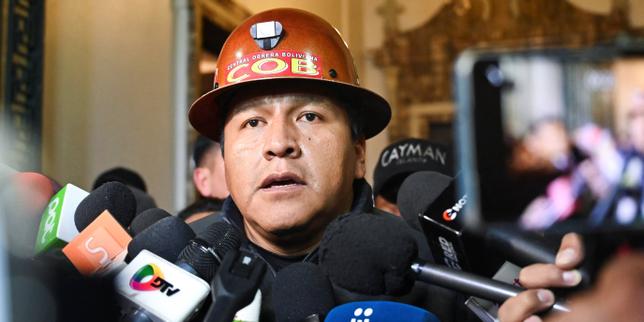
On Friday, inside the presidential palace, the pens finally met the paper. President Rodrigo Paz, whose center-right administration took the reins to dismantle twenty years of entrenched socialist governance, stood next to Mario Argollo, the executive secretary of the Bolivian Workers’ Confederation. They shook hands. They spoke of consensus. Argollo told reporters that a country had been waiting for "white smoke" to appear.
But out on the asphalt, away from the polished mahogany tables, the smoke is still black. And it is suffocating.
To understand how a nation of twelve million people fractures, you have to look past the macroeconomics. The international wire services will tell you the clinical details. They will report that Bolivia is enduring its worst economic crisis in forty years. They will cite a fiscal deficit hovering near 10% of GDP, an annual inflation rate that spiked to 25% before settling near 14%, and a catastrophic shortage of foreign currency and fuel.
Those numbers are real, but they are abstract. Consider instead a hypothetical but entirely representative woman named Elena. She runs a tiny grocery stall in El Alto. Elena does not think in terms of GDP. She thinks in terms of tomatoes and cooking oil. When the Central Obrera Boliviana called for an unlimited general strike, demanding a 20% increase in the minimum wage and the rollback of tax reforms targeting small merchants, Elena felt a familiar, ancient dread.
Then came the blockades.
Rocks. Tree trunks. Twisted scrap metal. The infrastructure of survival turned into a weapon of leverage. The major highways connecting the agricultural heartlands to the high-altitude cities became impassable walls. For nearly two weeks, the administrative capital was choked off.
The consequences of this paralysis were not distributed evenly. In the private markets of La Paz, the price of basic vegetables and meat doubled overnight. If you had money, you ate poorly. If you did not have money, you simply went hungry. The government tried to break the siege with an emergency airlift, flying in basic foodstuffs with logistical help from Argentina, but a few cargo planes cannot feed two million people stranded on the roof of the world.
The human cost quickly escalated from inconvenient to lethal. According to reports from the national ombudsman, at least fourteen people have died since the crisis began. These were not casualties of urban warfare or police gunfire. They were patients trapped in ambulances behind walls of boulders, unable to reach a specialist. They were aging truck drivers who suffered cardiac arrests while stranded for weeks on sun-baked highways, miles from the nearest vial of medicine.
When the stakes are that high, a political disagreement transforms into an existential battle. What began as a strike over wages and pension increases rapidly mutated into something far more volatile. The economic demands faded into the background. The chants echoing across the Altiplano became singular, blunt, and uncompromising: the president must resign.
President Paz, who assumed office promising a clean break from the populist eras of Evo Morales and Luis Arce, found himself trapped between economic reality and cultural resistance. He argued that raising wages by a fifth while the treasury was empty was a fantasy. "If you want to increase salaires," he remarked during a speech in Cochabamba, "start by creating jobs."
But you cannot reason with an empty stomach or an empty fuel tank.
The deal signed on Friday was billed as a triumph of diplomacy over brute force. President Paz insisted that dialogue must always be the first option, noting that the state should only reserve force for those who choose violence. On paper, the pressure measures are lifted nationwide. The major union infrastructure has agreed to a truce to allow the country to heal and rebuild.
But a signature in La Paz does not automatically clear a boulder in the lowlands.
The fracture lines run deeper than a single labor federation. In the Chapare region, the fierce stronghold of former President Evo Morales, the rural agricultural syndicates and coca growers look at the handshake between Argollo and President Paz and see only one thing: betrayal. Antonio Mallku, a prominent peasant leader, openly accused the union leadership of selling out the movement. For the indigenous communities who wear the iconic red ponchos and fly the multi-colored Wiphala banner as a passport through the barricades, the fight is far from over. The powerful Tupac Katari federation has already announced it will maintain its blockades until its own demands—including the release of jailed protestors—are met.
Hours after celebrating the "ray of hope" brought by the union agreement, President Paz was forced to declare a national state of emergency. The declaration opens the door for military deployment to forcibly clear the rural highways that the union could not convince its members to abandon.
The white smoke has risen, but the fire is still smoldering in the valleys. A nation cannot eat a signed treaty, and it cannot run its trucks on consensus. The barricades may shift, the soldiers may march, but until the deep, systemic rot of a forty-year economic crisis is answered, the peace achieved in the palace will remain as thin as the mountain air outside its doors.