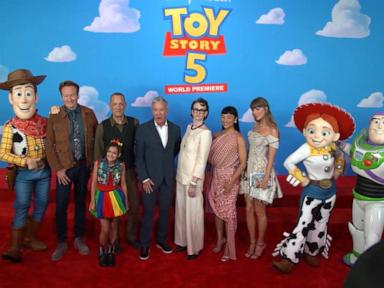
The initial wave of reactions for Toy Story 5 has officially broken online, and the verdict is uncharacteristically unanimous: Pixar has managed to pull off another emotional heist. Early screenings have left critics weeping in theater seats, declaring the film a masterful return to form that matches the heights of the original trilogy. By reframing the narrative around Jessie and introducing a direct, modern conflict between traditional toys and algorithmic tablet screen time, director Andrew Stanton has bypassed the fatigue that usually plagues a fifth installment.
Yet behind the glittering first reactions and the inevitable box office triumph lies a deeper, calculated narrative about creative survival. If you enjoyed this piece, you should read: this related article.
This film was not born solely out of a burning artistic need to see what happens to Buzz Lightyear next. It was forged in the fires of corporate necessity. Following a turbulent few years of shifting distribution strategies and uneven theatrical returns, Disney desperately needed its flagship franchise to anchor its theatrical prestige. Toy Story 5 is more than a movie; it is a meticulously engineered stabilization mechanism for the world's premier animation studio.
The Toys Versus the Screen
The plot of Toy Story 5 tackles an existential threat that every parent in the theater will instantly recognize. Bonnie, the child who inherited Andy’s beloved collection, has grown attached to an electronic tablet named Lilypad, voiced by Greta Lee. For another angle on this story, refer to the recent update from The Hollywood Reporter.
This setup shifts the franchise away from the existential dread of abandonment and toward a battle for a child's attention span. Early viewers have noted that the film avoids a simple, preachy stance on technology. Instead, it positions Lilypad as a tragic figure of modern childhood distraction—an algorithmic force that isolates children rather than fostering communal play.
- The Jessie Shift: Joan Cusack’s Cowgirl Jessie takes center stage, driving the emotional core of the film. Critics have widely praised this decision, noting that centering the narrative on her unresolved past and protective instincts breathes new life into the franchise.
- The B-Plot Relief: Tim Allen's Buzz Lightyear spearheads a comedic secondary storyline involving a plane crash and a colony of 100 stranded Buzz dolls, a sequence explicitly designed to break up the heavy emotional weight of the primary plot.
- The Woody Return: Despite his departure at the end of the fourth film, Tom Hanks’s Woody is pulled back into the fold, forcing a reunion that tests the boundaries of what a toy's duty actually means when the concept of play itself is dying.
This thematic framework is precisely why the film is striking a chord. It addresses a real-world cultural anxiety. The toys are no longer just fighting a tyrannical kid like Sid or a bitter hand-me-down like Lotso; they are fighting the modern dopamine loop.
The Corporate Blueprint Behind the Magic
To truly understand why Toy Story 5 exists, one must look at the financial chessboard of Walt Disney Studios. Original storytelling is a massive gamble in the current theatrical climate. When an original animated feature can cost upwards of $200 million to produce and another $100 million to market, a misfire can damage a studio's fiscal year.
Pixar Recent Box Office Trajectory (Historical Context)
┌───────────────────────────┬───────────────────────────┐
│ Film                      │ Global Box Office Gross   │
├───────────────────────────┼───────────────────────────┤
│ Toy Story 4 (2019)        │ $1.07 Billion             │
│ Lightyear (2022)          │ $226 Million              │
│ Inside Out 2 (2024)       │ $1.70 Billion             │
│ Toy Story 5 (2026 Est.)   │ $1.10 - $1.30 Billion     │
└───────────────────────────┴───────────────────────────┘
The data reveals a stark reality. Brand equity is the only true shield against theatrical apathy. Following the massive success of Inside Out 2, Disney management recognized that audiences are increasingly selective, choosing familiar worlds over unproven concepts. Toy Story 5 was greenlit not because the story of Toy Story 4 felt incomplete, but because the intellectual property carries a near-guaranteed floor of one billion dollars in global revenue.
This reliance on legacy franchises introduces a complex creative paradox. While legacy titles fund the studio's riskier, original ventures, they risk diluting the creative prestige that made Pixar famous in the first place. Andrew Stanton, a veteran of the studio's golden era, was brought back to direct precisely to ensure that this corporate mandates felt like genuine art.
Cultural Resonance Over Nostalgia Bait
The inclusion of Taylor Swift on the soundtrack with an original song titled "I Knew It, I Knew You" is a masterclass in modern event-movie marketing. It bridges generational gaps, drawing in younger audiences who may not have been alive when the first film premiered in 1995, while the core story retains the older demographic that grew up alongside Andy.
High-end animation journalism requires acknowledging the mechanics of these early reactions. Premiere audiences are inherently friendly, filled with superfans, industry insiders, and critics caught up in the immediate spectacle of a Hollywood event. The real test begins when general audiences buy tickets.
The early praise suggests that Pixar has cleared the highest hurdle: making a fifth movie feel justified. By grounding the conflict in the terrifying reality of tablet-addicted toddlers, Toy Story 5 positions itself as a necessary cultural artifact for the current moment, proving that sometimes, the old machinery still runs better than anything new.


