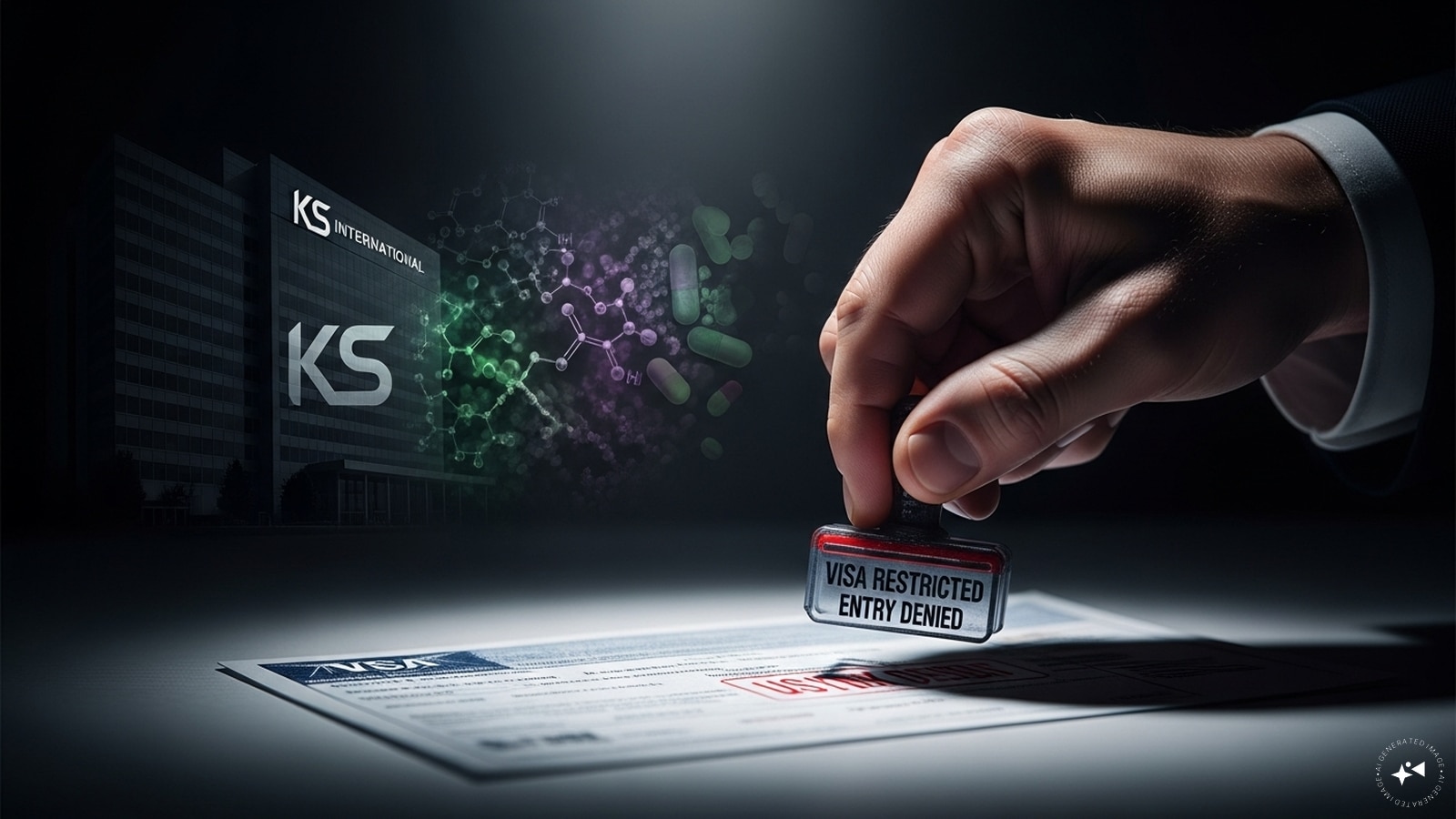
On May 12, 2026, the U.S. State Department deployed a rarely used diplomatic hammer. By imposing visa restrictions on the owner of Mumbai-based KS International Traders and 13 associated individuals, Washington has signaled that it is no longer content with just freezing bank accounts. This move bars a specific network of Indian nationals and their immediate family members from entering the United States, effectively branding them as persona non grata for their alleged role in fueling the American fentanyl epidemic.
The primary objective is clear. The U.S. government is targeting the "online pharmacy" infrastructure that allows synthetic opioids and counterfeit pills to bypass traditional border safeguards. While high-level chemical manufacturers often grab the headlines, the KS International case reveals the lethal efficiency of middle-tier distributors who master the art of small-parcel trafficking and mislabeled exports.
The Consular Weapon In The Drug War
For decades, the standard response to international drug trafficking involved the Treasury Department’s Office of Foreign Assets Control (OFAC). Sanctions were the primary tool. However, the shift toward visa revocations under Section 212(a)(2)(C) of the Immigration and Nationality Act represents a more personal form of deterrence.
It targets the lifestyle of the traffickers. Many of these mid-level executives view the U.S. not just as a market, but as a destination for their children’s education, personal vacations, and real estate investment. By revoking visas for the leadership of KS International and their families, the State Department is creating a social and personal cost that financial sanctions—often circumvented through shell companies and crypto-assets—cannot easily replicate.
Inside The KS International Network
The investigation into KS International, also known as KS Pharmacy, did not happen in a vacuum. It follows a multi-year trail of digital breadcrumbs.
- The Indictment Trail: Key figures like Sayyed and Shaikh were already under the federal microscope. Shaikh, the proprietor of the Mumbai operation, was indicted in late 2024 by a grand jury in the Southern District of New York.
- The Digital Storefront: Despite the legal heat, the network continued to operate. KS International allegedly marketed counterfeit pills laced with fentanyl and methamphetamine directly to U.S. consumers through sophisticated online storefronts.
- The Logistics Loophole: The network exploited the "small parcel" loophole, shipping what appeared to be legitimate medication but were actually high-potency synthetics.
This isn't just about one pharmacy. It is an indictment of a broader system where legitimate chemical manufacturing hubs in India are being co-opted by illicit actors.
Beyond The Border The Precursor Problem
While KS International focused on the finished product, the broader geopolitical tension lies in the precursors. India’s massive pharmaceutical and chemical sectors are both its greatest economic asset and its most vulnerable flank.
Just last year, the Department of Justice indicted Vasudha Pharma Chem Limited (VPC) and its top executives for allegedly conspiring to ship four metric tons of N-BOC-4-Piperidone. This specific chemical is a primary building block for fentanyl. To put the scale in perspective, one kilogram of this precursor can be synthesized into nearly 1.83 kilograms of fentanyl—enough for roughly 900,000 lethal doses.
The strategy is evolving. Mexican cartels, once primarily dependent on Chinese chemical suppliers, have increasingly diversified their supply chains into India. Indian firms like SR Chemicals and Agrat Chemicals have recently faced local crackdowns for allegedly forging end-user certificates to facilitate these exports to Mexico and Guatemala. The U.S. visa ban on the KS International 14 is a tactical warning to these broader networks: the "blind eye" era is over.
The Evolving Indo-US Enforcement Friction
The diplomatic dance here is delicate. Washington needs New Delhi’s cooperation to police the thousands of small-scale chemical exporters in Gujarat and Maharashtra. At the same time, the U.S. is increasing its unilateral pressure.
There is a growing realization that "cooperation" often hits a wall when it meets the sheer volume of Indian exports. The Gujarat Anti-Terrorism Squad (ATS) has made significant arrests, but the U.S. believes more aggressive domestic regulation of List I chemicals is required. The decision to name 14 individuals in a visa ban serves as a public nudge to Indian regulators to tighten their oversight of "online pharmacies" that appear to be nothing more than digital fronts for cartels.
What This Means For The Life Sciences Industry
Legitimate businesses are now caught in the crossfire of heightened scrutiny. Multinational life-sciences companies must recognize that the "Know Your Customer" (KYC) standard has been raised.
- Supply Chain Audits: Any association with third-party logistics providers that have moved shipments for sanctioned entities like KS International can trigger secondary inspections.
- Port of Entry Delays: U.S. Customs and Border Protection (CBP) is now applying "heightened scrutiny" to small-parcel pharmaceutical shipments originating from specific Indian hubs.
- Reputational Contagion: As seen with the family-member visa bans, the U.S. is willing to use guilt by association to isolate those linked to the synthetic drug trade.
The KS International action isn't a "one-off" event. It is part of a permanent shift in how the U.S. intends to use its borders as a defensive perimeter against the synthetic opioid crisis. For those in the crosshairs, the loss of access to the United States may prove to be a more effective deterrent than any fine ever could.
The message is blunt. If you facilitate the flow of fentanyl into American streets, your world—and the world of your family—just got a lot smaller. Ensure your compliance teams are looking at your vendor lists with the same intensity that federal agents are looking at those visa applications.