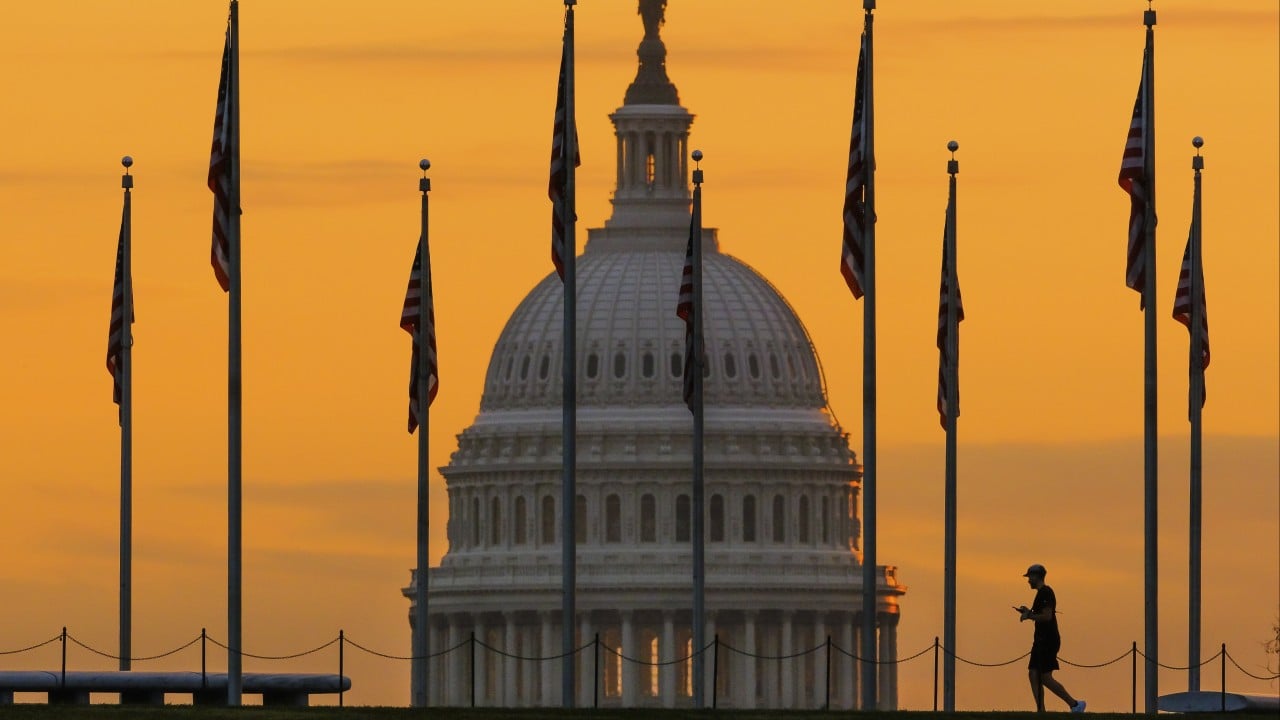
The rain in Washington smells different when an election approaches. It carries the sharp, metallic scent of ozone and wet pavement, a physical manifestation of the anxiety gripping the city.
Inside a nondescript office building three blocks from the Capitol, a career diplomat named Arthur adjusts his glasses. His desk is a sea of internal memos, polling data, and translated transcripts from Beijing. For thirty years, Arthur has watched the relationship between the United States and China tilt, sway, and violently lurch. He knows that what happens in small, crowded town halls in Ohio or Arizona this November will fundamentally reshape the reality of a factory worker in Shenzhen, and vice versa.
We often view geopolitics as a clash of titans. We picture giant chessboards, abstract flags, and distant leaders signing treaties in gilded rooms. This perspective is entirely wrong.
International relations are not driven by grand, predictable strategies. They are driven by the volatile, deeply human currents of domestic politics. Right now, as America barrels toward its midterm elections, those currents are swirling into a perfect storm. A veteran diplomat recently warned that these midterms are about to inject a dose of "renewed volatility" into Washington-Beijing relations.
That is diplomatic speak for a terrifying reality. The bedrock of global stability is shaking, and the tremors are originating from local American ballot boxes.
The Microphone and the Mirror
To understand why a local congressional race matters to a superpower across the ocean, you have to understand the theater of the campaign trail.
Imagine a candidate standing on a makeshift stage in a rust-belt town. The crowd is angry. Inflation has squeezed their paychecks. Factories that once sustained their grandparents are now hollow shells of corrugated iron. The candidate needs a villain. It cannot be an abstract economic force. It needs a face.
China is the perfect foil.
In modern American politics, bashing Beijing is one of the few truly bipartisan sports. Democrats accuse China of labor violations and environmental degradation. Republicans hammer the nation on trade imbalances and security threats. The rhetoric escalates in a predictable, dangerous spiral. Each side tries to out-hawk the other to prove they are tough enough to protect American interests.
But words spoken on a campaign trail do not vanish into the ether. They cross the ocean instantly.
In Beijing, analysts sit in quiet rooms, meticulously translating every speech, every debate performance, and every campaign ad. They do not always distinguish between campaign theater and actual policy intent. What an American politician sees as a necessary soundbite to win over undecided voters in Pennsylvania, a Chinese strategist sees as a declaration of systemic hostility.
Consider the psychological toll of this dynamic. Trust is a fragile commodity in diplomacy, built slowly over years of quiet dinners and painful compromises. It can be shattered by a single thirty-second television commercial. When American candidates compete to see who can promise the harshest sanctions or the stiffest tariffs, they lock the future administration into a corner.
Once elected, those politicians must deliver on their rhetoric, or risk looking weak. The theater becomes reality.
The Ghost in the Machine
Let us look at a hypothetical scenario to see how this plays out in the real world.
Meet Lin. She is twenty-four, living in a cramped apartment in Shanghai, and working for a tech startup that designs specialized microchips. She does not care about American political parties. She cares about her rent, her aging parents, and whether her company will survive the next quarter.
One morning, Lin arrives at work to find the office in a panic. The U.S. Congress, responding to pressure from voters terrified of losing a technological edge, has just passed a sweeping, bipartisan bill restricting the export of critical software components to Chinese firms. The bill was pushed through by lawmakers desperate to show strength before the midterms.
Suddenly, Lin’s company cannot access the tools it needs. Projects are frozen. Within three months, the startup collapses. Lin is unemployed, navigating a bleak job market, her resentment toward America hardening from an abstract concept into a deeply personal grievance.
Multiply Lin by millions. This is the human cost of geopolitical volatility.
The economic ties between the US and China are not just lines on a spreadsheet. They are a massive, intricate web of human dependency. When a Walmart shopper in Missouri buys a bicycle, or an apple farmer in Washington state ships a crate of fruit to Guangzhou, they are participating in this web.
When domestic political pressure forces Washington to take a harder line, Beijing does not just sit back. They retaliate. They target American agricultural exports, hitting the very heartland voters who pushed for a tough stance in the first place.
It is an economic loop where everyone loses, driven entirely by the calendar of the American electoral cycle.
The Danger of the Low-Hanging Fruit
Why is this happening now? The answer lies in the unique structure of midterms.
Presidential elections are massive, sprawling debates about the grand vision for the country. Midterms are different. They are hyper-localized, vicious fights for survival. Turnout is lower. The voters who show up are often the most passionate, the most partisan, and the most easily swayed by existential fears.
For a congressman fighting to keep his seat, foreign policy is the ultimate low-hanging fruit.
Passing complex domestic legislation—like healthcare reform or infrastructure spending—is agonizingly difficult. It requires compromise, endless committee meetings, and usually angers half the constituency. But condemning a foreign adversary? That is easy. It costs nothing in the short term, requires no internal compromise, and rallies the base instantly.
This creates what diplomats call a structural instability.
Even if the current administration wants to maintain a stable, predictable relationship with China to manage global issues like climate change or nuclear proliferation, their hands are tied by Capitol Hill. A wave of newly elected, fiercely ideological lawmakers can upend months of delicate diplomatic maneuvering overnight. They can launch investigations, summon officials to hostile hearings, and introduce provocative legislation regarding sensitive territorial disputes like Taiwan.
The Chinese leadership watches this and concludes that the American system is fundamentally unreliable. How can you negotiate a long-term agreement with a government that might completely change its posture every two years?
They stop trying to build bridges. Instead, they dig trenches.
The Concrete Walls of Suspicion
The tragedy of this volatility is that it becomes a self-fulfilling prophecy.
When America acts out of domestic political fear, China responds out of defensive nationalism. Beijing accelerates its push for economic self-reliance, cutting off American companies from its massive market. It increases its military spending, patrolling the South China Sea with greater aggression.
Back in Washington, politicians point to China’s rising aggression as proof that their original, harsh rhetoric was justified.
Look, they say. We told you they were a threat.
The cycle accelerates. The space for nuance, for diplomacy, for quiet de-escalation completely evaporates. Anyone who suggests a more measured approach is instantly branded as soft, a political kiss of death in the current environment.
Arthur, the veteran diplomat, knows this cycle all too well. He has seen how easily a misunderstanding during an election year can spiral into a crisis. In normal times, a minor naval incident or a trade dispute can be resolved through quiet, backdoor channels. But during an election year, when every action is magnified by the lens of cable news and social media campaign accounts, quiet diplomacy becomes impossible. Everything must be loud. Everything must be a victory.
We are entering a phase where the margin for error is razor-thin. The issues facing these two nations are monumental: the future of global technology standards, the stability of global supply chains, and the avoidance of a catastrophic military conflict in the Pacific. These are deeply complex challenges that require steady hands, long-term vision, and immense patience.
Instead, they are being filtered through the chaotic, short-term incentives of American campaign advertisements.
The rain continues to fall outside Arthur's window, washing over the monuments of a city entirely consumed by the upcoming vote. The political analysts on television are talking about control of the Senate, about suburban voters, about margins of victory.
But across the ocean, in manufacturing hubs, in tech incubators, and in naval command centers, people are watching those same screens, waiting to see if their world is about to be upended by a handful of votes in a country they have never seen.
The ballot box is no longer just a tool for domestic governance. It is a stone thrown into a global pond, and the ripples are turning into waves.