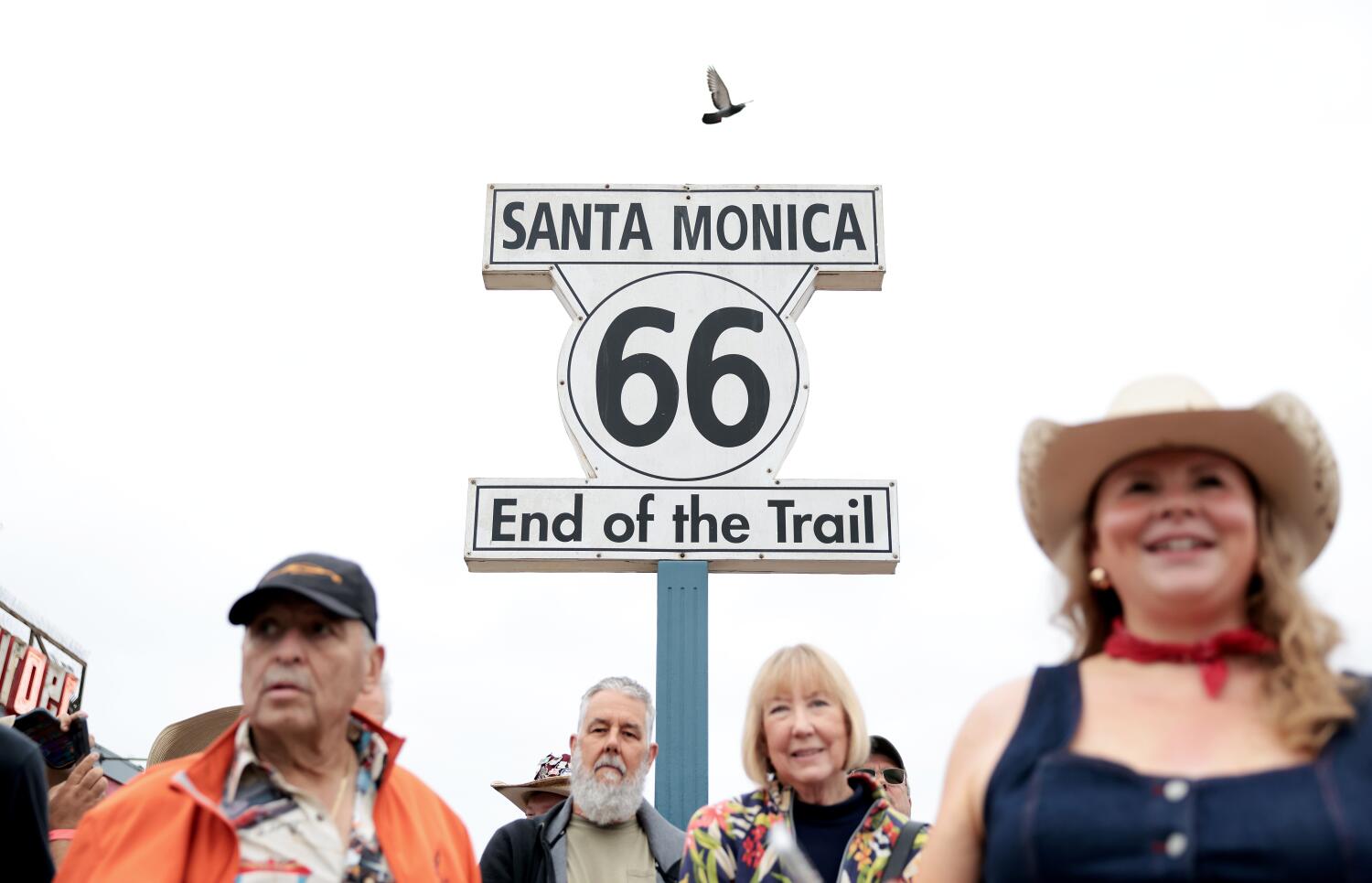
The "Mother Road" is a corpse on life support.
As Route 66 approaches its centennial, the travel industry is gearing up for a predictable, sugary-sweet celebration of Americana. You’ve seen the script: neon signs, rusted-out Chevys, and the romanticized grit of the open road. It’s a sanitized version of history served with a side of lukewarm diner coffee.
The consensus says Route 66 is the soul of America. I say it’s a distraction.
We are obsessed with a 2,400-mile museum of decline. While we pour tourism dollars into preserving the aesthetics of the 1950s, we ignore the fact that the actual spirit of Route 66—the drive for progress, mobility, and the future—died the moment the Interstate Highway System bypassed it. If you want to honor the legacy of American travel, stop looking at the cracked pavement of the past and start looking at the logistics of the present.
The Myth of the "Authentic" Road Trip
Modern travelers are told that driving Route 66 is a way to find the "real" America.
It isn't. It’s a curated theme park of poverty and kitsch.
When you drive through the ghost towns of western Oklahoma or the Mojave, you aren't seeing history. You are seeing the remains of an economic model that failed sixty years ago. The "mom and pop" businesses the guidebooks rave about are often just subsidized shrines, kept barely afloat by European tourists looking for a Hollywood version of the Wild West.
There is a fundamental dishonesty in how we market this road. We sell the "freedom of the highway" while ignoring that the road was decommissioned in 1985 because it was objectively dangerous, inefficient, and obsolete. The original Route 66 was a narrow, high-crash-rate ribbon of asphalt. Today’s version is a disjointed patchwork of frontage roads and business loops.
If you want "authentic" America, go to a bustling logistics hub in Joliet or a sprawling server farm in the desert. That is where the pulse of the country lives now. A rusted gas pump in Seligman is just a prop.
Nostalgia is a Poverty Trap
We need to talk about the economic ethics of Route 66 tourism.
Promoting these decaying corridors as "must-see" destinations often traps local communities in a cycle of low-wage service work. Instead of diversifying their economies or investing in modern infrastructure, these towns are encouraged to lean harder into 1950s cosplay.
I’ve seen towns spend their last remaining grants on painting murals of James Dean rather than fixing their water lines. It’s a hollow strategy. Tourism is a fickle master, especially when it’s based entirely on looking backward. When the centennial hype dies down in 2027, these towns will still be hours away from the nearest viable hospital or tech hub.
We are fetishizing the struggle of the Dust Bowl era because it looks good on an Instagram feed. The "Grapes of Wrath" wasn't a travel brochure; it was a tragedy. Why are we so desperate to relive it through the window of a rented Mustang?
The Environmental Hypocrisy of the "Classic" Drive
The industry ignores the massive carbon footprint of the "slow travel" movement on Route 66.
The romantic ideal involves driving an inefficient internal combustion engine across eight states, stopping every fifty miles to buy plastic trinkets. If we actually cared about the future of the American landscape, we would be discussing the electrification of the I-40 corridor or the implementation of high-speed rail that follows the old Santa Fe line.
Instead, the centennial discourse is focused on preserving vintage neon signs. Neon is cool. It’s also an energy hog and a relic of a time when we didn’t understand the consequences of our consumption.
If we want to be contrarian, let’s suggest something radical: Let the road return to the earth. Stop paving the "Original 1926 Alignment" just so a few dozen enthusiasts can drive over it once a year. There is beauty in decay, but there is also a point where preservation becomes a form of tax-funded hoarding.
The Infrastructure Lie
People ask: "How can I see the real Route 66?"
The honest answer? You can’t.
Roughly 80% of the original road is either gone, under a slab of concrete interstate, or private property where you’ll be greeted by a "No Trespassing" sign and a shotgun. The "Route 66" you see on Google Maps is a marketing construct.
We’ve built a shadow infrastructure to support the myth. We have created a simulation of a road trip. When you follow the brown "Historic Route 66" signs, you aren't following the path of the Joads; you are following a trail designed by state tourism boards to keep you away from the more efficient—and often more interesting—modern routes.
What You Should Do Instead
Stop trying to find "The Heartland" in a gift shop in Amarillo.
If you want the true experience of American scale and ambition, drive the industrial corridors. Watch how the country actually moves. Go to the Port of Long Beach. Drive the backroads of the Permian Basin where the energy that powers your life is actually pulled from the ground. Visit the massive wind farms of Kansas that dwarf any "World’s Largest" statue on the old road.
These places aren't "pretty" in the traditional sense. They don't have neon signs or chrome-plated diners. But they are real. They are vibrant. They are the 2026 version of what Route 66 was in 1926: the cutting edge of American movement.
The obsession with Route 66 is a symptom of a culture that is afraid of the future. We look back because we don't know where we are going. We celebrate the centennial of a road because we haven't built anything as iconic in the last fifty years.
Instead of a party for a dead highway, we should be having a funeral. Acknowledge what it was: a vital artery for a growing nation. Then, admit what it is: a burden of nostalgia that prevents us from building the next great American transit project.
Burn the maps. Delete the playlists. If you want to see America, look out the window at what is actually there, not what the brochures tell you used to be there. The road ended a long time ago. It's time we caught up.