The scent of roasted goose and aged soy sauce doesn’t just drift through the air in Hong Kong. It clings. It is a thick, humid invitation that has defined the city’s streets for decades. But lately, the rhythm of the chopping block has sounded different. The frantic, metallic thwack-thwack-thwack of the cleaver—once the heartbeat of a relentless tourist economy—has been searching for a new tempo.
For the restaurateurs of the city, the upcoming Golden Week isn’t just a date on a calendar. It is a referendum on survival.
Last year, the narrative was one of recovery. This year, it is about evolution. The "Standard Tourist" is a dying breed. The visitor who arrives by the busload, follows a flag to a mid-range buffet, and snaps a photo of a skyscraper before disappearing is no longer the engine of the economy. Instead, the city is looking toward the horizon—literally.
The View from the Deck
Consider a man we will call Mr. Lam. He has spent thirty years perfecting a secret broth in a narrow kitchen in Sai Kung. For years, his primary concern was the foot traffic from local weekenders. Today, he looks at the pier with a different kind of intensity. He isn’t waiting for a bus. He is waiting for a yacht.
The rise of the "Yacht Tourist" is not a metaphor for wealth; it is a literal shift in how capital enters the city’s waters. These are travelers who shun the claustrophobia of the central districts. They want the breeze of the South China Sea. They want the rugged coastline of the New Territories. More importantly, they want the authenticity that comes with a high price tag.
When a luxury vessel drops anchor near a seafood hub, the economic ripple effect is immediate. A single party from a private charter can spend more in one sitting than twenty budget travelers combined. They aren't looking for a discount. They are looking for the story of the fish, the vintage of the wine, and the soul of the chef. For owners like Lam, this is a lifeline. But it’s a demanding one.
The stakes are invisible but heavy. If the service falters, if the "vibe" feels manufactured, that wealth simply sails to the next cove. The city’s eateries are no longer just competing with each other; they are competing with the curated silence of a private deck.
The Quiet Ascent of the Trail
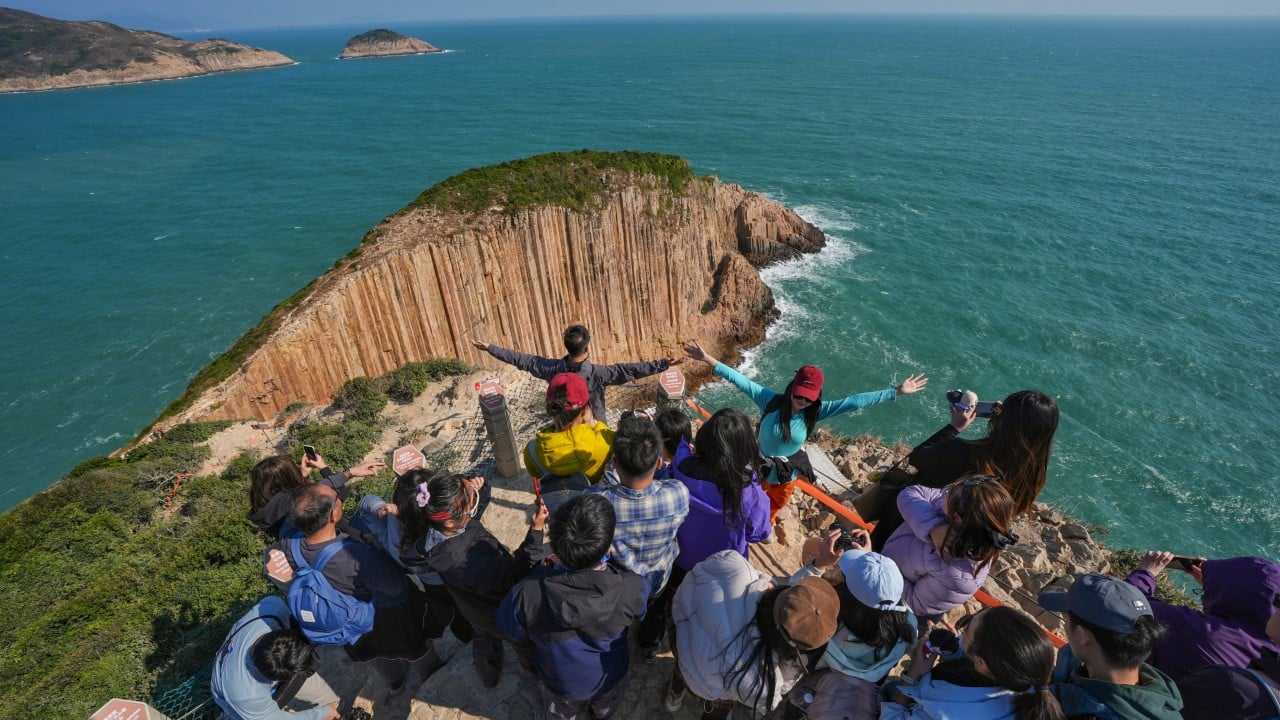
While the wealthy sail the coasts, another demographic is conquering the peaks. They arrive with scuffed boots and high-end cameras. They are the "Hikers," a group that has turned Hong Kong’s rugged topography into a primary attraction.
This isn't about a casual stroll. These are travelers from the mainland and beyond who have realized that Hong Kong is 40% country park. They are trading the neon of Tsim Sha Tsui for the Dragon’s Back and the grueling stairs of Lantau Peak.
The shift is seismic for the restaurant industry. Traditionally, the "Golden Week" boom stayed in the malls. Now, the money is moving to the edges. Small village cafes that once served only locals are finding themselves at the end of a digital breadcrumb trail. A viral post on Xiaohongshu can turn a sleepy tofu skin stall into a pilgrimage site overnight.
However, this influx brings a unique friction. A hiker spending five hours on a trail wants a specific kind of reward. They want the "hidden gem." They want the experience that feels unmediated by a travel agency. This forces restaurateurs to walk a precarious tightrope: how do you scale up for a massive holiday crowd without losing the "hole-in-the-wall" charm that brought the crowd there in the first place?
The Mathematics of Optimism
Optimism in the culinary world is rarely a feeling. It is a calculation.
Industry leaders are projecting a significant uptick in arrivals—potentially exceeding 1.2 million visitors over the break. But the numbers hide a complex truth. The "spending per capita" is the ghost that haunts every kitchen. In previous years, the sheer volume of tourists compensated for lower individual spending. Now, with the mainland’s own economic shifts and a stronger Hong Kong dollar, the volume is high, but the wallets are tighter.
This is why the yacht and the hiking boot are so vital. They represent "quality growth."
Restaurants are pivoting. You see it in the menus. There is less emphasis on the "set meal" and more on "curated experiences." There is a move toward pre-booked, high-value dining. If you can’t get them to stay for three days, you make the three hours they spend at your table unforgettable.
But there is a shadow here, too. The labor shortage in Hong Kong remains a bruising reality. You can have a thousand hungry hikers at the door, but if you only have two servers and one tired chef, optimism turns into a liability. The industry is currently operating on a knife’s edge, balancing the desire for a "Golden" windfall against the physical limits of a depleted workforce.
The Taste of the Future
I sat recently in a small eatery in Central, watching the rain blur the lights of the mid-levels. The owner, a woman who has survived SARS, the protests, and the pandemic, was polishing a glass with a rhythmic, almost meditative focus.
"The tourists come back," she said, not looking up. "But they don't come back to the same city."
She’s right. The Hong Kong that lived as a cheap shopping mall for the world is gone. The city that replaces it is more fragmented, more niche, and infinitely more interesting. It is a city where a Michelin-starred meal can be found in a shopping center, and the best bowl of noodles is found at the end of a six-mile ridge hike.
The optimism for this Golden Week isn't based on a return to the "good old days." It is based on the realization that the city’s value has changed. People are no longer coming to Hong Kong to buy things they can get at home for less. They are coming for the friction. They are coming for the chaos of the wet market contrasted with the serenity of a yacht in Tai Long Wan.
Beyond the Golden Hour
As the holiday approaches, the prep work begins. Extra crates of bok choy are stacked in alleys. Champagne is moved to the front of the coolers. Staffing schedules are drawn up like battle plans.
The invisible stakes are the reputations of thousands of small businesses. For a family-run restaurant in North Point, a successful Golden Week means the difference between upgrading their equipment or falling behind on rent. For the city, it means proving that the "Pearl of the Orient" hasn't lost its luster, even if the light hitting it is coming from a different angle.
We often talk about "tourism" as a monolith—a wave of people that washes over a city and leaves money behind. But tourism is a million individual choices. It is the choice to take a boat. The choice to climb a mountain. The choice to sit in a plastic chair on a crowded sidewalk and eat something that looks terrifying and tastes like heaven.
The eateries of Hong Kong are ready. They have sharpened their knives. They have scrubbed their floors. They are waiting for the hikers to descend from the green peaks and the yachts to glide into the blue harbors.
The cleaver hits the board. Thwack. The city is still here. It is still hungry.
The light over the harbor begins to purple as the first of the holiday crowds filter through the gates. In the kitchens, the steam rises, thick and fragrant, obscuring the faces of the cooks but carrying the unmistakable scent of a city that refuses to be quiet.
The water in the harbor is never still. It moves with the tide, reflecting the neon and the stars, carrying the weight of the ships and the dreams of the people on the shore. This week, it carries the hope of a golden return. But even if the gold is a little thinner than it used to be, the metal beneath is still iron.
A waiter sets a steaming plate of ginger-scallion lobster on a table. The customers, wind-burned from a day on the water, lean in. They don't look at their phones. They don't look at the view. They look at the food.
That is the win. That is the only thing that has ever mattered.