The Media Needs a Monster, and You Are Buying It
Every summer follows the exact same script. A swimmer gets a scrape, a nip, or a minor laceration in the Atlantic, and the media machine immediately spins up the jaws theme. Headline writers start churning out terms like "suspected shark attack" with zero marine biological context.
Let's strip away the panic and look at the actual mechanics of what happens in the waters off New York beaches.
Calling a minor encounter a "shark attack" is the media equivalent of calling a stray dog nipping at your ankle a "wolf mauling." It is sensationalist, scientifically inaccurate, and betrays a fundamental ignorance of how local marine ecosystems function. Marine biologists consistently point out that the vast majority of these incidents are cases of mistaken identity in low-visibility water. The sharks native to these coastlines—primarily sandbar sharks, sand tigers, and juvenile threshers—are not hunting humans. They are hunting menhaden, commonly known as bunker fish.
When a human swims through a dense school of baitfish in murky water, a juvenile shark striking at a fish can accidentally clip a human foot or hand. It is a hit-and-run mistake. The shark realizes its error instantly and swims away. To frame this as an "attack" implies intent, predation, and danger that simply does not exist.
The Numbers Do Not Lie, But Headings Do
The International Shark Attack File (ISAF), housed at the University of Florida, remains the gold standard for tracking these encounters. Year after year, the data shows that unprovoked shark bites are extraordinarily rare events. You are statistically more likely to be struck by lightning, injured by a falling coconut, or harmed by a malfunctioning toaster than you are to be bitten by a shark.
Yet, when a New York beach experiences a single incident, local officials rush to deploy drones, scramble lifeguards, and temporarily close shorelines. This response does not protect the public; it creates an illusion of active warfare against a marine threat. It validates the flawed premise that the ocean is a swimming pool that can be completely sanitized for human comfort.
Imagine a scenario where thousands of people walked through a dense forest during the peak of a bear foraging season, wearing suits made of berries. If a bear accidentally bumped into someone while grabbing a branch, we would not declare the forest an active combat zone. Yet, we treat the ocean with a bizarre sense of entitlement.
The Real Danger on the Coast
If you want to talk about real risk at New York beaches, stop looking at the fins. Look at the currents.
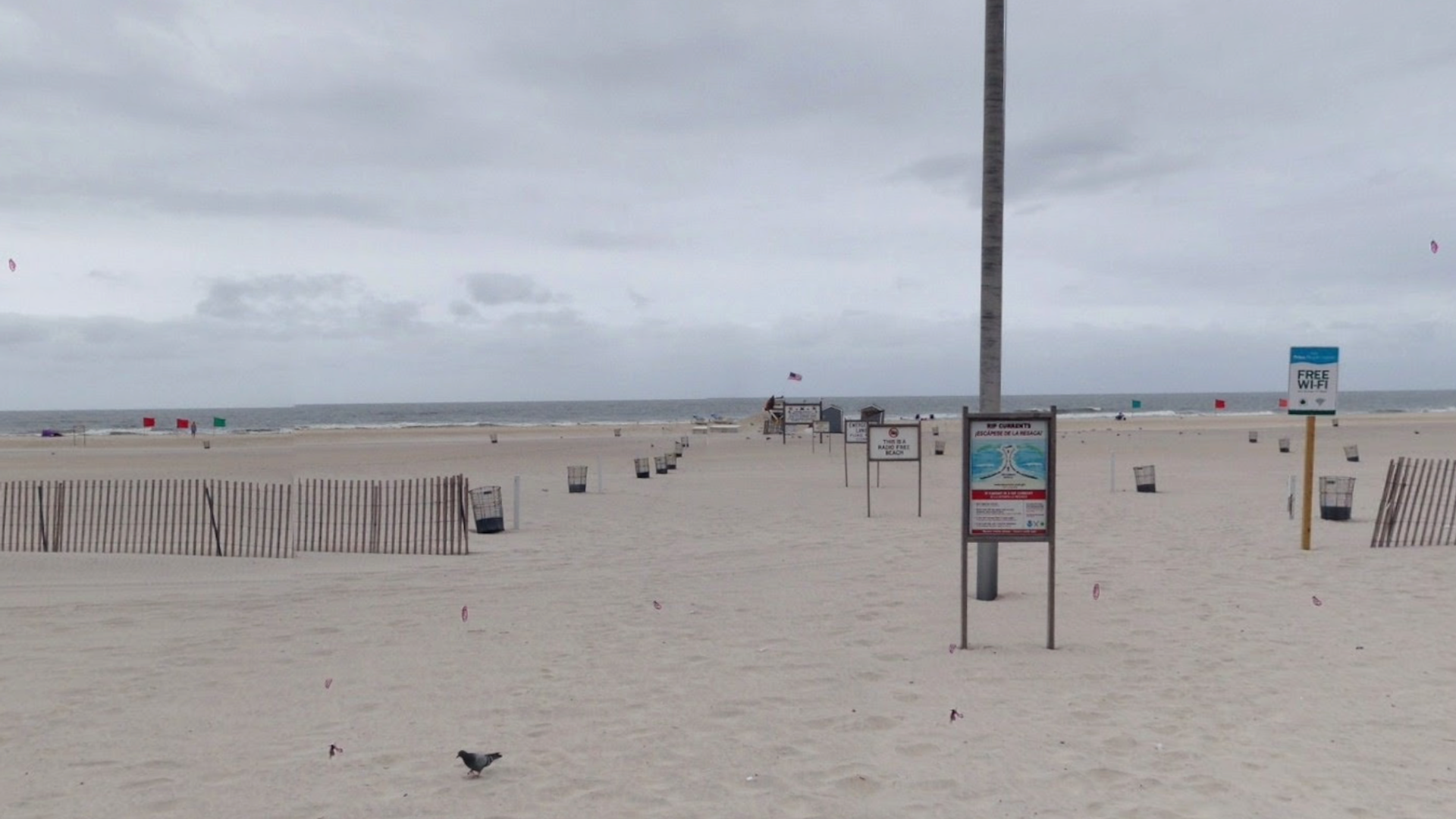
Rip currents are the true, silent killers of the coastline. According to the National Weather Service, rip currents pull hundreds of swimmers out to sea every year, resulting in dozens of fatalities across the region. A rip current will not get you featured on a cable news segment, but it will absolutely end your life if you do not know how to swim parallel to the shore to escape it.
The fixation on sharks draws vital public safety attention away from real, systemic hazards:
- Rip currents and sudden drop-offs.
- Shorebreak waves that cause spinal injuries.
- Severe dehydration and heat stroke on the sand.
- Water contamination after heavy rainfall.
We waste public resources flying drones over the surf to spot shadows when we should be investing in better public swimming education and rip current awareness.
Changing the Premise
The question people always ask is: "How do I avoid a shark attack at the beach?"
That is the wrong question. The right question is: "How do I respect a functioning marine ecosystem while sharing it?"
If you want to minimize the already microscopic risk of an encounter, the rules are simple and logical. Do not swim at dawn or dusk when baitfish are most active. Do not swim near schools of jumping fish or diving seabirds. Do not swim near fishing piers where bait is thrown into the water.
Stop expecting the ocean to be a sterile theme park. When you step into the surf, you are entering a wild environment. The presence of marine predators is not a sign of a broken beach; it is a sign of a healthy, recovering ecosystem. The return of cleaner waters and strict regulations on baitfish harvesting mean the ocean is working exactly the way nature intended.
Accept the wildness of the water, turn off the cable news alerts, and respect the boundary between human recreation and natural habitat. The ocean does not owe you absolute safety, but it does owe you the truth.