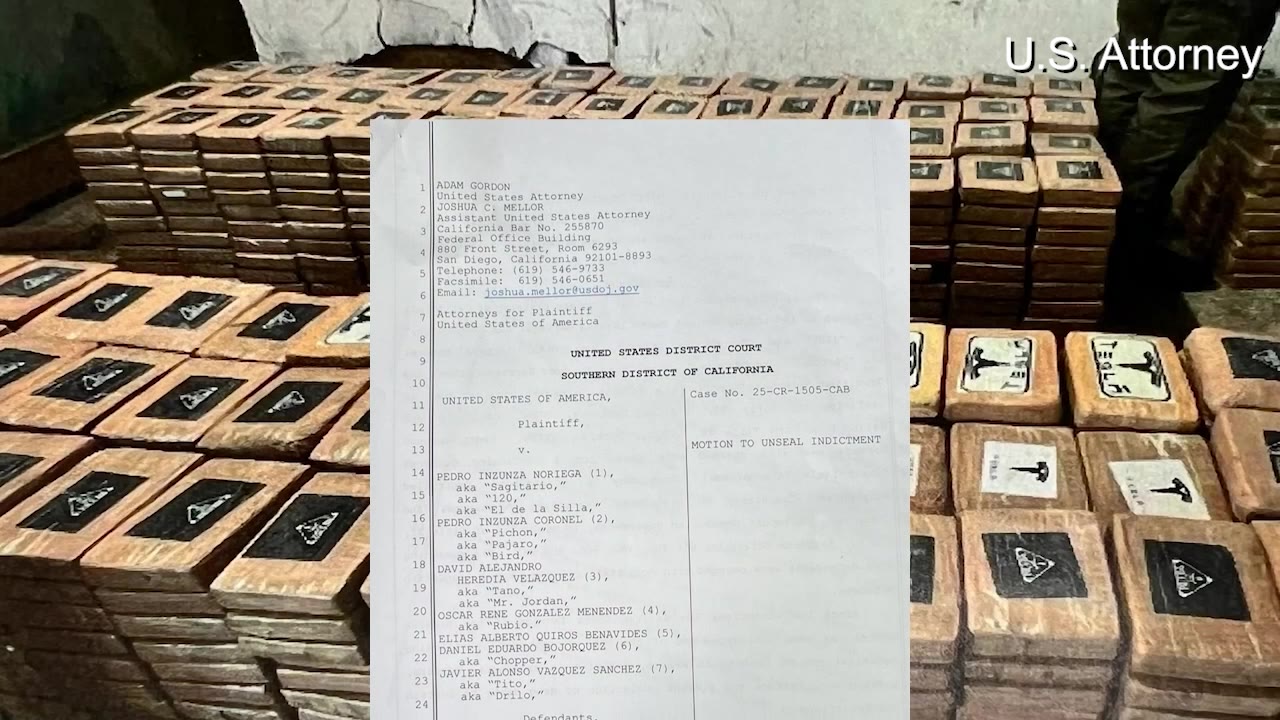
The United States Department of Justice just fired a shot directly into the heart of the Mexican political establishment. On Wednesday, federal prosecutors in the Southern District of New York unsealed a staggering indictment against Rubén Rocha Moya, the sitting governor of Sinaloa. This isn't just another drug case. It is a formal accusation that a high-ranking Mexican official didn't just look the other way, but actively conspired with the Sinaloa Cartel to turn a sovereign state into a logistics hub for fentanyl and cocaine.
The charges are a death knell for the "hugs not bullets" philosophy that has defined Mexican security for years. For Rocha Moya, a man who built his career as a leftist academic and rector, the fall is steep. Washington is no longer content with catching the men in the mountains wearing tactical gear. They are coming for the men in the suits who sign the permits and control the police.
The Architecture of Betrayal
The indictment alleges that Rocha Moya’s 2021 election victory was bought with the currency of terror. According to the DEA, the "Chapitos"—the faction of the Sinaloa Cartel led by the sons of Joaquín "El Chapo" Guzmán—systematically kidnapped and intimidated Rocha’s political rivals to ensure his path to the governor's palace was clear. In the transactional world of Culiacán, favors of this magnitude are never free.
What followed was a wholesale handover of state authority. Prosecutors claim Rocha Moya allowed the cartel to handpick local police commanders and state officials. This created a protective umbrella over a narco-terrorist organization, allowing it to move tons of synthetic drugs across the border while the very people sworn to stop them were receiving monthly stipends. One deputy attorney general, Dámaso Castro Saavedra, allegedly pocketed $11,000 a month just to tip off the cartel about joint U.S.-Mexico operations.
The Alibi that Dissolved
Suspicions surrounding Rocha Moya aren't new, but they crystallized on July 25, 2024. That was the day Ismael "El Mayo" Zambada and Joaquín Guzmán López landed in Texas in a U.S. federal trap. Zambada later released a letter through his attorneys claiming he was lured to a meeting under the guise of mediating a political dispute between Rocha Moya and Héctor Melesio Cuén, an opposition leader. Zambada says he was kidnapped at that meeting. Cuén was murdered that same night.
Rocha Moya’s defense was a masterclass in political theater. He claimed he was on a family vacation in Los Angeles at the time, even producing flight logs to prove he landed in California hours before the ambush. But the U.S. indictment treats these "coincidences" with extreme skepticism. The Department of Justice alleges the governor's office was deeply enmeshed in the cartel's internal wars, using state resources to facilitate the movements of one faction over another.
A Designated Terrorist Threat
The legal landscape changed significantly in 2025 when the U.S. government officially designated the Sinaloa Cartel as a foreign terrorist organization. This move wasn't just symbolic. It unlocked a different tier of surveillance, funding, and prosecutorial aggressive tactics. By charging Rocha Moya with possession of machine guns and destructive devices alongside narcotics conspiracy, the U.S. is signaling that it views corrupt officials not as mere bribees, but as active combatants in a terrorist enterprise.
The mandatory minimum sentence for these charges is 40 years. For a 76-year-old politician, that is a life sentence.
The Extradition Standoff
The diplomatic fallout is already fracturing the relationship between Washington and Mexico City. President Claudia Sheinbaum’s administration is caught in a vice. Domestically, she has attempted a "clean house" strategy, arresting several Morena party members involved in local corruption. But the U.S. demand for the extradition of a sitting governor is a direct challenge to Mexican sovereignty that no president can easily ignore.
Mexico’s Secretariat of Foreign Affairs (SRE) has already signaled resistance, claiming the U.S. documents lack sufficient proof. This is a familiar script. In 2020, the arrest of General Salvador Cienfuegos led to a total breakdown in security cooperation until the U.S. was forced to return him. This time, however, the U.S. seems less inclined to blink. The fentanyl crisis has become a central pillar of American domestic policy, and the patience for "sovereignty" as a shield for cartel collaboration has evaporated.
The Price of Peace in Sinaloa
While the lawyers argue in New York and Mexico City, the reality on the ground in Culiacán is one of braced anticipation. When the state and the cartel are indistinguishable, the removal of the political head creates a vacuum. If Rocha Moya is forced out or extradited, the delicate balance between the Chapitos and the Zambada loyalists—already frayed by the events of 2024—could explode into a full-scale civil war.
The indictment of Rubén Rocha Moya proves that the border is no longer a barrier to justice, but the real test is whether his removal changes the business model. For decades, the Sinaloa Cartel has functioned because it was a partnership between the underworld and the upperworld. Washington has finally decided to prosecute both halves of the equation.
The era of the untouchable governor is over.