For decades, the view from the crowded sidewalks of Tsim Sha Tsui has been defined by neon, concrete, and the humid haze hanging over Victoria Harbour. If you look up, your gaze hits the underbelly of an apartment block or the glowing facade of a shopping mall. The stars rarely stand a chance against the city’s sheer, electric brilliance. Space, for someone navigating the dense labyrinth of Hong Kong, has always felt like an abstraction. It belonged to Hollywood blockbusters, faraway launchpads in the Gobi Desert, or Cape Canaveral. It belonged to someone else.
That changes in less than sixty days.
A quiet hum of anticipation is building in the city’s classrooms, research labs, and cha chaan tengs. Soon, the distance between the pavement of Nathan Road and the thermosphere will shrink to the length of a digital signal. Hong Kong is about to speak directly to its own pioneer in the stars.
The announcement came down with the usual bureaucratic sobriety: Chief Executive John Lee Ka-chiu confirmed that the city's first-ever payload specialist, selected after a grueling, nationwide search, will connect with the people of Hong Kong through a series of dedicated public engagement events over the next two months. Behind that standard press release lies a profound shift in the city’s identity. A community long celebrated for its financial hustle and architectural verticality is realizing that its ambitions can no longer be contained by earthbound real estate.
To understand the weight of this moment, we have to look at the sheer improbability of it.
Picture a young researcher. Let's call her Michelle. For years, Michelle has spent her nights in a cramped laboratory at the Hong Kong Polytechnic University, analyzing precision instruments designed to scratch the surface of Mars or collect dust from the moon. Her hands have built components that traveled millions of miles, yet she herself has spent her life navigating MTR stations and fighting for a seat on the ferry. She knows the frustration of explaining her passion to relatives who wonder why she didn't just go into investment banking or corporate law.
"Space doesn't pay the rent," they would say.
But Michelle represents a growing, fiercely dedicated subculture within the territory. Hong Kong universities have silently become powerhouses in aerospace engineering, contributing crucial technology to major space missions without ever grabbing the mainstream headlines. The missing link was never talent or intellect. It was skin in the game. It was the presence of a local face inside the visor.
When China’s space agency opened the recruitment pool for its fourth batch of astronauts to candidates from Hong Kong and Macau, it wasn't just a policy update. It was a catalyst. Over a hundred of the city’s brightest minds—doctors, engineers, researchers—stepped forward. They weren't just auditioning for a job. They were volunteering to carry the psychological weight of seven million people into orbit.
The selection process was brutal. Candidates were spun in centrifuges until their vision blurred. They were submerged in dark tanks for hours to test their psychological resilience against isolation. They were picked apart, cell by cell, to ensure they could withstand the unforgiving vacuum of space.
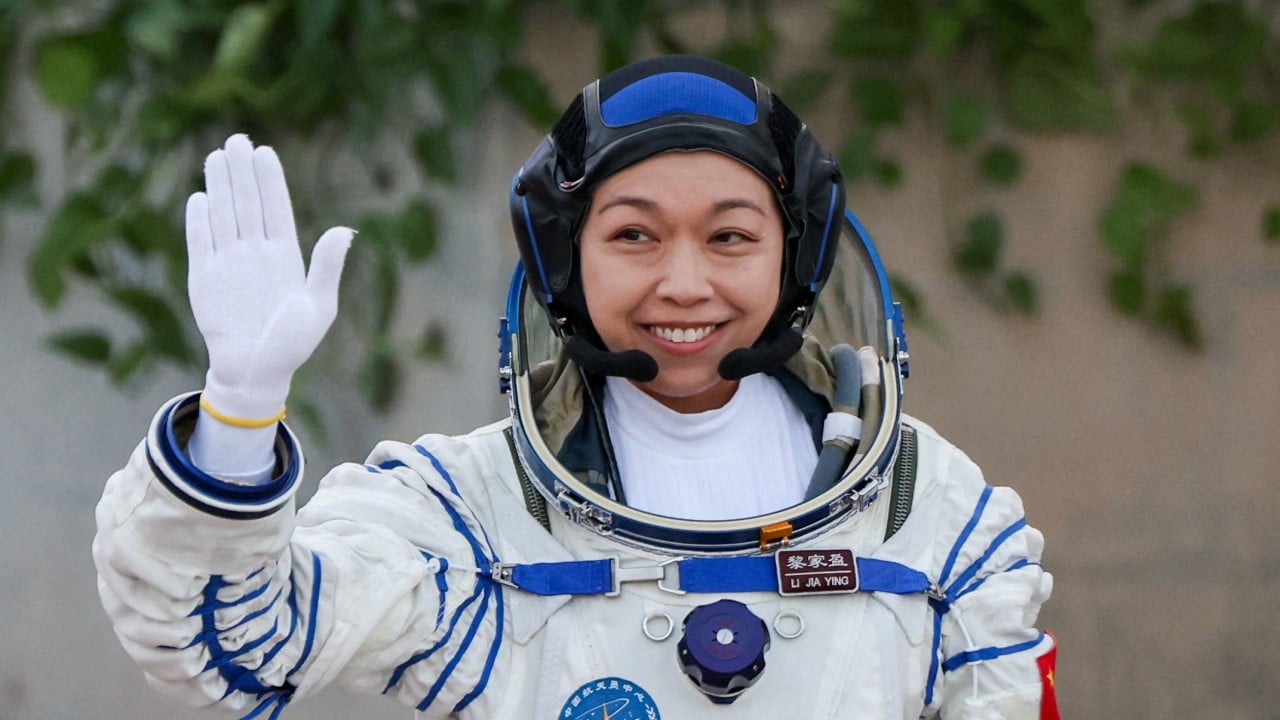
Then, the final selection came. A Hong Konger made the cut.
We do not yet know every detail of their daily routine in the training facilities outside Beijing. The secrecy surrounding astronaut preparation is notoriously thick. But we know the math of survival up there. We know they are learning to breathe recycled air, to move in microgravity where a single misplaced tool can end a mission, and to mentally map a space station that will become their entire world for months at a time.
What happens when this individual finally speaks to the city?
The upcoming events are designed to be interactive, bridging the gap between high-level aerospace engineering and the everyday citizen. Schools are already preparing. Imagine the scene in a secondary school auditorium in Kwun Tong. The air conditioning is roaring against the summer heat. Hundreds of students sit in uniform, eyes locked onto a projection screen.
The audio crackles to life. A voice speaks in familiar Cantonese, but with the distinct, slight delay of a transmission traveling through hundreds of kilometers of atmosphere.
Suddenly, the abstract science in their textbooks becomes alive. When a kid from Mong Kok sees someone who grew up on the same streets, who speaks the same dialect, floating weightless while looking down at the blue curve of the Earth, the psychological ceiling shatters. The lesson is no longer about orbital mechanics; it is about permission. Permission to dream beyond the boundaries of a hyper-dense metropolis.
Skeptics will argue that a few video calls won't solve the immediate, grounded challenges facing the city. They will say that space exploration is an expensive luxury when there are housing shortages and economic shifts to navigate on the ground. This doubt is understandable. It is easy to be cynical when daily life demands so much logistical focus.
But human beings do not thrive on survival alone. We need frontiers.
Consider the historical precedent of the Apollo missions. In the late 1960s, the United States was torn apart by social unrest, economic anxiety, and an unpopular war. Yet, when the grainy black-and-white footage of the lunar landing beamed back to Earth, it provided a moment of collective pause. It re-calibrated what people believed was possible. It didn’t fix the broken roads or heal political divides overnight, but it altered the cultural trajectory of an entire generation. It turned children into engineers, thinkers, and explorers.
Hong Kong is craving that kind of re-calibration. The city has weathered years of immense transformation, economic restructuring, and uncertainty. A live link to an astronaut offers a rare, unifying vantage point. From 400 kilometers up, the political borders, the socioeconomic divides, and the daily anxieties of the city fade into a singular, brilliant cluster of lights nestled between the mountains and the sea.
The upcoming two months will feature more than just a single broadcast. The government plans to roll out exhibition materials, educational forums, and science outreach programs designed to maximize the impact of this milestone. It is a full-scale push to demystify the cosmos for the average citizen.
For the scientific community within Hong Kong, this is a validation of decades of quiet, unglamorous work. Universities are already anticipating a surge of interest in STEM subjects. The hope is that this momentum will transform Hong Kong from a consumer of global technology into a vital node of spatial discovery.
But the real magic will happen in the quiet moments of these interactions. It will be in the specific, human questions asked by the public. Not just about rocket fuel or satellite trajectories, but about the mundane realities of cosmic life. How does the food taste? Do you miss the smell of rain on concrete? What does Victoria Harbour look like when the sun rises sixteen times a day?
Those answers will humanize the infinite. They will prove that space is not just a cold, metallic void reserved for superpowers, but a place where human curiosity, wrapped in a local identity, can find a home.
As the summer weeks tick away, the technicians will finish testing the communication arrays. The satellite dishes will align. In a secure training facility, a hometown hero will prepare their notes, knowing that their words will carry the dreams of millions.
The next time you find yourself stuck in a crowd on a stifling afternoon in Causeway Bay, look past the neon signs. Keep your eyes moving upward, beyond the skyscrapers, into the deep, unobstructed blue. Someone up there is getting ready to call home.