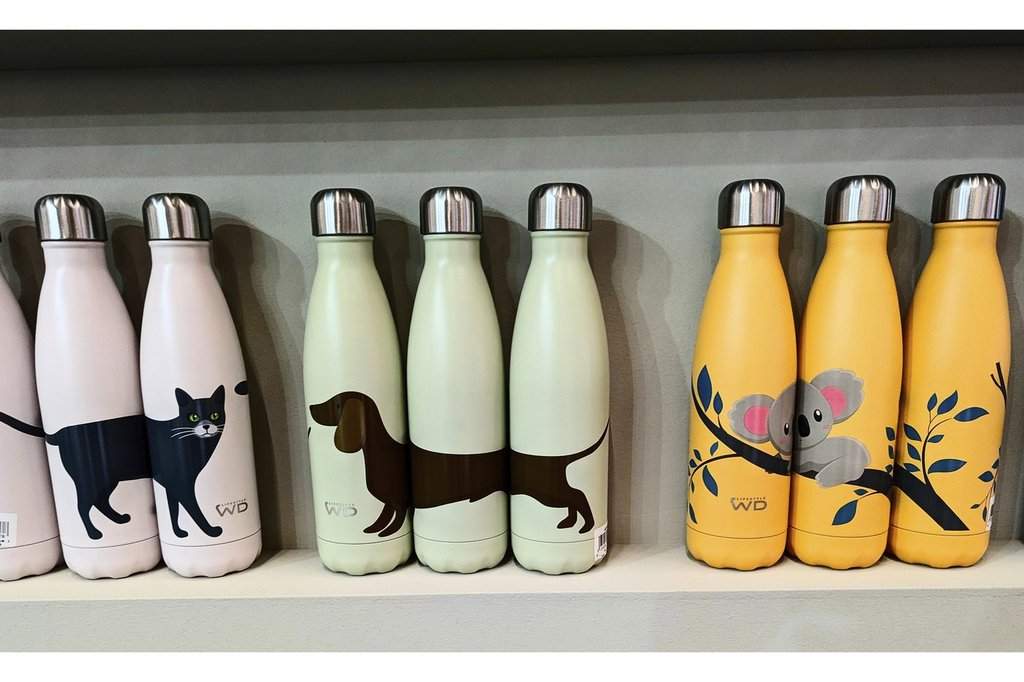
The plastic crunch underfoot is the first thing you hear. It is a specific, hollow sound, multiplied by thousands of moving boots and sneakers outside the stadium gates. For years, we were told to change our habits. We bought the powder-coated steel canisters. We sticker-bombed them. We carried them like extra limbs to work, to the gym, and to the park.
Then came the turnstiles.
Picture a fan named Sarah. She spent months saving for a ticket to see the biggest soccer match of her life at BC Place in Vancouver. She wore her jersey, packed light, and brought her trusty, battered insulated water bottle—the one that had traveled with her for five years. She checked the stadium’s online guidelines the night before. The website gave a green light. Reusable bottles were permitted, provided they were empty upon entry. Safe, sustainable, sensible.
But when Sarah reached the front of the security line, a guard pointed a gloved finger at her stainless-steel companion.
"Can't bring that in," the guard said.
Sarah pointed out the policy she had read online. The guard shrugged. The orders had changed from above. FIFA was in town, and FIFA rules overrode local promises. Her choices were sudden and brutal: abandon a forty-dollar piece of personal property in a overflowing bin of destined-for-the-landfill metal, or walk away from a match she had spent a week's pay to see.
She threw it away. The thud it made against the bottom of the plastic bin was heavy. It was the sound of a compromise that nobody asked for, wrapped in a corporate mandate.
The Illusion of Local Control
What happened at BC Place is not an isolated incident of poor communication. It is a symptom of a much larger, invisible friction between global sports monoliths and the communities that host them. When a city wins the right to host a massive international tournament like the World Cup, it signs away more than just stadium dates. It signs away its autonomy.
For months leading up to major international fixtures, local stadium authorities reassure the public that operations will run normally. Vancouverites have grown accustomed to a certain standard of environmental consciousness. British Columbia prides itself on green initiatives. The stadium's initial digital handbook reflected this local ethos, explicitly stating that empty reusable containers were welcome.
Then the global governing body arrived.
International sports organizations operate like sovereign states. When they set up camp, local rules dissolve. Security protocols are standardized globally, dictated by a rigid playbook written in Zurich or Lausanne, entirely detached from the geographical realities of the host city. The overarching explanation is always safety. A metal bottle, when filled or even empty, can be weaponized. It can be thrown onto the pitch. It can strike a player or an official.
From a pure security standpoint, the logic holds weight. A projectile is a projectile. But the sudden, unannounced pivot exposes a deep flaw in how these mega-events communicate with the flesh-and-blood humans who fund them. The communication breakdown left thousands of fans blindsided at the gates, turning what should have been a celebration into a bureaucratic ambush.
The Hidden Economy of the Concession Stand
Consider what happens next once a fan is stripped of their hydration strategy. They pass through the metal detectors, slightly agitated, their throat dry from the walk to the venue. They look for a water fountain. The lines stretch thirty people deep because the infrastructure was never designed to handle an entire stadium of entirely bottle-less spectators.
The eyes naturally drift to the bright, neon-lit concession stands.
There, stacked in immaculate, chilling pyramids, are rows of single-use plastic bottles. They are cold. They are convenient. They cost seven dollars each.
This is where the environmental narrative turns cynical. To the average fan standing in the concourse, the safety argument begins to curdle. If the primary objective is preventing heavy projectiles from entering the seating bowl, why are heavy, capped plastic bottles sold inside the perimeter? A full one-liter plastic bottle thrown from the upper deck carries enough kinetic energy to cause serious injury.
The distinction feels less about safety and more about a captive market. Global tournaments run on exclusive sponsorship deals. Beverage giants pay hundreds of millions of dollars to ensure their logos are the only ones visible within the camera frame. A sea of mismatched, sticker-covered Hydro Flasks and Yetis is an eyesore to a corporate sponsor. A stadium filled with uniform, branded plastic is a commercial victory.
The fan is caught in the middle of this corporate tug-of-war. We are scolded by advertising campaigns to reduce our carbon footprint, to avoid single-use plastics, to be conscious citizens of a warming planet. Yet, the moment we enter the gates of a premier sporting event, that philosophy is inverted. Sustainability becomes a liability; consumption becomes mandatory.
The Emotional Tax of the Security Line
The true cost of these policy flip-flops cannot be measured solely in plastic tonnage or lost revenue. It is paid in human frustration.
The security line at a massive sporting event is already a pressure cooker. Fans are anxious about missing kickoff. Guards are exhausted, dealing with thousands of impatient strangers. When an unannounced policy change is enforced at the absolute final bottleneck, confrontation is inevitable.
It forces the front-line stadium staff to become the villains of a story they didn't write. They are the ones who must endure the sighs, the arguments, and the defeated stares of fans who feel cheated. They are the ones watching the recycling bins fill to the brim with high-quality, reusable gear that will likely end up destroyed or discarded because there is no logistical system in place to return thousands of confiscated bottles to their rightful owners at the end of the night.
This friction erodes trust. When a public entity like BC Place states one policy and enforces another because an international circus rolled into town, the public remembers. The next time the city asks its citizens to support a bid for an international tournament, the memory of that confiscated bottle, that long line, and that seven-dollar plastic replacement will color their response.
Reimagining the Stadium Gates
The conflict between safety, commerce, and sustainability does not have to be an unsolvable equation. It requires imagination, something often lacking in corporate playbooks.
If metal bottles are truly deemed a security threat by international bodies, the solution is not a blanket ban enforced at the eleventh hour. Venues could invest in stadium-wide token systems, where fans check their high-value reusable bottles at a secure perimeter locker station, receiving a lightweight, tournament-approved recycled cup for use inside the bowl, and reclaiming their property upon exit.
Alternatively, if single-use plastic must be the default inside the stadium, the cost should not be offloaded onto the consumer who attempted to do the right thing. Free, high-velocity water-dispensing stations should outnumber beer taps. The tournament organizers should bear the logistical cost of collecting and instantly recycling every single piece of plastic sold within their walls, creating a closed-loop system rather than relying on municipal waste management to clean up the aftermath.
But these solutions require a shift in perspective. They require viewing the fan as a guest and a partner in sustainability, rather than a security risk to be managed and a wallet to be emptied.
The sun sets over the stadium, lighting up the glass facade. Inside, the crowd roars as a goal is scored. It is a beautiful, unifying moment of human athletic achievement. But outside, by the service entrances, the maintenance crews are already wheeling away the heavy gray bins, filled to the top with the metallic casualties of a broken promise.