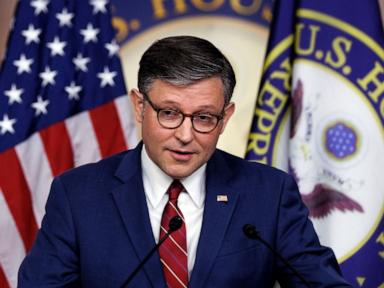
The legacy media is running its favorite playbook again: the manufactured midnight countdown. Mainstream outlets are breathless over House Speaker Mike Johnson rushing to the White House to "huddle" with Donald Trump in a last-ditch effort to save Section 702 of the Foreign Intelligence Surveillance Act (FISA) before it expires. They want you to believe that if a deal isn't struck, America’s global surveillance apparatus goes dark, terrorists win, and the intelligence community is left blind.
It is a complete farce.
The entire premise of the "deadline crisis" is a performance designed to scare lawmakers into passing rubber-stamped extensions without meaningful warrant requirements. As someone who has watched the intelligence community manipulate legislative deadlines for over a decade, I know exactly how this game is played. The clock ticking toward midnight is not a national security threat; it is an executive-branch leverage tactic.
Here is the dirty secret nobody in Washington wants to admit: the government’s warrantless surveillance dragnet will not stop, even if Congress completely fails to pass a reauthorization bill by the deadline.
The Permanent Extension Myth
The public is being fed a narrative that Section 702 is a fragile tool on life support. In reality, the legal architecture underpinning it is built to survive congressional inaction.
Earlier this year, the Foreign Intelligence Surveillance Court (FISC) quietly issued a yearlong recertification authorizing Section 702 data collection through approximately March 2027. Under the explicit statutory language of FISA, the intelligence community is legally permitted to continue collecting information under an existing court order even if the underlying law lapses.
When hawkish lawmakers write frantic letters warning of a "potential significant gap in foreign intelligence collection," they are playing a part in a theater troupe. They are intentionally omitting the fact that the legal authorization is already locked in for months to come. The intelligence agencies do not turn off the servers when the clock strikes midnight. They keep collecting, keeping the data flowing while the political class uses the fake emergency to exhaust the opposition.
The Fake Compromise Machine
Every time Section 702 comes up for renewal, we see the same dance. Reform-minded civil liberties advocates demand a clean warrant requirement: if the FBI wants to search the database for the communications of American citizens, they must get a warrant from a judge.
Then comes the "compromise." Speaker Johnson’s previous attempts at a deal did not protect American privacy; they codified the status quo. One of his recent proposals sought to lock in a multi-year extension while introducing language that actually made it easier for data acquired via Section 702 to be deployed against Americans in domestic criminal proceedings.
This is the classic DC bait-and-switch. Leadership dresses up a surveillance expansion in the clothing of "reform," slaps a punitive penalty clause for FISA abuse on it to satisfy talking points, and calls it a day. When bipartisan coalitions reject these Trojan horses, the media labels it a "fiasco" or "chaos" rather than what it actually is: a functioning legislative body refusing to be bullied by the executive branch.
The Real Standoff Has Nothing to Do with Privacy
The current gridlock isn’t even a philosophical debate over the Fourth Amendment anymore. It has devolved into a petty administrative turf war over who controls the agencies.
The immediate collapse of the recent bipartisan renewal deal happened because the White House appointed a political loyalist with zero intelligence experience to a top national security post, driving a wedge through the Senate. Now, the entire debate is frozen because factions within the government are using the surveillance standoff as leverage to achieve a completely different goal: shrinking or outright abolishing the Office of the Director of National Intelligence (ODNI).
This is what the mainstream narrative entirely misses. While talking heads on television debate national security versus civil liberties, the actual players in Washington are treating the nation's most powerful spy tool as a bargaining chip to settle institutional grudges and score personnel victories.
The Flawed Premise of the Debate
If you are asking whether Speaker Johnson can cut a deal with Trump to "fix" FISA, you are asking the wrong question. FISA cannot be fixed by tweaking the expiration date from two years to three years, nor can it be resolved by backroom agreements at Mar-a-Lago or the White House.
The fundamental problem is that Section 702 was designed for an analog understanding of international communications but operates in a digital world where global data flows intersect constantly. When the government targets a foreigner abroad, they inevitably sweep up millions of incidental communications from everyday Americans.
The intelligence apparatus argues that requiring a warrant to query this already-collected data would "blind" them. This is an admission of guilt, not a defense. If searching through the private data of US citizens is so essential to their daily operations that a judicial warrant slows them down, then the program is already operating as a domestic surveillance tool through the backdoor.
Admitting the downside of a hard sunset is simple: yes, letting a law lapse creates administrative friction and minor legal uncertainties for corporate tech partners who assist in data collection. But that friction is exactly what the Founders intended when they drafted the Fourth Amendment. Security and liberty are in tension, and the current congressional leadership is entirely willing to sacrifice the latter to avoid a temporary bureaucratic headache.
Stop watching the countdown clock. The servers are plugged in, the data is being stored, and the deep state is doing just fine. The only thing hanging in the balance is whether Congress will finally find the backbone to let a bad law expire.



:max_bytes(150000):strip_icc():focal(665x0:667x2)/gettyimages-50733149-2000-8b129a2475974982a915418ce92a73d8.jpg)