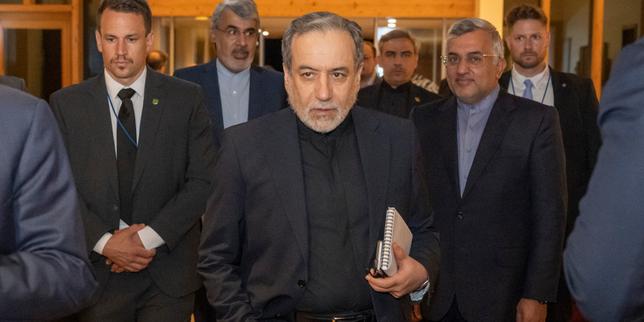
Geopolitical commentators are dusting off their old scripts. The moment diplomatic delegations from Washington and Tehran touch down on the tarmac in Switzerland, the media follows a predictable choreography. The headlines scream about an impending global economic meltdown because Iran threatened to shutter the Strait of Hormuz.
It happens every single time tension spikes in the Middle East. It is a tired narrative, a lazy consensus driven by talking heads who look at maps but do not understand logistics, naval architecture, or domestic Iranian survival strategies.
The panic is entirely misplaced. Iran will not close the Strait of Hormuz. More importantly, if you are treating this Swiss diplomatic summit as a high-stakes poker game over the world’s oil supply, you are asking the wrong question entirely. The real risk is not a total blockade; it is the structural shifts in global energy flows that this theater masks.
The Mathematical Impossibility of a Hormuz Blockade
Let’s dismantle the biggest myth first. The idea that Iran can simply turn off the tap at Hormuz like a kitchen faucet is a fantasy designed to scare commodity traders and drive up crude futures.
The Strait of Hormuz is roughly 21 miles wide at its narrowest point, but the actual shipping lanes used by massive Very Large Crude Carriers (VLCCs) are incredibly restricted. We are talking about two two-mile-wide channels separated by a two-mile buffer zone. On paper, it looks like a choke point that is easy to plug.
In reality, physically blocking a waterway that handles over 20 million barrels of oil per day requires sustained, conventional naval supremacy. Iran does not have it. The moment Tehran attempts a hard blockade—whether through mining the channels, sinking blockships, or deploying anti-ship cruise missiles from the coast—it triggers an immediate, overwhelming kinetic response from the US Navy’s Fifth Fleet and an international coalition.
I have spent years analyzing maritime security data and talking to naval strategist veterans who have simulated this exact scenario in dozens of war games. The consensus among the people who actually plan for war—not the ones who talk about it on cable news—is uniform: Iran can cause chaos for 72 to 96 hours. They can damage a few hulls, spike insurance premiums, and create a temporary logistical nightmare. But they cannot sustain a closure.
The Suicide Pill Tehran Won't Swallow
The geopolitical analysts pushing the panic button forget a fundamental rule of economic warfare: you do not cut off your own oxygen supply to choke your neighbor.
Iran is suffering under a suffocating regime of international sanctions. Its economic survival relies almost entirely on a gray-market network of tankers delivering discounted crude to buyers, primarily independent refineries in China. How do those tankers leave the Persian Gulf? They sail right through the Strait of Hormuz.
Closing the strait means Iran blockades its own economy. It freezes its own remaining revenue streams. Furthermore, it directly harms the economic interests of Beijing, Tehran’s most critical geopolitical lifelines. China imports millions of barrels a day through that corridor. If Iran permanently disrupts that flow, it transforms its biggest diplomatic protector into an instant adversary. The regime in Tehran is deeply ideological, but it is not suicidal. The threat of closure is a diplomatic lever used to extract concessions at the negotiating table in Switzerland, nothing more.
The Real Crisis: Premium Creep and Logistical Decay
So, what happens while everyone focuses on the wrong threat? The real damage occurs in the areas investors and corporate risk officers ignore.
While the media obsessions center on a catastrophic, black-swan blockade, the market quietly bleeds from structural friction. You should stop worrying about an absolute stoppage of oil and start looking at the compounding costs of persistent regional instability.
- War Risk Insurance Surges: Lloyd’s Joint War Committee does not need a full war to reclassify a zone. Just the threat of hostilities causes insurance underwriters to spike premiums for hulls transiting the Gulf. These costs are passed directly to consumers, acting as a permanent tax on global trade.
- The Shadow Fleet Consolidation: Every time the threat of conflict increases, legitimate shipping lines alter routes or demand higher premiums. This vacuum is filled by the "shadow fleet"—aging, poorly maintained tankers flying flags of convenience, operating without standard Western insurance. This increases the structural risk of a catastrophic environmental disaster in the region, which would close the strait far more effectively than Iranian mines.
- The Misallocation of State Capital: Western governments spend billions positioning carrier strike groups to defend a physical channel, while the actual vulnerabilities have migrated to cyber infrastructure, pipeline terminals, and distributed energy grids.
Dismantling the Consensus Flaws
If you look at the questions asked during these crises, the premise is always broken. Let's look at the standard assumptions.
Flawed Premise: "If Iran closes the strait, oil will immediately hit $200 a barrel and trigger a global depression."
This assumes the global energy market is static. It ignores the massive structural buffers built since the oil shocks of the 1970s. The US is the world's largest oil producer. Strategic Petroleum Reserves across OECD nations are designed precisely to cushion short-term physical disruptions. A temporary spike would occur, but it triggers immediate demand destruction and releases of strategic reserves that cap the long-term upside.
Flawed Premise: "Diplomatic summits in Switzerland can solve the underlying volatility of the maritime choke point."
Diplomacy can manage the immediate temperature of the conflict, but it cannot fix the geography. The structural tension of Hormuz is permanent. As long as a high percentage of the world’s liquid energy passes through a single narrow channel bordered by an adversarial state, the volatility is a feature, not a bug.
The Actionable Pivot for Asset Allocation
Stop trading the headlines. If you are adjusting your portfolio or your supply chain strategy based on the daily news coming out of the Swiss negotiations, you are playing a losing game.
First, ignore the short-term spikes in crude. The smart money shorts the volatility peaks because they know the physical flow of oil rarely stops for long. Look instead at the companies providing maritime security, specialized salvage operations, and satellite tracking infrastructure. They profit whether the strait is open or closed because the uncertainty itself drives their order books.
Second, recognize that the real winners of this ongoing theater are alternative transit routes. Pipelines bypassing the strait—like Saudi Arabia’s East-West Pipeline or the UAE’s Habshan–Fujairah line—become more strategically vital with every Iranian press release. The capital flowing into infrastructure that routes around the Persian Gulf is where the long-term value lies.
The negotiators in Switzerland know all of this. They will sit in wood-paneled rooms, exchange stern diplomatic notes, and emerge with a vague communique about de-escalation. The markets will sigh in relief, oil will drop three dollars, and the commentators will claim diplomacy saved the world from a global blockade.
It is a choreographed show. The strait was never going to close. Stop watching the performance and start positioning for the structural friction that happens while everyone else is distracted by the bluff.