The rejection of direct diplomatic negotiations by the Kremlin has altered the strategic calculus of the Russia-Ukraine war, shifting the conflict from a war of attrition localized along the Donbas line of contact to an expansive asymmetric campaign targeting the Russian Federation’s deep rear. When political pathways are blocked, military actions must absorb the weight of coercion. Ukraine’s targeting of critical infrastructure in St. Petersburg is not a random act of retaliation; it is a calculated execution of asymmetric escalation designed to impose severe economic and political costs directly on the Russian regime's domestic power base.
To understand this shift, the strategic landscape must be broken down into three core operational variables: the breakdown of the diplomatic theater, the mechanics of long-range asymmetric strike capabilities, and the vulnerabilities of Russia’s critical industrial nodes.
The Diplomatic Impasse and the Logic of Cost Imposition
Negotiation in high-intensity conflicts rarely occurs out of altruism; it is driven by the mutual recognition of an unsustainable stalemate or a shifting cost-benefit matrix. The recent refusal by Moscow to engage in direct talks requested by Kyiv clarifies that Russia believes its current attrition strategy on the ground will yield greater territorial and political concessions over time.
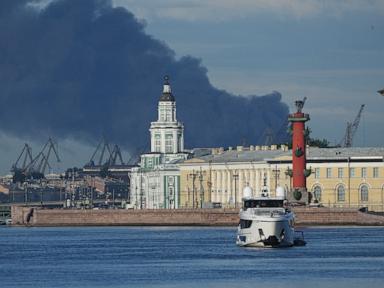
By eliminating the diplomatic off-ramp, the Kremlin forces Ukraine to alter Russia’s internal cost function. A state engaged in a war of attrition enjoys an advantage if the destruction is contained entirely within the adversary's territory. Kyiv’s counter-strategy relies on breaking this containment. The targeting of St. Petersburg—a city historically and politically central to the Russian state identity and the personal narrative of its leadership—serves to invalidate the Russian domestic assumption that the war can be sustained at zero risk to its core urban centers.
The Triad of Asymmetric Air Leverage
Ukraine’s deep-strike capability against targets over 1,000 kilometers from its borders relies on a specific triad of operational factors. Without access to Western long-range ballistic missiles authorized for strikes inside internationally recognized Russian territory, Kyiv has engineered an independent strategic strike portfolio.
1. Low-RCS Autonomous Systems
The utilization of domestically produced, long-range one-way attack Unmanned Aerial Vehicles (UAVs) relies on a low Radar Cross-Section (RCS). These platforms move at low altitudes and slow speeds, frequently bypassing traditional Russian air defense systems designed to detect and intercept high-velocity, high-altitude ballistic or cruise missiles.
2. Air Defense Saturation Dynamics
Russian air defense doctrine prioritizes the protection of high-value military installations, the Kremlin, and the immediate frontline. By launching salvos that navigate complex, winding flight paths, Ukrainian forces exploit gaps in the radar coverage of Russia’s early warning networks. To defend St. Petersburg, Russia must redeploy surface-to-air missile systems (such as the S-400 or Pantsir-S1) from either the front lines or other vital industrial sectors, creating secondary vulnerabilities elsewhere.
3. Economic Asymmetry Ratio
A critical vulnerability in Russia’s defensive posture is the cost-exchange ratio. Manufacturing an long-range attack drone costs Kyiv between $20,000 and $50,000. In contrast, the interceptor missiles fired by Russian air defense networks cost between $500,000 and $2 million per shot. Even if Russian forces successfully intercept 80% of incoming drones, the economic friction favors the attacker, depleting Russian missile inventories faster than they can be replenished by wartime production lines.
Industrial Vulnerability Vectors in the Baltic Region
The selection of St. Petersburg as a primary target zone exposes specific vulnerabilities within Russia's economic architecture. The region serves as the logistical and energy gateway to Western markets, making its infrastructure highly lucrative for strategic interdiction.
The primary target vector is the energy export infrastructure, specifically oil terminals and processing plants such as the Ust-Luga complex. The operational mechanics of oil refining and export depend on highly complex, continuous-flow systems. A single drone strike striking a fractionation column or a distillation unit can halt production for months. These components are highly specialized, capital-intensive, and heavily reliant on Western-manufactured parts that are currently restricted under global sanction regimes.
The second vector is logistical strangulation. St. Petersburg houses the premier Russian port infrastructure on the Baltic Sea. Disrupting this node complicates the maritime transport of refined petroleum products and containerized cargo, forcing Russia to reroute logistics to less developed southern or eastern ports, introducing massive inefficiencies and transport premiums into their supply chains.
The Strategic Limits of Long-Range Attrition
While deep strikes impose financial friction and psychological strain, the strategy contains inherent structural limitations that prevent it from being a singular solution to the conflict.
- Payload Limitations: A standard long-range UAV carries a payload ranging from 20 to 50 kilograms of explosives. Compared to a conventional cruise missile or a heavy artillery shell, this kinetic impact is minimal. It requires precise targeting of highly volatile materials (such as fuel storage tanks) to trigger secondary explosions capable of causing systemic damage.
- Geographic Scale: Russia possesses an immense geographic depth. Compelling a nationwide shift in public opinion or forcing industrial relocation via sporadic drone strikes requires a scale of production and launch frequency that Ukraine's current industrial base cannot sustain without significant, continuous external funding and raw material imports.
- Regime Resilience: Autocratic regimes maintain a high tolerance for economic pain and civilian discomfort when compared to democratic polities. The assumption that localized infrastructure disruption will automatically trigger a political crisis within the Kremlin overlooks the highly centralized security apparatus that suppresses domestic dissent.
Operational Playbook for Asymmetric Compulsion
To convert these deep strikes from symbolic actions into a decisive lever that forces Russia back to the negotiating table, Ukraine must transition from sporadic operations to a system of sustained interdiction. The strategic execution requires three steps:
First, Ukraine must establish a synchronized target matrix that pairs deep-rear infrastructure strikes with localized frontline offensives. Striking energy infrastructure must occur precisely when Russian military logistics require peak fuel consumption, compounding the effect of supply shortages.
Second, production must prioritize modular, multi-role drone platforms capable of electronic warfare emulation. By deploying drones that broadcast false radar signatures, Ukraine can force Russian air defense operators to expend live ammunition on decoys, accelerating the depletion of Russia's air defense umbrella around St. Petersburg and Moscow.
Third, the campaign must systematically isolate the Baltic maritime trade route. By rendering the Gulf of Finland a high-risk zone for commercial shipping through a combination of aerial drones and uncrewed surface vessels (USVs), Ukraine can drive maritime insurance premiums to prohibitive levels. This action effectively closes Russia's northern trade window without requiring direct NATO intervention or the enforcement of a physical blockade.
The conflict has entered a phase where kinetic action in the rear must substitute for the absence of diplomacy. If the Kremlin will not negotiate out of political goodwill, the alternative is to systematically dismantle the economic and logistical pillars that fund its capacity to wage war.