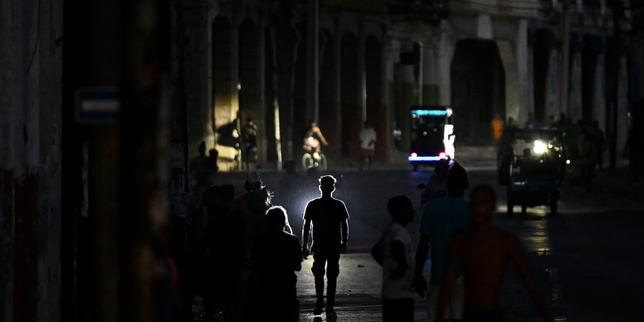
The collapse of the Cuban National Electric System (SEN) is not a discrete event but the inevitable output of a multi-decade deficit in capital reinvestment and fuel supply logistics. When the grid experiences a total blackout (zero-generation state), it signifies that the frequency and voltage fluctuations have exceeded the protective thresholds of the country’s aging thermoelectric plants (CTEs). This is a terminal mechanical failure of a centralized energy architecture that lacks the spinning reserves to absorb even minor shocks.
The Triad of Systemic Fragility
To understand why a single plant failure can cascade into a nationwide blackout, we must analyze the three variables that govern the Cuban energy equation: fuel procurement, mechanical reliability, and grid inertia. For a closer look into similar topics, we recommend: this related article.
1. Fuel Procurement and Calorific Inconsistency
The Cuban grid relies heavily on heavy crude oil and diesel. The domestic crude produced is characterized by high sulfur content, which accelerates the corrosion of boiler tubes and turbines within the CTEs. This creates a feedback loop:
- Low-Quality Input: High-sulfur crude increases the frequency of "unplanned maintenance."
- Supply Chain Volatility: The transition from subsidized Venezuelan oil to sporadic spot-market purchases has led to "fuel-based outages," where plants are functional but dormant due to empty tanks.
- The Diesel Trap: To compensate for CTE failures, Cuba has deployed distributed generation (small diesel engines). While flexible, these are exponentially more expensive to operate and require a logistical fleet of tanker trucks that the island's infrastructure cannot support.
2. Mechanical Obsolescence and the Maintenance Gap
The backbone of the SEN consists of eight primary thermoelectric plants. Most of these units have exceeded their 30-year design life by over a decade. In a healthy power system, "planned maintenance" is a preventative measure. In Cuba, maintenance is "reactive." To get more details on the matter, comprehensive analysis is available on NPR.
The cost function of maintaining these units is rising non-linearly. Because the plants are Soviet-era or built with aging European tech, spare parts are no longer manufactured. This forces engineers to engage in "cannibalization"—stripping parts from one defunct unit to keep another running. This reduces the total installed capacity over time, ensuring that the system always operates at 90-95% of its available capacity, leaving no margin for error.
3. Critical Loss of Grid Inertia
In electrical engineering, inertia is the ability of the system to maintain its frequency ($60\text{ Hz}$ in Cuba) when a large load or generator suddenly disconnects. In a centralized system, large rotating masses (turbines) provide this inertia.
As the large CTEs like Antonio Guiteras or Felton go offline, the total inertia of the Cuban grid drops. When the "island" (the grid) becomes too small, any minor fluctuation in demand causes the frequency to swing wildly. If the frequency drops below a specific threshold (typically around $58.5\text{ Hz}$), automated load-shedding kicks in. If that fails, the entire system "trips" to prevent the physical destruction of the turbines, resulting in a total blackout.
The Mechanics of the "Black Start" Process
Restoring a grid from zero is a delicate technical operation that carries a high risk of immediate re-collapse. The process follows a rigid hierarchy of re-energization:
- Micro-islands: Engineers attempt to start small gas turbines or hydroelectric units that have "black start" capability (the ability to start without external power).
- Sub-transmission Links: These micro-islands are used to send power to the larger CTEs to restart their auxiliary systems (pumps, fans, and heaters).
- Synchronization: Once a large plant begins generating, it must be synchronized with others. If the demand (the load) is added too quickly, the frequency collapses again, and the process resets to zero. This explains why Cuban citizens often see power return for thirty minutes before it disappears again for days.
The Economic Impact of Energy Rationing
Energy is the primary input for all industrial and residential stability. The "deficit de capacidad" (capacity deficit) reported daily by the Unión Eléctrica (UNE) acts as a hard ceiling on GDP.
The Productivity Bottleneck
When the deficit exceeds $1,000\text{ MW}$ (roughly 30-40% of peak demand), the state is forced to prioritize "Vital Circuits"—hospitals, water pumping stations, and high-revenue tourist zones. This leaves the industrial sector in a state of permanent stagnation. Small and medium enterprises (SMEs) cannot maintain cold chains for food, leading to massive inventory loss and localized inflation.
The Opportunity Cost of Distributed Generation
Cuba’s pivot toward "distributed generation" in the mid-2000s was intended to provide resilience. However, the current reality is a "negative scale economy."
- Maintenance complexity: It is harder to maintain 1,000 small engines scattered across a province than one large turbine.
- Thermal Efficiency: Small diesel generators have lower thermal efficiency than large-scale combined-cycle plants. The cost per kilowatt-hour ($kWh$) produced by these units is unsustainable for a state with depleted foreign exchange reserves.
Constraints on Renewable Transition
A common critique suggests that Cuba should pivot immediately to solar or wind. However, the technical reality of the SEN makes this a secondary solution at best. Solar and wind are "intermittent" sources. They do not provide the rotational inertia required to stabilize a fragile grid. Without massive investment in battery energy storage systems (BESS) or a stable "base load" (provided by thermal or nuclear), adding more solar panels actually increases the risk of grid instability during cloud cover or sunset transitions.
The Infrastructure Dead-End
The current crisis is not a temporary dip in performance but a terminal state of the current infrastructure. The SEN is currently experiencing "cascading failure modes" where the stress of trying to restart the grid causes secondary equipment (transformers and circuit breakers) to explode due to age and thermal stress.
To stabilize the system, a capital injection of several billion dollars would be required to replace, rather than repair, the primary CTEs. Given the sovereign debt profile and the current geopolitical constraints, the likelihood of a modernized, stable base-load coming online within the next 24-48 months is statistically near zero.
Strategic Forecast and Operational Reality
The Cuban state will likely continue to rely on "floating power plants" (Karpowerships) leased from Turkey. These provide a temporary, mobile base load that bypasses the crumbling land-based infrastructure. However, this is a "rent-seeking" solution that drains hard currency without building long-term equity in the national grid.
The grid will continue to operate in a "fragmented state." Expect the permanent adoption of a "regional island" strategy, where provinces are intentionally disconnected from the national grid to prevent a localized failure from triggering a total national blackout. This signifies the end of a unified national power system and the beginning of a localized, survival-based energy distribution model.
The immediate strategic priority for the UNE will be the protection of the "Generation-Transmission-Distribution" core in Havana at the expense of the eastern provinces. This geographic prioritization is a political necessity but a technical admission of defeat: the SEN can no longer function as a single, synchronized entity. The future of Cuban energy is not "recovery" but "managed decline," where success is defined not by 24-hour service, but by the prevention of a total, multi-week system "freeze" that would render the island's basic life-support systems (water and telecommunications) non-functional.