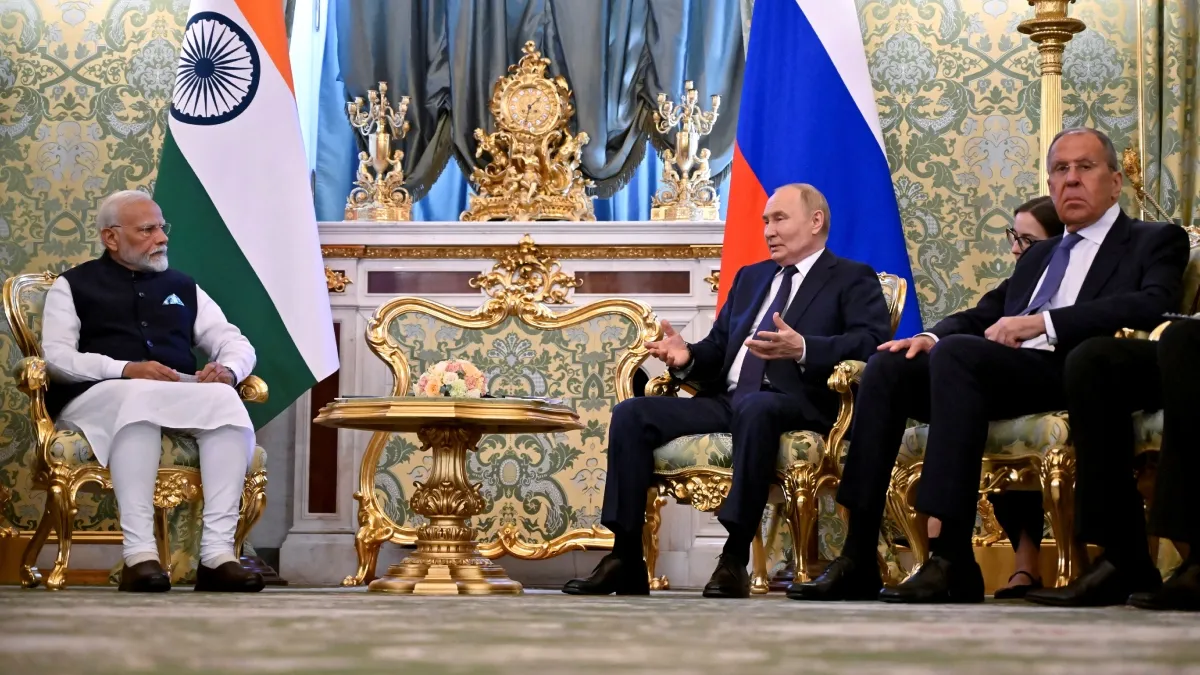
The visual composition of high-level state delegations serves as a non-verbal signaling mechanism that communicates internal power structures, institutional priorities, and the maturity of a nation's human capital pipelines. When a photograph of a US-China bilateral meeting reveals a total absence of women, it is not merely a failure of "representation" in a social sense; it is a visible data point reflecting a bottleneck in the professional development and promotion of high-ranking female officials within the national security and trade apparatuses of both superpowers. This visual homogeneity indicates a systemic reliance on legacy networks that may optimize for perceived stability but fail to leverage the full cognitive diversity of their respective populations.
The Triad of Institutional Inertia
The absence of women in senior diplomatic photos is the result of three specific institutional variables that dictate how delegations are formed.
- Pipeline Leakage in Seniority Tiers: In both the United States and China, the journey to "Principal" status (Cabinet-level or Politburo-level) involves a multi-decadal progression through specific career tracks. In the US, this often requires rotations through the National Security Council (NSC) or the Department of State’s senior executive service. In China, it requires ascending through provincial governorships or specific party organs. If women are filtered out at the mid-career stage—often due to rigid promotion timelines that conflict with biological or familial milestones—the "pool" of eligible participants for a high-level summit remains overwhelmingly male.
- The Securitization of Policy: Diplomatic engagement has increasingly shifted from "soft power" trade discussions to "hard power" security competitions. Military and intelligence cadres, which remain the most gender-skewed sectors of government, now dominate the seating charts. When the agenda prioritizes maritime boundaries and weapons technology over economic integration, the delegation reflects the demographics of the defense establishment rather than the broader civil service.
- Risk Aversion in High-Stakes Selection: Negotiators often default to "proven" veterans of previous rounds to ensure continuity. This creates a circular logic where the individuals already in the room are the only ones deemed qualified to remain there. This path dependency prevents the entry of new specialists, effectively freezing the demographic profile of the negotiating team in a previous era.
The Cognitive Cost of Homogenous Teams
In strategic consulting and high-stakes negotiation, "Groupthink" is a measurable risk factor. Homogenous groups tend to reach consensus faster, but that consensus is often based on shared blind spots.
- Heuristic Overlap: When a delegation is composed of individuals with nearly identical educational backgrounds, career paths, and gendered social experiences, they utilize the same mental models. This limits the breadth of the "negotiation space" they can explore.
- Signaling Friction: For the United States, which frequently identifies its commitment to liberal democratic values and gender equity as a point of soft power advantage, a male-only photo creates a credibility gap. It signals a misalignment between stated policy (supporting women’s rights globally) and internal operational reality.
- The Zero-Sum Trap: Research in behavioral economics suggests that more diverse negotiating teams are better at identifying "integrative" solutions—win-win scenarios—whereas homogenous, traditional male structures are more prone to "distributive" or zero-sum bargaining, where every gain by one side is viewed as a loss by the other.
Quantifying the Exclusionary Mechanism
To understand why these photos look the way they do, we must examine the specific mechanics of the selection process. A delegation is not a random sample; it is a curated list of "Relevant Principals."
The exclusion occurs at the intersection of two functions: the Relevance Filter and the Seniority Threshold.
- Relevance Filter: If the topics are limited to Defense, Intelligence, and Heavy Industry, the filter naturally pulls from male-dominated sectors.
- Seniority Threshold: If the required rank is "Assistant Secretary" or higher, the pool is limited to those who entered the workforce 25–30 years ago, reflecting the labor market biases of the 1990s.
This creates a "Lagged Reality" where the photo on the screen is actually a snapshot of the hiring practices of three decades prior. The "masculine and militarized" aesthetic is a trailing indicator of historical bias, not necessarily a real-time reflection of current junior-tier demographics.
The Strategic Risk of Visual Exclusion
A "masculine" aesthetic in diplomacy is not just an aesthetic concern; it carries specific strategic liabilities in the context of 21st-century geopolitics.
- Public Diplomacy Erosion: In the digital age, a single image travels faster than a thousand-page policy brief. For domestic audiences in the US and the broader international community, an all-male photo provides an easy target for criticism that distracts from the actual policy outcomes of the meeting. It allows critics to frame the engagement as an "old boys' club" making decisions behind closed doors, which erodes the democratic legitimacy of the agreement.
- Internal Talent Retention: High-performing women within the State Department, the Department of Commerce, or the Chinese Ministry of Foreign Affairs see these images as "career ceilings." When the visual evidence suggests that the top tier of power is inaccessible, the most talented junior and mid-level female officers are more likely to exit for the private sector, further depleting the pool of future female leaders.
- Narrowing of Intelligence Channels: Diverse teams are statistically more likely to catch subtle shifts in an adversary’s posture because they are less bound by a singular cultural narrative. By excluding women, delegations lose access to different communication styles and social intelligence that could be vital in de-escalating a tense standoff.
Structural Interventions for Future Delegations
Fixing the "optics" of a delegation requires more than just adding a woman for the sake of the camera; it requires a structural overhaul of how negotiating teams are assembled.
- Tiered Shadowing: Every senior male principal should be accompanied by a mid-level "shadow" of a different demographic. While the principal leads the talking, the shadow gains the high-stakes exposure necessary to clear the Seniority Threshold in the next five years.
- Functional Diversification of Agendas: By broadening the scope of bilateral meetings to include climate tech, public health, and digital ethics—sectors where women have achieved higher parity—the Relevance Filter will naturally pull a more diverse group of experts into the room.
- Objective Selection Audits: Before a delegation is finalized, the National Security Advisor or Chief of Staff should be required to review the "Eligible Pool" for each slot. If a woman is the second-ranked expert in a field, she should be included as a technical advisor, even if she does not hold the primary principal title.
The Definitive Forecast for Diplomatic Optics
The current outcry over the "masculine and exclusionary" nature of these photos is a sign that the external environment has evolved faster than the internal bureaucratic structures of the US and China. We are currently in a transition period where the "Lagged Reality" of the 1990s is clashing with the "Information Reality" of the 2020s.
Over the next five to ten years, the demographic shift in the lower and middle tiers of the civil service will become impossible to ignore. However, waiting for "natural progression" is a passive strategy that leaves geopolitical value on the table. The nation that first succeeds in institutionalizing gender diversity at the highest levels of its national security apparatus will gain a measurable edge in soft power, negotiation flexibility, and talent retention.
Strategic leaders must treat the composition of a delegation as a deliberate component of the mission's "Product Specs." If the goal is a comprehensive agreement that will stand the test of public scrutiny and diverse implementation, the team must be built to reflect the full breadth of the nation's expertise. The "men-only" room is no longer a symbol of strength; it is a signal of a rigid, fragile system that is failing to adapt to a complex, multi-dimensional world.