A set of keys sits on a scratched coffee table in a concrete apartment in Beirut. They are heavy, brass, and useless. The door they unlock is sixty miles south, and that door, for all its owner knows, might no longer be attached to a wall.
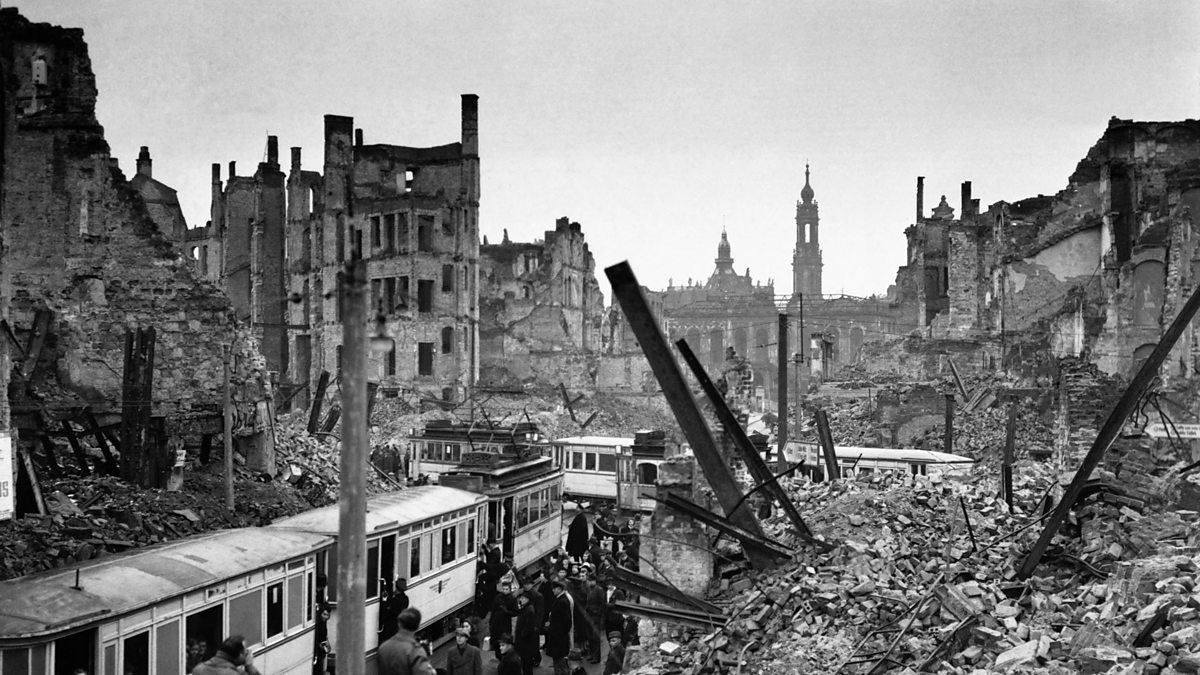
This is the geometry of displacement. It isn't just a map with shifting red zones or a spreadsheet of "internally displaced persons" reaching toward the million mark. It is the weight of what you chose to grab in three minutes and the haunting lightness of everything you left behind. When a nation begins to move, it doesn’t move all at once like a single tide. It fractures. It breaks into thousands of individual tragedies, each one carrying a plastic bag or a rolling suitcase with a broken wheel.
The Three Minute Choice
Imagine the silence of a Tuesday afternoon shattered by a sound that isn't just loud, but physical. It hits your chest before it hits your ears.
Fatima—a name for a thousand women today—did not check the news. The news arrived via the vibration in her windowpanes. She had lived through the 2006 war, and the scars of the 1970s and 80s were etched into her father’s stooped shoulders. She knew the protocol of the dispossessed. You don’t reach for your photo albums. You reach for the "emergency folder."
The folder contains the deeds to a house that might be rubble by sunset. It contains birth certificates, passports, and the deed to a small plot of olive trees. These are the papers that prove you exist when the world around you is being erased.
She stuffed a change of clothes for her youngest son into a backpack. She forgot his shoes. It is a detail that will haunt her three days later when they are walking across a gravel parking lot turned into a makeshift camp. The human brain, under the pressure of incoming fire, becomes a sieve. It lets the essential slip through while clinging to the absurd. She grabbed a jar of za’atar from the counter.
Why the spice? Because it smelled like the kitchen. Because in that moment, the smell of roasted thyme was a stronger anchor than logic.
The Longest Road North
The highway heading north from southern Lebanon is a graveyard of momentum. On a normal day, the drive from Tyre to Beirut takes about ninety minutes. During a mass exodus, it takes fifteen hours.
The heat is the first enemy. Engines overheat. Children cry until they run out of moisture, then they simply stare out of windows with hollow, unblinking eyes. Families pile seven deep into old Mercedes sedans, mattresses strapped to the roofs with fraying twine. These mattresses are the universal flag of the refugee. They represent the desperate hope that, wherever the journey ends, there will be a floor to sleep on.
Consider the logistics of a nation being uprooted. Lebanon is a small country, roughly the size of Connecticut. When hundreds of thousands of people move simultaneously, the infrastructure doesn't just groan; it collapses. Gas stations run dry. The price of a taxi ride triples, then quadruples, as drivers weigh the value of a fare against the risk of a drone strike on the road.
The "invisible stakes" here aren't just geopolitical. They are the sudden, brutal dissolution of the middle class. People who owned pharmacies, who taught French literature, who spent their weekends arguing over the best way to grill sea bass, are suddenly sleeping on the sidewalk of the Corniche in Beirut. They are not "refugees" in the way the West often imagines—they are people whose lives were interrupted mid-sentence.
The Architecture of Displacement
Beirut is a city that knows how to swallow grief, but even its throat is full.
Public schools have been converted into shelters. Desks are pushed against walls to make room for thin foam mats. Blackboards that were meant for geometry lessons now feature lists of missing persons or instructions on where to find clean water. There is a specific smell to these schools now: a mixture of unwashed bodies, heavy bleach, and the metallic tang of fear.
The city’s geography has been rewritten. Bourj Hammoud, Hamra, and Achrafieh are no longer just neighborhoods; they are lifeboats. But lifeboats have a maximum capacity.
The economic reality is a silent predator. Lebanon was already reeling from one of the worst financial collapses in modern history. The currency, the lira, had already lost 98% of its value before the first bomb fell this year. People were already living on the edge of a cliff. War didn't just push them off; it removed the cliff entirely.
When a family arrives in Beirut with nothing but the clothes on their backs, they enter a predatory rental market. Apartments that cost $500 a month in August are being offered for $2,000 in October. This isn't just "supply and demand." It is the cannibalization of the desperate by the opportunistic.
Yet, there is the counter-narrative. The bakeries giving away manousheh for free. The young men on motorcycles delivering blankets to families sleeping in parks. The solidarity of the scarred. In Lebanon, the state is often a ghost, but the community is a fortress.
The Geometry of the Void
What does it mean for a nation to be "uprooted"?
Think of a tree. The roots aren't just for stability; they are for communication. They pulse with the history of the soil. When you rip a person from their village in the south—a place where their family has farmed the same rocky hillside for four centuries—you aren't just moving a body. You are severing a nervous system.
The "facts" tell us that over 2,000 people have been killed and thousands more wounded. The "narrative" tells us that a generation of children is learning that "home" is a temporary concept.
The trauma is cumulative. For a seventy-year-old grandfather in a shelter, this is his fourth time being displaced. He looks at his grandson and sees the cycle repeating, a dark inheritance that no one asked for. He knows the stages of the journey: the initial panic, the long wait, the numbing realization that "temporary" might mean years, and the eventual, painful attempt to rebuild among the ruins.
The world watches via satellite imagery. We see the grey plumes of smoke rising from the lush green hills of the Bekaa Valley. We see the infrared heat signatures of convoys moving along the coast. These images are "standard." They are clinical. They turn a human catastrophe into an aesthetic experience for the distant viewer.
But the camera cannot capture the sound of a mother whispering a lie to her daughter.
"We're just camping," she says, as they huddle under a bridge while the horizon glows orange. "It’s an adventure."
The lie is an act of mercy. It is perhaps the most human thing left in a landscape defined by high-altitude precision.
The Myth of the Safe Zone
There is no such thing as a safe zone in a country this small. The psychological toll of "waiting" is a slow-motion form of violence.
In Beirut, the night is divided into two parts: the silence and the sound. The silence is worse. It is the period where you wait for the low, rhythmic hum of a drone. It is a sound that lives in the back of the throat. When the hum stops, the heart stops. Because the silence that follows a drone’s departure is often broken by a blast that can be felt five miles away.
The people of Lebanon are masters of the "calculated risk." They learn to judge the distance of an explosion by the delay in the vibration. They learn which streets are "safer" because they don't house specific political offices. But war has a way of mocking calculations.
The "core facts" of the conflict involve borders, resolutions, and sovereign rights. But the emotional core is a young man standing in front of his ruined shop in Tyre, holding a single, intact porcelain teacup. He doesn't cry. He just looks at it. The teacup is a miracle. It survived the collapse of two floors of concrete. It is a symbol of the utter randomness of survival.
Why him? Why his shop? Why this teacup?
There are no answers. There is only the wind blowing through the rebar.
The Weight of the Key
Back in the apartment in Beirut, Fatima looks at those brass keys.
She realizes that the house they belong to is no longer a place. It is a memory. If she goes back, she won't be returning to her life; she will be returning to a site of archaeological grief. She will find the charred remains of the sofa where her children napped. She will find the kitchen where she forgot the shoes.
The displacement of a nation isn't a temporary movement of people. It is a permanent shift in the soul. Even if every person returns south tomorrow, they carry the "uprooting" within them. They know now how quickly a life can be reduced to a backpack. They know how thin the walls of civilization really are.
The international community speaks of "de-escalation" and "diplomatic corridors." These words are cold. They don't account for the heat of the sidewalk or the grit of the dust in a child’s hair.
Lebanon is a nation of survivors, but survival is a grueling, exhausting profession. It leaves the eyes weary and the hands calloused. As the sun sets over the Mediterranean, the light turns a bruised purple. It is beautiful, in a way that feels like an insult.
The cars continue to crawl north. The mattresses continue to pile up in schoolyards. And the keys continue to sit on coffee tables, unlocking doors that lead to nowhere.
The real tragedy isn't that the nation was uprooted. It's that we have learned to look at the images of that uprooting and see only "news," rather than the reflection of our own fragile belonging.
The key remains. The door is gone. The road is long.
Everything else is just noise.