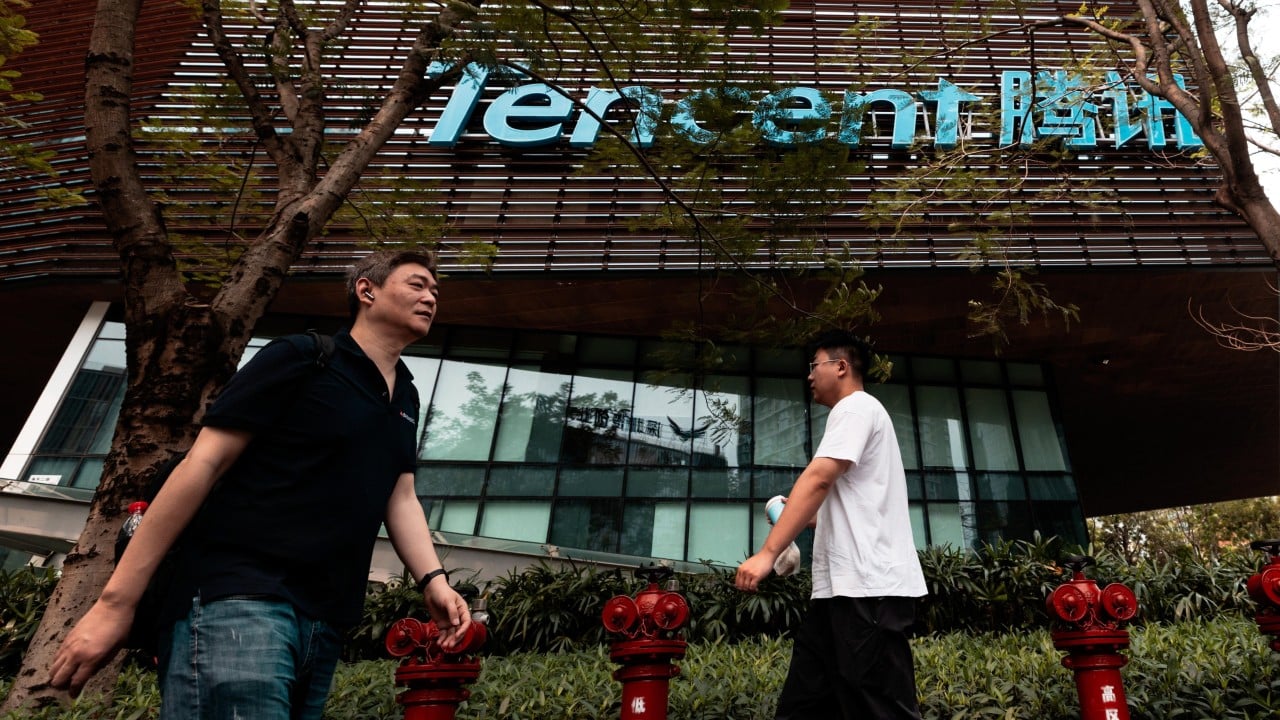
Tencent Holdings has hit a wall that no amount of WeChat dominance can easily scale. The company’s latest quarterly performance did more than just miss revenue estimates; it exposed a fundamental exhaustion in its traditional profit engines. For years, the Shenzhen-based giant relied on a predictable formula of gaming hits and social media advertising. But as domestic consumption plateaus and regulatory pressures simmer, the company is pivoting toward an aggressive, high-stakes integration of artificial intelligence to salvage its growth trajectory. This is not a voluntary evolution. It is a defensive maneuver.
The Cracks in the Gaming Fortress
Gaming has always been the bedrock of the Tencent empire. However, the bedrock is shifting. While titles like Honor of Kings and Peacekeeper Elite remain massive earners, they are aging assets in a market that demands constant novelty. The missed revenue targets stem directly from a cooling domestic gaming market and a slower-than-anticipated rollout of new, high-impact titles.
Investors often look at the top-line numbers, but the real story lies in the user acquisition costs. It is getting more expensive to keep players engaged. The Chinese youth gaming restrictions, while now a normalized part of the operational environment, have permanently lowered the ceiling for organic growth within the mainland. To compensate, Tencent is looking outward, but international expansion brings its own set of geopolitical and competitive headaches.
The problem is one of scale. When you are already the biggest, finding a market large enough to move the needle is an exhausting exercise. The company’s gaming division is no longer sprinting; it is treading water in a very expensive pool.
The Hunyuan Pivot as Necessity
President Martin Lau and CEO Pony Ma have positioned the Hunyuan large language model as the savior of the company’s ecosystem. This is a massive bet on infrastructure. By integrating Hunyuan across its suite of products—from Tencent Meeting to WeChat advertising—the company hopes to squeeze more efficiency out of its existing user base.
The strategy is clear: use AI to make advertising more surgical. If Tencent can use machine learning to predict user intent with 10% more accuracy, the value of their ad inventory skyrockets without needing to add a single new user. This is "internal growth," a term often used when external expansion has failed.
Why AI Integration is a Double Edged Sword
There is a significant risk in this pivot. Developing and maintaining LLMs is a capital-intensive endeavor that eats into margins. While Tencent has the cash reserves to fund this, the return on investment is not guaranteed.
- Computational Costs: The price of chips and electricity to run these models at the scale of a billion users is staggering.
- Regulatory Scrutiny: Beijing keeps a tight leash on AI outputs, meaning Tencent must spend heavily on filtering and compliance, costs their Western counterparts do not face to the same degree.
- Adoption Friction: Not every product benefits from a chatbot or an AI-generated interface. Forcing these features can alienate a user base that values the utility of WeChat's "Swiss Army Knife" simplicity.
Advertising in a Saturated Market
Tencent's advertising revenue missed the mark because the Chinese consumer is being more cautious. When the economy slows, the first thing companies cut is their marketing budget. Tencent’s ad platform, while powerful, is competing for those shrinking budgets against ByteDance’s TikTok (Douyin) and Alibaba.
ByteDance, in particular, has mastered the art of algorithmic addiction. Tencent is playing catch-up in the short-video space with Video Accounts. While Video Accounts have shown growth, they are essentially a defensive product designed to stop users from leaving the WeChat ecosystem. They are not yet the primary destination for advertisers; they are a secondary consideration.
To win back the lead, Tencent is betting that Hunyuan can create a superior ad-targeting engine that outperforms the competition. They are moving away from being a "social network" and trying to become a "data intelligence" company. This transition is difficult. It requires a shift in corporate DNA from being a product-led company to being a research-led one.
The Cloud and Fintech Bottleneck
Tencent Cloud was once touted as the next great growth engine. That narrative has cooled. The cloud market in China has devolved into a brutal price war, with Alibaba and Huawei slashing prices to maintain market share. In this environment, revenue growth is often "hollow"—you might be adding clients, but you aren't adding profit.
Fintech, another major pillar, faces a different set of hurdles. The regulatory environment for digital payments is far stricter than it was five years ago. The days of "move fast and break things" in Chinese finance are over. Tencent must now operate with the caution of a traditional bank while trying to maintain the growth of a tech startup. It is an almost impossible balance to strike.
The Overlooked Factor of Hardware Constraints
An often-ignored aspect of Tencent’s AI ambitions is the physical reality of hardware. Global export restrictions on advanced semiconductors mean Tencent has to be incredibly creative with the silicon it can access. While they have stockpiled chips, those supplies are not infinite. Their ability to iterate on Hunyuan depends entirely on their ability to optimize software for less-capable hardware or find alternative supply chains. This technical debt will eventually become a drag on their speed of innovation.
The Strategy of Aggressive Buybacks
Because the growth story has become complicated, Tencent has turned to a reliable tactic to keep shareholders happy: massive share buybacks. By spending billions to buy its own stock, the company is artificially boosting earnings per share even when total revenue growth is lackluster.
This is a move straight out of the mature-company playbook. It signals to the market that Tencent knows it cannot find better places to invest that cash than in itself. For a tech company that is supposed to be at the frontier of innovation, this is a bittersweet admission. It is the behavior of a utility company, not a hyper-growth disruptor.
Survival of the Most Integrated
The company's future depends on whether it can turn WeChat into an invisible layer of AI-assisted commerce. If you can order a meal, book a flight, and manage your investments through an AI assistant that actually knows your preferences, Tencent wins. But if the AI feels like a clunky add-on or a privacy invasion, users will stay with the "dumb" versions of the apps they already know.
Tencent is currently in a transition phase where the old world is dying and the new one is not yet born. The missed estimates are a symptom of this uncomfortable middle ground. They are no longer the underdog; they are the incumbent, and the incumbent's greatest enemy is always its own size.
The pivot to AI isn't about building a better search engine or a smarter chatbot. It is about maintaining control over the digital life of the Chinese citizen. If Tencent loses that grip, even by a fraction, the revenue misses of today will look like the good old days in five years.
Stop looking at the revenue miss as a one-time fluke. It is the first clear signal that the era of easy growth is over for the Chinese internet. The path forward requires a level of technical execution that Tencent has never been forced to demonstrate before. They must now prove they can build the future, rather than just tax the present.