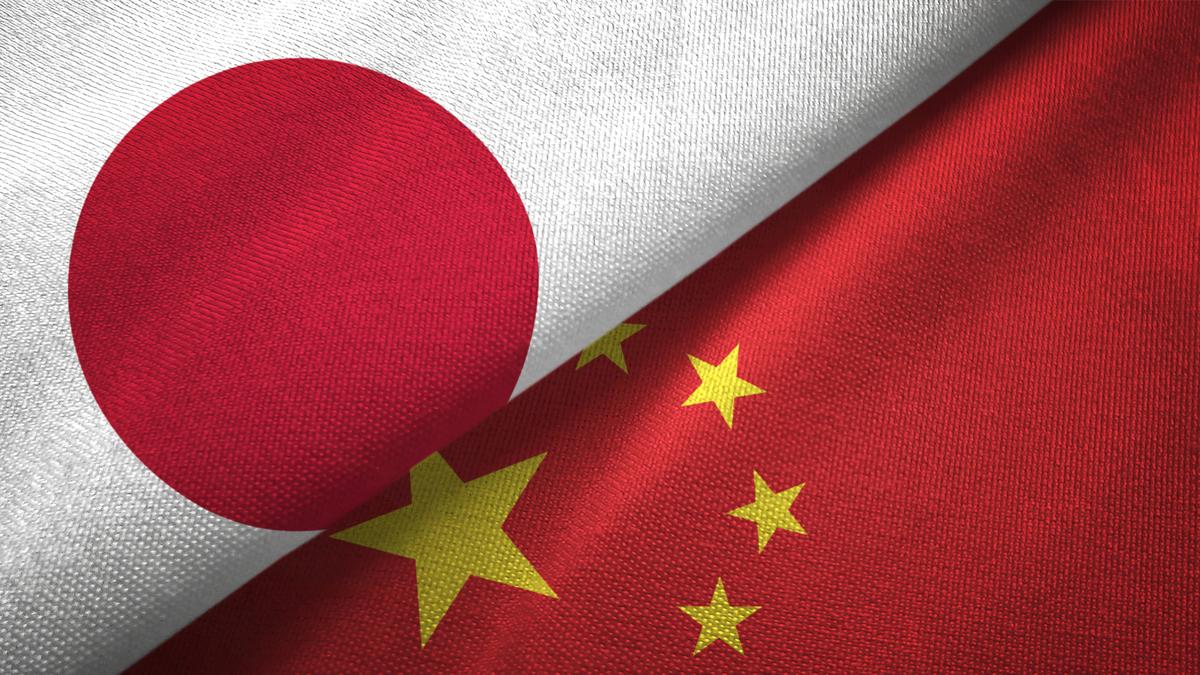
The era of Japanese restraint in the Taiwan Strait is over. By sailing the Sazanami, a 4,650-ton destroyer, through the sensitive waterway for the first time in modern history, Tokyo has shifted from quiet observer to active participant in the contest for the Indo-Pacific. This move was not a navigational error or a routine transit. It was a calculated response to a summer of unprecedented Chinese military incursions into Japanese territory. Beijing’s quick condemnation of the "provocation" misses the underlying reality that Japan is no longer willing to treat the Strait as a sanctuary for Chinese naval dominance.
For decades, the Japanese Maritime Self-Defense Force (JMSDF) adhered to an unwritten rule. While the United States and occasionally European powers sailed the 110-mile-wide body of water to assert "freedom of navigation," Japan stayed away to avoid a direct confrontation with its largest trading partner. That era of strategic ambiguity collapsed because the cost of silence finally outweighed the benefits of stability.
The August Escalation That Changed Everything
To understand why a single destroyer passage matters, one must look at the weeks leading up to the decision. In late August, a Chinese Y-9 electronic intelligence aircraft breached Japanese airspace near the Danjo Islands. Days later, a Chinese survey ship entered Japanese territorial waters off Yakushima Island. These were not isolated incidents. They represented a testing of the "red lines" that Japan has traditionally relied upon for its sense of national security.
Tokyo’s security establishment viewed these incursions as a tactical evolution. China was no longer just circling the disputed Senkaku Islands; it was testing the response times and political will of the Kishida administration. The decision to send the Sazanami, accompanied by vessels from Australia and New Zealand, was the "how" of Japanese signaling. It demonstrated that Japan can mobilize a multilateral response that mirrors the very "encirclement" that Beijing fears most.
Rebuilding the First Island Chain Defense
The Taiwan Strait is the central artery of the "First Island Chain," a geographic barrier that runs from the Japanese archipelago through Taiwan and down to the Philippines. For China, breaking this chain is essential for projected power into the deep Pacific. For Japan, the chain is a shield.
If China achieves total control over the Taiwan Strait, the Japanese southwestern islands—including Okinawa—become strategically isolated. Logistics for the JMSDF would become a nightmare. By transiting the Strait, Japan is asserting that the waterway is international territory, thereby maintaining the integrity of its own southern flank.
The hardware involved reflects this tension. The Sazanami is equipped with sophisticated anti-submarine warfare capabilities and Aegis-linked tracking systems. Its presence in the Strait was a live-fire exercise in data collection. Every radar pulse from the Chinese mainland and every shadowing maneuver by the People’s Liberation Army Navy (PLAN) provided the Japanese and their allies with a fresh map of Chinese coastal defense signatures.
Economic Interdependence Versus Kinetic Risk
Critics of the move argue that Tokyo is playing a dangerous game with its economy. China remains a vital market for Japanese tech, machinery, and automotive parts. However, the internal logic in Tokyo has shifted. The Ministry of Defense now operates under the assumption that economic stability is impossible without maritime security.
Japan imports over 90% of its energy and the vast majority of its food. A significant portion of those shipments passes through or near the Taiwan Strait. Allowing the Strait to become a de facto Chinese lake would give Beijing a "kill switch" over the Japanese economy. This realization has pushed the conservative elements of the Liberal Democratic Party (LDP) to advocate for a more "muscular" pacifism—a concept that would have been politically unthinkable a decade ago.
The Multilateral Mask
Japan rarely acts alone in these high-stakes maneuvers. The inclusion of Australian and New Zealand ships was a masterstroke of diplomatic cover. It framed the transit not as a bilateral feud between Tokyo and Beijing, but as a collective endorsement of a "Free and Open Indo-Pacific."
The Australian Role
Australia’s participation signals a tightening of the "quasi-alliance" between Canberra and Tokyo. Both nations are increasingly synchronizing their naval deployments to ensure that the U.S. Navy is not the only force standing against regional hegemony.
The New Zealand Shift
Perhaps more surprising was the presence of New Zealand. Long considered the "softest" link in the Western intelligence-sharing network regarding China, Wellington’s decision to join the transit suggests that even the most cautious regional players are becoming alarmed by the pace of Chinese naval expansion.
Technological Warfare in the Narrow Sea
The transit was as much about the electromagnetic spectrum as it was about steel and hulls. When a modern warship enters the Taiwan Strait, it enters one of the most dense signal environments on Earth.
Signal Intelligence (SIGINT) plays the lead role here.
- Chinese Land-Based Radar: Beijing’s coastal installations likely went into high gear to track the Sazanami.
- Aegis Integration: The Japanese destroyer’s systems were undoubtedly recording the frequencies and patterns of these radars.
- Subsurface Monitoring: The Strait is relatively shallow, making it a difficult but essential environment for submarine operations.
This data is the currency of modern warfare. Knowing how a competitor "looks" at you through their sensors allows you to develop the jamming and deception technologies needed if a conflict ever breaks out. Japan is a world leader in high-end electronics and materials science; every hour spent in the Strait is an opportunity to refine the algorithms that govern its missile defense systems.
The Limits of Beijing’s Outrage
While the Chinese Foreign Ministry used familiar language regarding "provocations" and "sovereignty," the actual military response was measured. The PLAN shadowed the vessels, but there were no reported "unsafe" intercepts of the kind often seen with U.S. aircraft or Canadian ships.
This suggests that Beijing is also in a period of calibration. They are dealing with a stalling domestic economy and are wary of triggering a full-scale maritime standoff that could lead to sanctions or a flight of Japanese capital. However, we should expect a "tit-for-tat" response in the coming months. We will likely see more Chinese naval activity in the Miyako Strait or perhaps another incursion into Japanese territorial waters to "balance the ledger."
The End of the Post-War Shell
Japan is currently undergoing its most significant military buildup since 1945. It is acquiring long-range counterstrike missiles, converting helicopter carriers into light aircraft carriers for F-35B stealth jets, and deepening intelligence ties with Taiwan.
The Sazanami’s transit is the clearest signal yet that Japan has shed its post-war shell. It is no longer content to let Washington handle the "heavy lifting" of regional deterrence. This shift creates a more complex environment for China. Instead of managing a single superpower rival, Beijing now faces a sophisticated, high-tech regional power that is historically sensitive to maritime threats and increasingly willing to flex its muscles.
The "Taiwan Contingency" is no longer a theoretical exercise for Japanese planners. It is the central pillar of their defense strategy. By sailing through the Strait, Japan has told the world that it views the defense of Taiwan as inextricably linked to the defense of Japan itself. This is a fundamental realignment of the Asian security order.
Western observers should stop viewing these transits as mere political theater. They are the tactical manifestations of a nation preparing for a future where the seas are no longer guaranteed to be open. Japan has placed its bet. It has decided that the risk of a confrontation today is preferable to the certainty of being cornered tomorrow.
Monitor the movement of Japanese logistics hubs toward the Ryukyu Islands. Watch for the hardening of civilian airports on Ishigaki and Miyako. These are the real indicators that Tokyo is bracing for a storm. The transit of the Sazanami was not the start of a new policy, but the public unveiling of a strategy that has been years in the making. The quiet is gone, and in its place is a cold, calculated readiness.



