Donald Trump isn't happy with the judicial branch today. If you've been following the saga of the massive new White House ballroom, you know it's been a legal minefield from the start. On Thursday, U.S. District Judge Richard Leon doubled down on his decision to block above-ground construction on the project. Trump took to Truth Social almost immediately, calling Leon a "Trump Hating" judge and accusing him of undermining national security.
The project itself is staggering in scale. We’re talking about a 90,000-square-foot addition where the East Wing used to stand. The administration already tore down the old East Wing in October, and now there’s a massive hole in the ground that Trump wants to turn into a neoclassical venue for 999 guests. Judge Leon’s latest ruling basically says: "You can keep digging the bunker, but don't you dare start the walls for the party room."
The national security card doesn't always work
The administration's legal team tried a classic move. They argued that the entire project—ballroom and all—is a matter of national security. They claim the building is "heavily fortified" to protect against drones, ballistic missiles, and even biohazards. Underneath the dance floor, they're building a state-of-the-art bunker, military installations, and a medical facility.
Judge Leon didn't buy the "all-or-nothing" argument. He clarified that while the secret underground stuff is fine to continue for safety reasons, the above-ground ballroom is a different story. He noted that national security isn't a "blank check" to bypass the law. The core issue? Trump didn't get congressional approval.
Historically, the White House is a protected landmark. You can't just knock down a wing and build a $400 million addition because you want to stop using "unsightly" tents for state dinners. The National Trust for Historic Preservation, the group that sued to stop the project, argues that the President is acting like a developer rather than a steward of a national monument.
Who is actually paying for this
One of the weirdest parts of this story is the money. Trump says the $400 million ballroom is funded by private donations. He’s framed it as a "Great Gift to America" that won't cost taxpayers a dime. But the courts are skeptical of this funding model.
- Public vs. Private: While the ballroom itself might be "privately funded," the taxpayer is definitely footing the bill for the high-tech bunker and security upgrades underneath.
- Foreign Steel: A recent investigation found that $37 million worth of donated steel for the project came from ArcelorMittal, a company based in Luxembourg.
- The Price Tag: The budget started at $200 million in 2025 and has doubled in just a year.
It’s easy to see why the DC Council and preservationists are panicking. The scale is massive. DC Council Chair Phil Mendelson was the lone "no" vote on a recent planning commission meeting, simply stating, "It’s too large."
The design flaws you haven't heard about
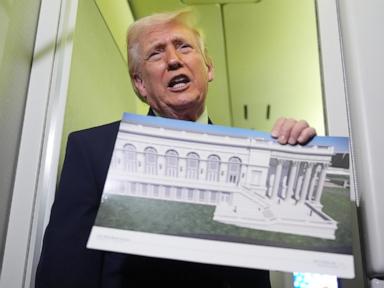
Aside from the legal drama, the architecture itself is kind of a mess. When renderings were first released, architects pointed out some pretty embarrassing mistakes. One version of the plan featured a grand exterior staircase that led to a wall with no door. Other critics noted that the massive columns would actually block the views from inside, and the symmetry of the iconic White House driveway would be completely ruined.
Trump actually released an "updated" design recently to fix some of these blunders, but the core problem remains. The building is designed to hold 999 people—just one shy of the 1,000-person threshold that might trigger even stricter regulations. It’s a classic Trump move.
What happens on April 17
We’re at a stalemate. The appeals court gave the administration a tiny window of time—until today, April 17—to keep working while they figure out their next move. The goal for the White House is to get this in front of the Supreme Court. They want the highest court in the land to rule that the President has the unilateral authority to renovate his residence however he sees fit, especially when "security" is involved.
If you’re wondering why this matters, it’s about more than just a fancy room for parties. It’s a fight over executive power. If a President can demolish part of the White House and rebuild it three times larger without asking Congress for a cent or a permission slip, the rules for federal landmarks basically cease to exist.
Don't expect construction crews to pack up their cranes just yet. The administration is already filing notices for further appeals. For now, the East Wing remains a construction site of half-finished bunkers and disputed dreams. If you want to see the progress, you'll have to look past the high fences and the legal filings. The next few weeks in the DC Circuit will determine if this project becomes a "crucial aspect" of the White House or its most expensive mistake.