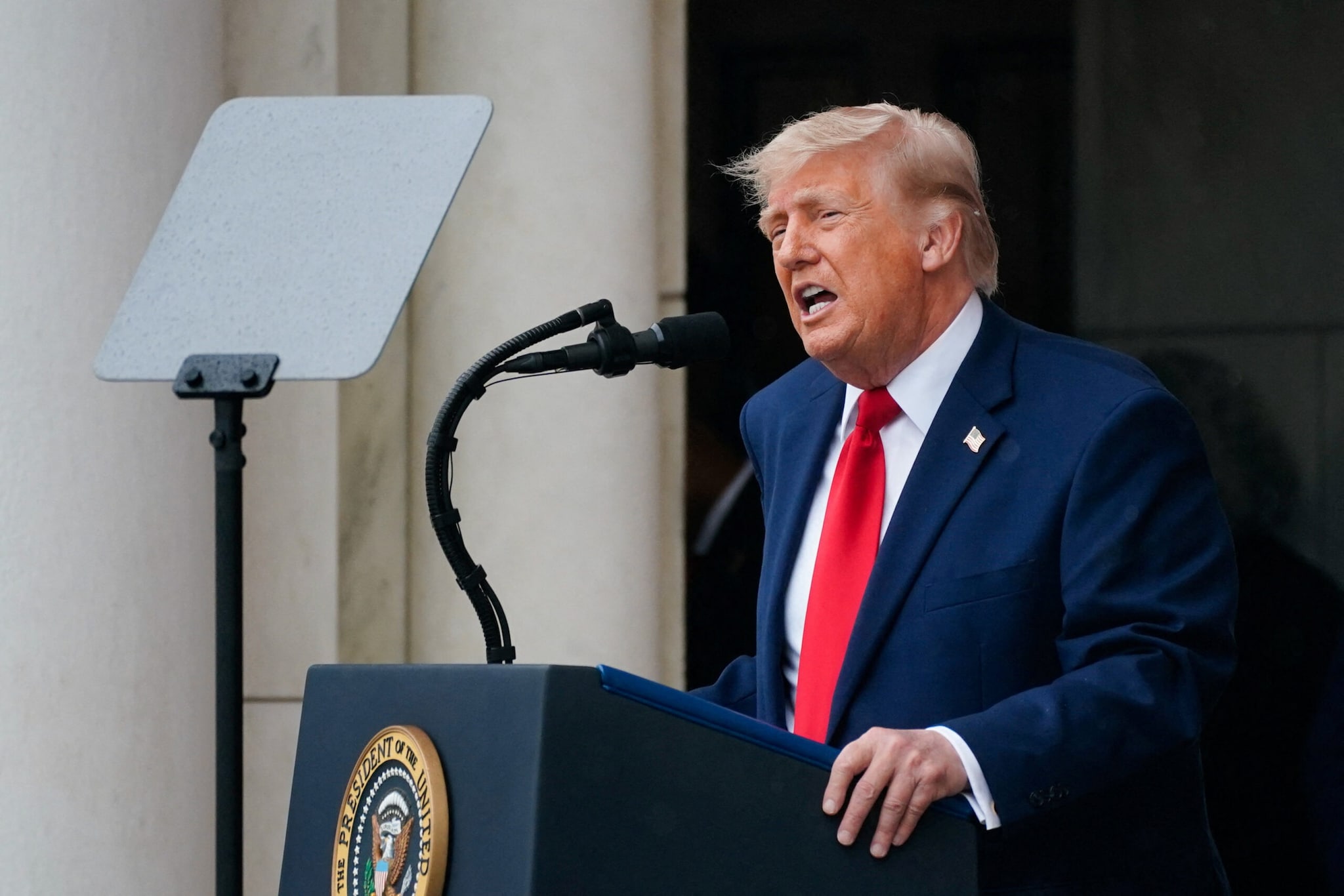
You can't just bypass the Constitution to get your way on immigration policy. President Donald Trump tried exactly that last September when he signed an executive proclamation forcing U.S. companies to pay a staggering $100,000 fee for every new H-1B visa application. The goal wasn't a secret. It was a blunt-force attempt to price foreign talent out of the market and force companies to hire American.
It didn't work. On Monday, U.S. District Judge Leo Sorokin in Boston completely dismantled the policy. In a scathing 42-page ruling, the judge declared the fee unlawful and vacated it nationwide. For a deeper dive into similar topics, we suggest: this related article.
This isn't just a minor administrative hiccup for the White House. It's a massive legal defeat that exposes the structural limits of executive power. If you run a business, work in tech, or manage a university department, you can breathe a sigh of relief. The $100,000 wall just came tumbling down.
A Tax by Another Name
The Trump administration insisted the $100,000 penalty was simply a regulatory payment designed to maintain program integrity. Judge Sorokin saw right through that. He ruled that regardless of what the administration decided to call it, the massive charge functioned as a tax. To get more information on the matter, detailed analysis can be read at Reuters.
The distinction matters. Under the U.S. Constitution, the power to levy taxes belongs exclusively to Congress. The executive branch cannot simply invent a six-figure levy out of thin air because it wants to squeeze a specific immigration program.
"The substance and application of the $100,000 payment reveal that it is a tax, regardless of what the payment is called," Sorokin wrote.
The administration leaned heavily on the Immigration and Nationality Act to justify the move. They argued the statute gives the president broad authority to restrict the entry of noncitizens who might harm domestic economic interests. But Sorokin pointed out that nowhere does the law grant the White House the power to tax.
This ruling heavily echoed another recent blowout for the administration. Earlier this year, the U.S. Supreme Court struck down Trump's sweeping global tariffs on similar grounds. The high court made it clear that only Congress has the constitutional authority to raise revenue. Sorokin used that exact legal logic to target the visa fee. A government can use taxes to curb behavior, like taxing tobacco to discourage smoking, but that doesn't change the fact that it's still a tax.
The Devastating Damage on the Ground
While the White House claimed major tech giants were totally fine with the changes, reality on the ground told a completely different story. Before this policy hit, standard H-1B filing fees usually ranged from $1,700 to $4,500. Bumping that to $100,000 was a 20-to-50 fold increase.
It paralyzed the system. Data revealed in court filings showed that U.S. Citizenship and Immigration Services received a pathetic 85 payments at the $100,000 level between October and mid-February. Employers simply couldn't or wouldn't pay it.
A coalition of 20 Democratic state attorneys general, led by California, filed the lawsuit because the damage stretched far beyond Silicon Valley tech companies. It was choking public infrastructure.
- Public Universities: Schools lost out on critical research professors and specialized faculty who couldn't be replaced by domestic applicants.
- Healthcare Systems: Rural hospitals and state-run medical facilities couldn't secure doctors and nurses, worsening massive nationwide staffing shortages.
- K-12 Education: Public school districts struggled to fill vacancies for specialized STEM and language teachers.
The states successfully argued that the administration violated the Administrative Procedure Act by failing to provide any reasoned explanation for the policy. They gave zero consideration to how a six-figure fee would wreck the ability of states to provide basic human needs like healthcare and education.
What Happens Next for U.S. Employers
The Department of Homeland Security immediately fired back, calling the decision blatant judicial activism. The administration claims it's protecting American workers, and White House spokespeople say they are confident the order will be reversed on appeal.
But don't expect a quick reversal. With the Supreme Court tariff precedent looming large, the administration faces an uphill battle to prove this isn't an unconstitutional tax.
Right now, the $100,000 fee is dead. If you are an employer looking to file new H-1B petitions for highly skilled workers, you can move forward under the standard, pre-proclamation fee structures. The standard 65,000 annual cap and the extra 20,000 spots for advanced-degree holders remain in place.
You should act quickly. The administration will undoubtedly appeal this to the circuit court, and multiple other lawsuits are still winding their way through federal courts in Washington, D.C., and San Francisco. This legal battle isn't entirely over, but for now, the playing field has reset. Prepare your applications, calculate your budgets based on the traditional fees, and get your filings in before the next legal shift.