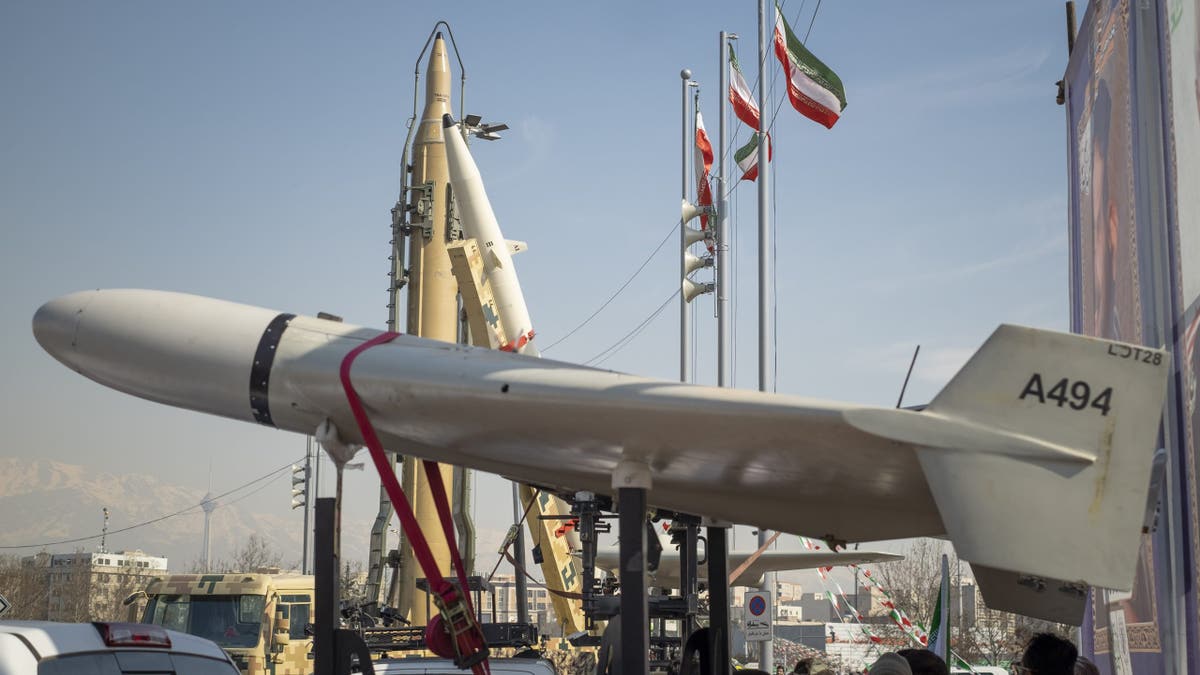
Western intelligence and defense analysts spent decades losing sleep over the sheer volume of Tehran’s arsenal. We saw the satellite photos. We watched the underground "missile cities" revealed in glossy propaganda videos. But a recent report from the Institute for the Study of War (ISW) suggests we might have been looking at the wrong metrics. It turns out that having thousands of missiles doesn't matter much if half of them fall out of the sky before reaching the target.
During Iran's massive April 2024 aerial assault on Israel, the numbers were staggering but the results were underwhelming. Reports indicate that roughly 50% of the Iranian ballistic missiles either failed to launch or crashed well short of their intended destinations. This isn't just a minor "glitch" in a few units. We're talking about a systemic failure that calls into question the readiness of the entire Islamic Revolutionary Guard Corps (IRGC) Aerospace Force.
When you strip away the bravado, the reality is clear. Iran's long-range strike capability is heavily weighed down by aging tech and poor quality control.
Why Technical Failures Are Winning the War for Israel
If you’re a military planner, you care about "probability of kill." You want to know that if you fire a shot, the bullet hits. Iran’s current problem is that their "bullets" are exploding in the barrel.
U.S. officials tracking the April barrage noted that out of the medium-range ballistic missiles fired, a significant portion didn't even make it across the border. Think about that for a second. These are weapons designed to travel over a thousand kilometers, yet they can't survive the first three minutes of flight.
This high failure rate creates a massive "transparency" problem for the IRGC. They can’t hide these failures anymore. In the past, they could claim a successful test in the desert and nobody could prove otherwise. Now, with high-resolution global tracking and real-world combat scenarios, the world sees the scrap metal.
The ISW report highlights that this "combat-ineffective" status isn't just about the missiles being intercepted by the Arrow 3 or Patriot systems. It’s about internal engineering. Iran relies on a mix of North Korean designs and indigenous "Frankenstein" modifications. When you keep stretching old tech to hit longer ranges, the math starts to break. Stress on the airframe increases. The fuel pumps fail. The guidance systems shake themselves to pieces.
The Gap Between Propaganda and Physics
Tehran loves a good parade. They line up the Fattah and the Kheibar Shekan and tell us they’re "hypersonic" or "invincible." Physics tells a different story.
Many of these systems are liquid-fueled. Liquid fuel is a nightmare to handle in a high-stress combat environment. It’s corrosive. It’s volatile. If your technicians haven't slept in three days and they're rushing a launch under the threat of a counter-strike, mistakes happen. A leaky valve or a contaminated fuel line turns a multi-million dollar missile into an expensive lawn dart.
The Problem with Quantity Over Quality
Iran’s strategy has always been "saturation." They know Western-made interceptors like the SM-3 are expensive. If they fire 100 missiles, they hope five get through. But if 50 of those 100 fail on their own, the math changes completely.
- Logistical Strain: Every failed missile represents wasted resources and a launch site that is now exposed to satellite detection.
- Intelligence Leakage: Crashed missiles provide a treasure trove for Western intelligence. Every time a "secret" Iranian missile crashes in the Iraqi desert, experts get to pick apart the wiring.
- Deterrence Erosion: If your neighbors know your missiles probably won't work, they aren't as scared of you.
I’ve seen this pattern before in other Soviet-adjacent military doctrines. They prioritize the "look" of power. They want the intimidation factor. But true military power is about reliability. Right now, the IRGC’s reliability is in the basement.
Intelligence Assessments on Iranian Ballistic Missiles
The ISW isn't the only group pointing this out. Various defense circles in Washington have been quietly discussing the "dud rate" of Iranian hardware for years. What changed is the scale of the data set. The April 2024 attack was the largest drone and missile strike in history. It provided a massive sample size.
Before this, we were guessing based on grainy footage from Yemen. Now we have hard data from sophisticated radar arrays. The consensus is forming. Iran’s ballistic program is a "paper tiger" in terms of precision and reliability, even if it remains dangerous in terms of sheer numbers.
Reliability vs Interception
Don't confuse failure with defense. Israel’s "Iron Dome," "David’s Sling," and "Arrow" systems performed exceptionally well. They caught almost everything that actually stayed in the air. But the "silent win" for the West was the missiles that didn't even need to be shot down.
When 50% of an arsenal is combat-ineffective, it doubles the effectiveness of the defender’s magazine. Israel and its allies don't have to waste expensive interceptors on missiles that are headed for an empty field or are about to break apart in the stratosphere.
What This Means for Regional Security
If you're an Iranian commander, you're currently in a panic. Your primary tool for projecting power just got exposed as unreliable. This likely leads to two outcomes.
First, Iran will probably double down on its drone program. The Shahed-136 drones are cheap, slow, and easy to shoot down, but they actually work. They're basically lawnmowers with wings, and they don't have the complex failure points of a ballistic missile.
Second, expect a massive internal purge of the IRGC’s engineering corps. Someone is going to get blamed for the April embarrassment. But you can't execute your way out of a bad supply chain. Iran is under heavy sanctions. They can’t get the high-grade microchips or the specialized alloys they need for high-performance rocketry. They’re trying to build Ferraris using parts from a 1994 Toyota. It doesn't work.
The High Cost of Cutting Corners
You can’t cheat the engineering. Ballistic missiles operate at the edge of physical limits. They face extreme heat during reentry and massive G-forces during ascent.
Iran’s domestic industry has done a lot with a little. I’ll give them that. They’ve managed to build a massive infrastructure under some of the harshest sanctions in history. But the ISW report proves there's a ceiling to that success. You can make a missile look like a missile, but making it behave like one is a different story.
The "combat-ineffective" label is a scarlet letter for a military that relies on fear. If the majority of your strategic deterrent is a coin flip, you don't actually have a deterrent. You have a gamble.
If you’re following this space, stop looking at the total number of missiles Iran has. That number is a lie. Start looking at the failure rates. Watch the telemetry data from the next time they try a test launch. The real story isn't how many they fire; it's how many actually make it to the end of the flight path. For Iran, that number is currently a disaster.
The next time you see a headline about a "new" Iranian missile, remember the 50% rule. Half of what they say is probably true, and half of what they build probably won't fly. Keep your eyes on the technical reports, not the parade photos. That's where the real war is being lost.