Money changes shape when it freezes.
In a bank account, it ceases to be currency and becomes a monument to a dispute. For decades, billions of dollars belonging to the Iranian people have sat untouched in foreign vaults, locked away by the invisible architecture of international sanctions. They are numbers on a digital ledger, completely stationary, while the world moves violently around them.
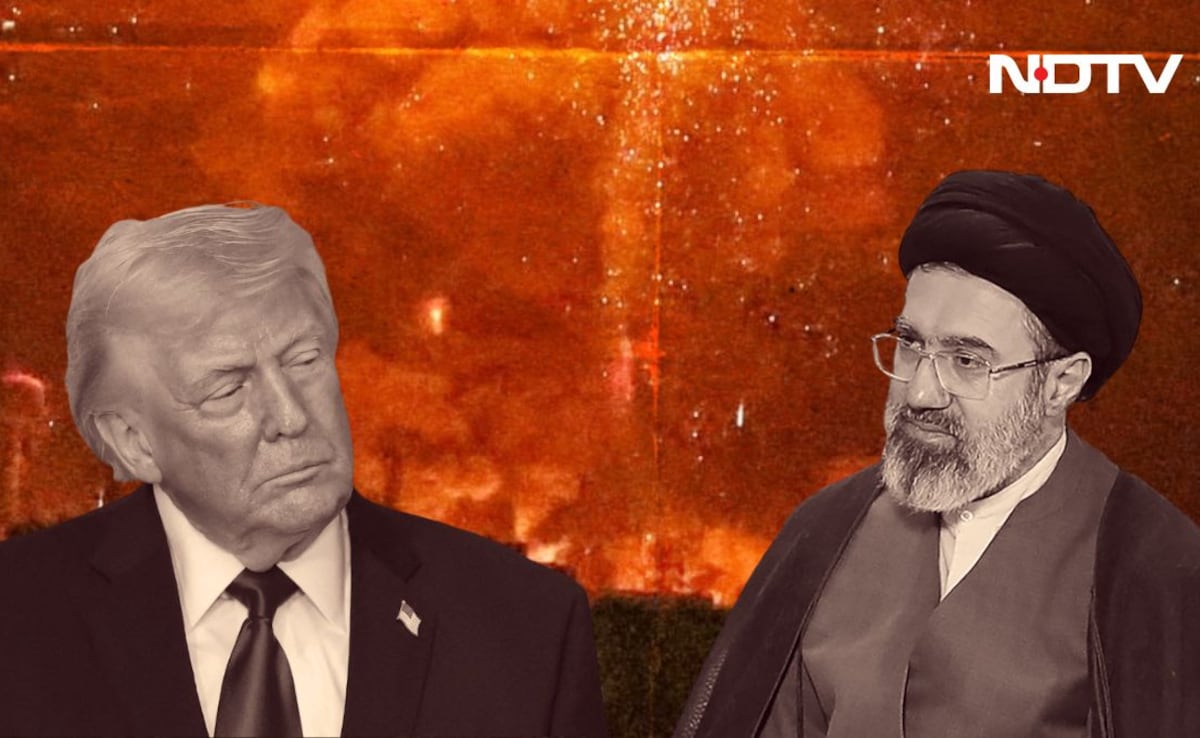
Now, a massive lever is moving. Reports from the negotiating tables indicate that Iranian officials are pursuing the release of $24 billion in frozen assets as part of a sweeping, quiet deal with the United States.
To understand what that number means, you have to look past the geopolitical chessboard. You have to look at the grocery stores in Tehran, where the smell of baked sangak bread competes with the anxiety of skyrocketing inflation. You have to look at the pharmacies where generic substitutes are rationed like water. Twenty-four billion dollars is not just a financial statistic. It is a blood transfusion for an economy gasping for air.
Consider a hypothetical citizen, someone we will call Dariush. He runs a small appliance repair shop in Isfahan. Dariush does not read diplomatic cables, but he feels them. He feels them when a replacement compressor for a refrigerator costs twice what it did last month. He feels them when his customers ask to pay in installments for a fix that used to take pocket change. For Dariush, the frozen billions are a abstract ghost that haunts his ledger every single day. When a country’s assets are trapped abroad, the currency at home plummets, and the cost of living climbs until it suffocates ordinary lives.
The mechanics of this proposed deal are intricate, laced with distrust and historical baggage. The funds in question are scattered across the globe, held in South Korea, Iraq, and European financial institutions. They are largely the proceeds of oil sales from a different era, blocked from returning home by a labyrinth of US banking restrictions.
Negotiating their release is like trying to defuse a bomb while wearing boxing gloves.
The United States uses these frozen funds as its ultimate bargaining chip. It is financial leverage meant to curb Iran’s nuclear ambitions and influence its regional policy. For Washington, letting that money flow is a massive political risk. Critics argue that unfreezing billions provides a windfall to a hostile government, potentially funding proxy networks and defense programs. The administration must walk a razor-thin line, structuring the release so the capital can only be used for humanitarian goods—food, medicine, and agricultural supplies.
But money is fungible. Even if every single cent of the $24 billion is strictly monitored and funneled directly into wheat shipments or medical equipment, it frees up other state resources. It alters the entire balance sheet of the nation.
The true complexity lies in the delivery mechanism. You cannot simply wire $24 billion to the Central Bank of Iran. The process requires a financial intermediary, usually a third-party nation like Qatar or Oman, to act as a custodian. The funds are moved into guarded accounts, and every transaction requires a mountain of paperwork to prove no sanctioned entities are touching the cash. It is a slow, agonizing process where a single misplaced comma can stall the livelihood of millions.
This is not the first time this high-stakes drama has played out. History repeats itself in the world of economic warfare. We saw it during the implementation of the JCPOA in 2015, and we saw it in smaller asset releases in the years that followed. Every time the financial gates open slightly, a brief wave of optimism sweeps through the markets. The Iranian rial strengthens for a moment. Businesses breathe.
Then, the political winds shift in Washington or Tehran, the gates slam shut, and the freeze sets in again.
This cyclical economic whiplash does something profound to a society. It breeds a deep, systemic uncertainty. Merchants cannot plan for next quarter because they do not know if their money will be worth half its value by Tuesday. Young families delay having children. The brightest minds look for ways to leave, creating a quiet exodus of talent that hurts far worse than any trade embargo.
The debate over the $24 billion deal often ignores this psychological toll. In Western capitals, the conversation is clinical. It centers on compliance, verification protocols, and strategic deterrence. In the halls of power in Tehran, it is framed as a triumph against foreign tyranny. Both narratives miss the ground reality.
If the deal goes through, the immediate impact will not be a sudden boom or a transformation of the geopolitical landscape. It will be a collective lowering of shoulders. It will mean that a hospital in Shiraz can secure the specialized oncology drugs it ran out of last winter. It will mean Dariush might see the price of imported copper wire stabilize long enough for him to turn a profit.
The money belongs to a nation, but its absence is borne by individuals.
As the diplomats argue behind closed doors, drafting agreements that will be scrutinized by intelligence agencies across the world, the digital ledger waits. The $24 billion remains suspended in a state of financial animation, a massive reserve of potential energy that could either stabilize a region or ignite a new wave of political fury.
The ink on these agreements is never permanent. Even if the assets are unlocked, the underlying friction between the two nations remains untouched. The fundamental distrust is too deep, the history too bloody. This deal is a temporary truce in an ongoing economic war, a moment where both sides find it useful to let the ghost of this money materialize back into the real world.
Outside the repair shop in Isfahan, the afternoon sun hits the dusty pavement. Dariush closes his ledger, knowing that his tomorrow depends entirely on decisions made by people who will never know his name, fighting over wealth he can see only in the rising prices of his daily bread.