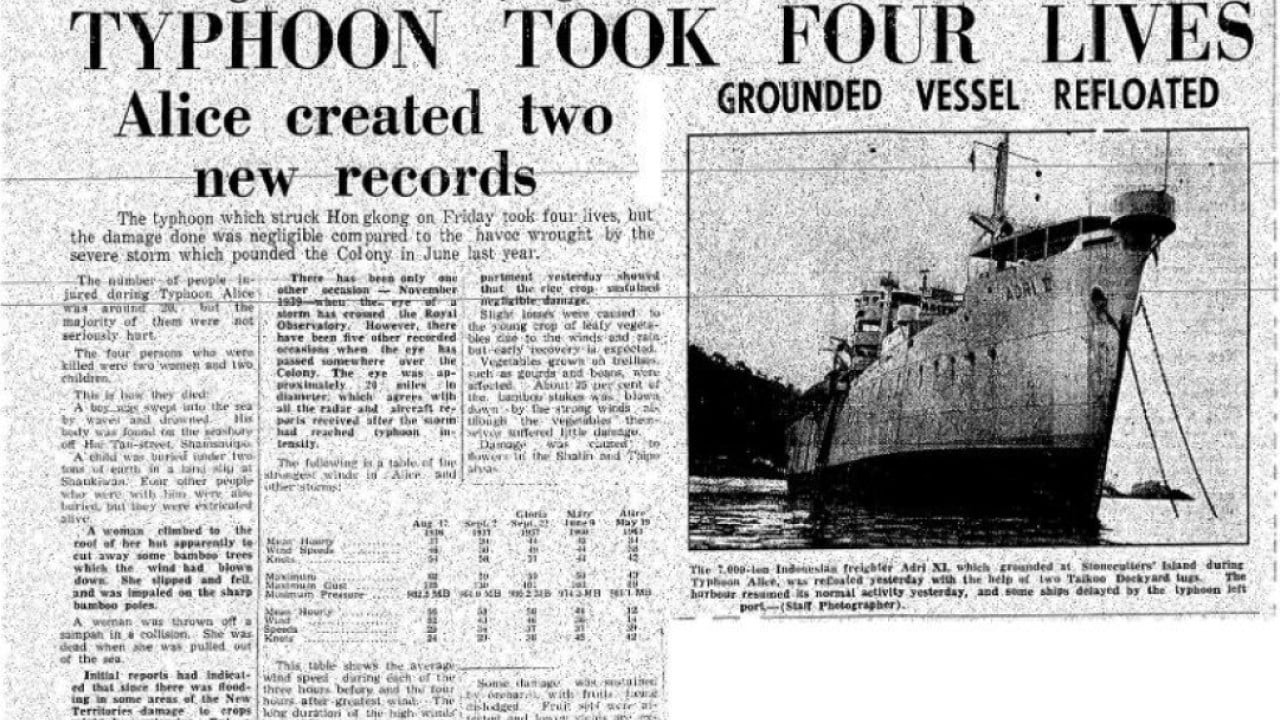
May 19, 1961, started like any other tense, humid morning in colonial Hong Kong. By nightfall, the city was in the direct crosshairs of a tropical storm that exposed major vulnerabilities in how the territory built houses and protected its people.
Typhoon Alice wasn't the biggest storm to hit the South China Sea. Honestly, it wasn't even close to the ferocity of Typhoon Wanda, which flattened parts of the city a year later. Yet, Alice holds a distinct, sobering place in local history. It was one of the rare storms where the eye passed directly over the Hong Kong Observatory, triggering the dreaded Hurricane Signal No. 10.
The storm left four dead, around 20 injured, and thousands shaken. Looking back at the historical record helps us understand how a mid-sized storm managed to breach a major Asian hub and why its lessons still apply to modern urban engineering.
The Micro-Storm That Fooled Forecasters
People often think a typhoon needs monstrous, Category 5 winds to cause chaos. Alice proved that theory wrong.
The storm formed east of the Philippines on May 17, 1961, and sprinted northwest. It developed fast. By the time it made landfall on May 19, it was packed with intense localized energy but lacked a massive radius. The Hong Kong Observatory logged maximum 60-minute sustained winds of just 83 km/h. On Waglan Island, winds topped out at 90 km/h.
Those numbers don't technically hit the official threshold for sustained hurricane-force winds. Meteorologists at the time faced a brutal choice. Should they hoist the No. 10 signal?
They did. It was the right call.
Typhoon Alice Wind Profile (May 19, 1961)
----------------------------------------
Max Gusts:             137 km/h (85 mph)
Sustained Port Winds:  83 km/h
Waglan Island Winds:   90 km/h
Even though sustained winds were below the technical hurricane line, localized gusts tore through the city at 137 km/h. The storm didn't give anyone time to overthink things. It hit fast, slammed the urban core, and left a trail of ruined wooden shanties and flooded streets before moving inland into Mainland China.
The Human Cost in the Shantytowns
The South China Morning Post archive from May 21, 1961, paints a grim picture of the aftermath. The four fatalities weren't offshore fishermen caught in rough seas. They were vulnerable residents living in precarious onshore conditions.
Two women and two children died when the storm collapsed poorly constructed shelters.
During the early 1960s, Hong Kong faced a massive housing crisis. Hundreds of thousands of refugees lived in makeshift squatter huts clinging to steep hillsides. These structures were basically made of scrap wood, sheet metal, and tarpaulins. They stood zero chance against a 137 km/h gust.
When Alice hit, hillsides turned to mud. Retaining walls failed. The storm proved that structural integrity matters far more than meteorology charts. A weaker storm hitting a highly vulnerable neighborhood is always more dangerous than a super typhoon hitting a fortified concrete city.
The Controversy Behind Signal No. 10
The decision to raise the No. 10 signal for Alice sparked intense debate among colonial officials and weather experts. Just the year before, in 1960, Typhoon Mary had prompted a similar emergency response that critics claimed was an overreaction.
When the eye of Alice passed directly over Nathan Road and the Tsim Sha Tsui observatory, the sudden drop in wind speed created a eerie, false sense of security. People stepped outside into the calm, only to get slammed by the reverse wall of the storm a short time later.
The high signal was justified by the sheer unpredictability of the storm's path. If the observatory hadn't issued the maximum warning, the death toll likely would've been much higher. It set a precedent for the city: clear, aggressive public warnings save lives, even if the storm winds fall slightly short of the history books.
What Alice Taught Modern Civil Engineers
You can draw a straight line from the wreckage of May 1961 to the aggressive building codes Hong Kong uses today. The city realized it couldn't survive as a global financial hub if a moderate May storm could shut down the economy and claim lives.
The disaster forced a total rethink of urban planning.
- Mandatory Concrete Infrastructure: The government accelerated the relocation of squatter communities into public housing blocks built with reinforced concrete.
- Slopes and Retaining Walls: Hillside communities were retrofitted with massive concrete anchors and drainage channels to prevent the mudslides that buried families during Alice.
- The Window Test: Modern structures are engineered to withstand gusts well over 250 km/h, far higher than what Alice produced.
Check Your Local Storm Preparedness
If you live in a typhoon or hurricane zone, don't use historic categories to judge your current safety. A storm doesn't need a name like "Super Typhoon" to ruin your property or threaten your family.
Take a page from the lessons of 1961. Walk around your property today. Inspect the drainage paths around your home. Look for loose roofing, unanchored structures, or old trees leaning toward your living room. Clear out gutters before the rainy season starts. Secure your emergency supplies before the local stores run out of batteries and clean water. History shows that the storms we underestimate are usually the ones that do the worst damage.


