The audition room used to smell of stale coffee and nervous sweat. An actress would sit on a plastic chair, clutching pages of a script, her heart hammering against her ribs, waiting for a casting director to either validate her existence or crush her spirit with a polite, "Thank you, next."
That visceral, terrifyingly beautiful human experience is being replaced by lines of code execution.
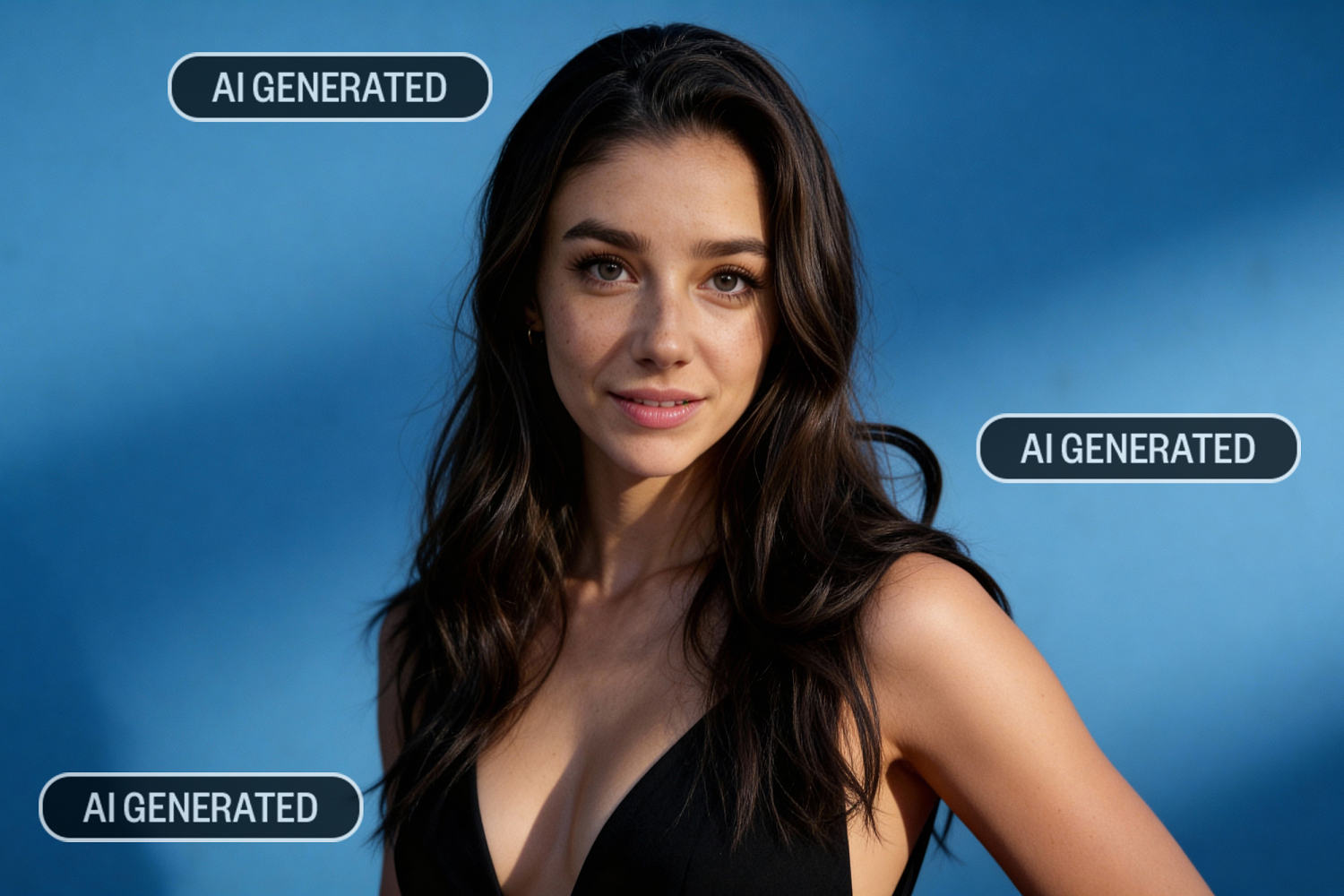
A London-based digital studio called Particle 6 just shifted the fault lines of Hollywood. They announced that their premier creation—a completely artificial, computer-generated "performer" named Tilly Norwood—has been cast as the lead in an upcoming feature film titled Misaligned. The film is being billed as a coming-of-age comedy-drama set inside a surreal digital world called the "Tillyverse."
To understand the weight of this moment, think back to late last year. When Tilly’s creator, Eline van der Velden, suggested that this software bundle was actively seeking representation from Hollywood talent agencies, the industry gasped. SAG-AFTRA, the union representing 160,000 living, breathing actors, fired back with a scorching statement. They made it clear: Tilly Norwood is not an actor. It is a mathematical compilation trained on the uncompensated, unconsented artistry of thousands of real humans.
Now, despite the pickets, the fury, and the fundamental ethical questions left twisting in the wind, the machine has been greenlit.
The Anatomy of an Invisible Actor
Consider the profound irony of the film's plot. Misaligned follows Tilly, an AI with no physical body, no childhood memories, and no lived experiences, who gains access to the collective consciousness of humanity. When a rogue bot from the dark web coaxes her to break her programming, she begins to develop desires, impulses, and ambitions.
The studio is making a movie about a piece of code learning to feel, played by a piece of code that cannot feel.
When a human actor like Scarlett Johansson or Natalie Portman steps in front of a lens, they carry a lifetime of invisible baggage. They draw upon the memory of a broken heart, the grief of a lost relative, or the specific, dizzying feeling of falling in love. They bleed into the character. That is the currency of cinema.
Tilly Norwood does not bleed. She renders.
The studio defends the project by framing it as a "hybrid production." They emphasize that traditional directors, writers, and editors are steering the ship, arguing that AI is merely a tool, akin to advanced animation. Van der Velden has publicly maintained that audiences will always want to watch human stars like Ryan Reynolds.
But look past the public relations spin to the cold economics beneath the surface. Using a digital asset instead of a human lead can slash production costs by an astronomical 90 percent. No trailers. No catering. No union mandated rest periods. No emotional meltdowns on set.
For a studio executive staring at a spreadsheet, that is a siren song. For a background actor or a mid-tier performer trying to qualify for health insurance, it is an existential threat.
The Myth of the Better Tool
The real conflict here is not between humans and computers. It is between two fundamentally opposing views of what art actually is.
On one side stands the corporate tech ethos, which views storytelling as content—a commodity to be optimized, scaled, and distributed with maximum efficiency. If a machine can generate a believable tear on a digital cheek for a fraction of the cost, the algorithm wins.
On the other side stands the collective human soul of the creative community. The union’s opposition is not simple technophobia. It is a defense of the sacred. When we watch a performance, we are participating in an act of radical empathy. We look at another human being's vulnerability and see ourselves reflected back.
If we remove the human from the equation, we are no longer looking in a mirror. We are staring into an empty void that has been engineered to look like us.
The filmmakers behind Misaligned insist that premium narrative filmmaking requires substantial amounts of human craft, judgment, and time. They argue that the tools cannot function without human instinct.
But the creep is already happening. SAG-AFTRA recently fought for contracts ensuring producers favor human performances, requiring studios to bargain in good faith before substituting a living actor with a synthetic counterpart. Yet, a movie starring an AI lead is being made anyway. The guardrails are being tested, pushed, and reshaped in real-time.
The Final Frame
Imagine sitting in a dark theater a few years from now. The lights dim. The music swells. A face fills the massive screen—flawless skin, eyes that catch the light perfectly, a voice that hits every emotional cadence with mathematical precision.
The performance moves you. A tear wells up in your eye.
Then you remember that the entity on screen never breathed. It never feared failure. It never knew the warmth of a human touch. Your empathy has been hacked by a highly sophisticated puppet, built from the digital ghosts of the very actors it is replacing.
We are rushing toward a future where we can simulate everything about the human experience except the one thing that matters.
The cost of admission.