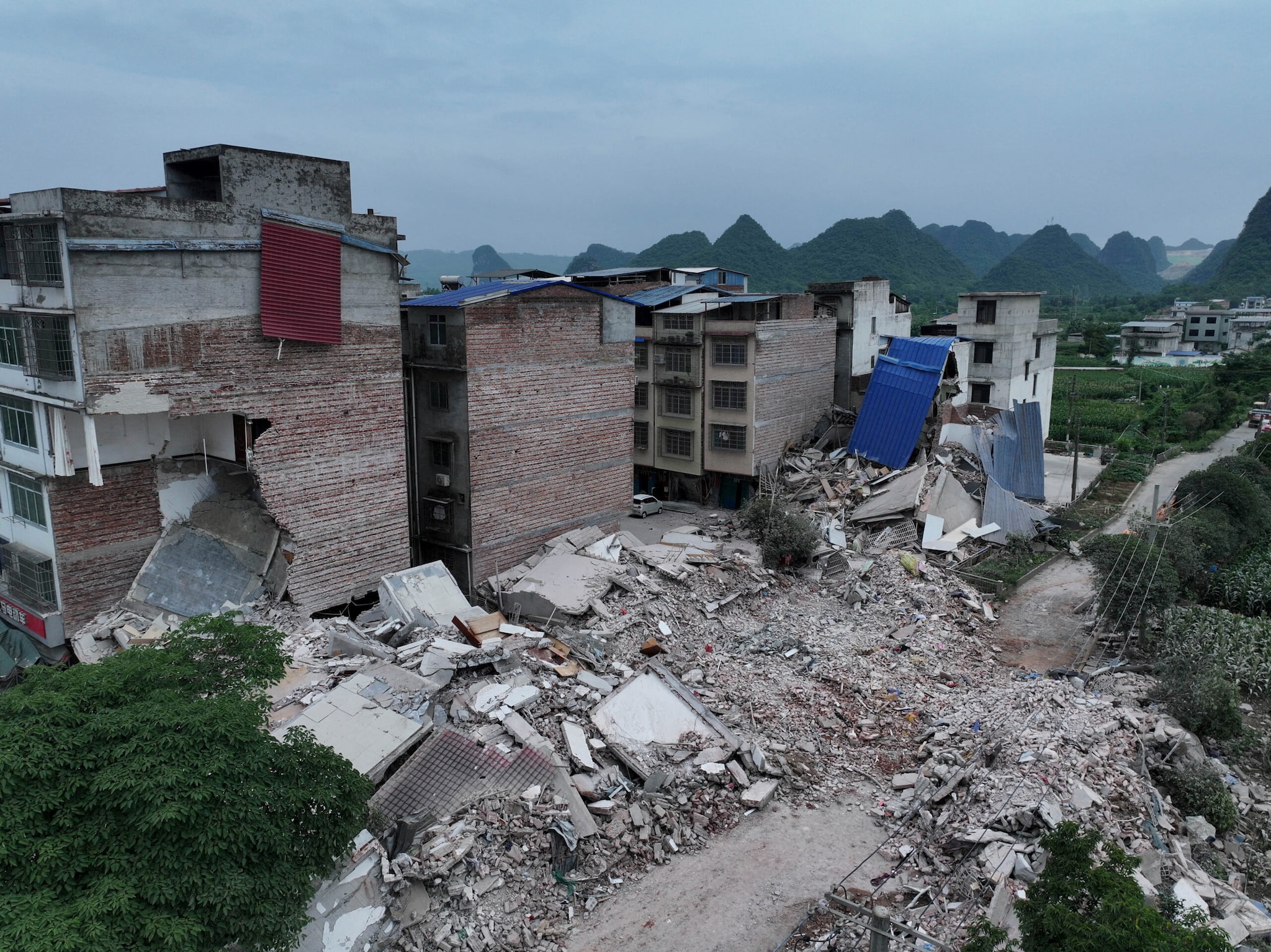
A pair of severe seismic events occurring thousands of miles apart have exposed the profound vulnerability of disparate building infrastructures to sudden ground shifts. In south China’s Guangxi region, twin 5.2-magnitude earthquakes left two people dead, collapsed at least 15 homes, and forced the emergency evacuation of more than 7,000 residents in Liuzhou City. Hours later, a significantly stronger 6.0-magnitude earthquake rattled the Vanuatu islands in the South Pacific near Port Vila. Despite the Vanuatu quake releasing nearly fifteen times more raw energy than the Chinese tremors, it resulted in zero reported casualties and only minor localized damage.
This stark contrast highlights an unsettling reality. The true danger of an earthquake is rarely determined by its magnitude alone, but rather by the exact depth of the rupture and the historical preparation of the soil and structures above it.
The Anomaly of the Guangxi Twin Quakes
The disaster in Liuzhou defies standard expectations for regional seismic activity. Southern China is historically considered far safer than the volatile, mountainous fault lines of Sichuan to the west or the active subduction zones near Taiwan to the east. The twin 5.2-magnitude tremors that struck Liuzhou represented the most violent seismic disruption to hit the immediate area in 331 years.
The primary reason for the extensive destruction was the shallow depth of the first rupture. Striking at just 8 kilometers beneath the surface, the initial midnight tremor sent violent, high-frequency shockwaves straight up into Taiyangcun Town before the energy had any distance to naturally dissipate. A second 5.2-magnitude shock struck the exact same area less than twenty-four hours later, hammering already compromised structures.
SEISMIC COMPARISON: MAY 18-19, 2026
+-------------------+--------------------+--------------------+
| Metric            | Liuzhou, China     | Port Vila, Vanuatu |
+-------------------+--------------------+--------------------+
| Magnitude         | 5.2 (Twin Quakes)  | 6.0                |
| Focal Depth       | 8.0 km (Very Shallow)| 10.0 km (Shallow) |
| Fatalities        | 2                  | 0                  |
| Evacuations       | 7,000+             | 0                  |
| Secondary Hazards | Sinkholes, Rockfalls| Minor Aftershocks  |
+-------------------+--------------------+--------------------+
The human toll in Guangxi was concentrated but devastating. A married couple working as chicken vendors at a local farmers' market were killed when a building buckled. While emergency crews successfully pulled a 91-year-old man alive from the rubble after eleven hours of entrapment, the structural failures across the town pointed to a deeper geological problem.
The earthquakes triggered 14 distinct secondary disasters, including massive rockfalls and sudden ground sinkholes. Taiyangcun Town rests on a highly sensitive karst landscape, where subterranean limestone is gradually carved out by groundwater. The sudden, violent acceleration of the shallow quakes destabilized these hidden underground caverns, causing three massive sinkholes to open overnight, with one plunging more than three meters deep. Local infrastructure built on top of this unstable, hollowed terrain simply could not withstand the shifting foundations.
Why Vanuatu Withstood a Stronger Shock
Far out in the Coral Sea, the 6.0-magnitude earthquake that struck near Port Vila, Vanuatu, presented a completely different outcome. Vanuatu rests directly atop the Pacific Ring of Fire, specifically where the Indo-Australian Plate actively plunges beneath the New Hebrides microplate. Because this tectonic collision is continuous, the islands experience a relentless barrage of moderate to severe earthquakes every single year.
The 6.0-magnitude event occurred at a shallow depth of 10 kilometers, yet it produced nothing more than moderate shaking in nearby Pango and light tremors across the capital city of Port Vila.
Constant exposure to extreme seismic threats has forced a natural selection of infrastructure across the South Pacific archipelago. Traditional building designs utilize lightweight, flexible materials like timber, thatch, and bamboo, which sway and bend to absorb kinetic energy rather than snapping or collapsing under tension. Modern concrete builds in Port Vila are subject to strict building codes designed specifically to handle routine tectonic shifts.
Furthermore, the geological composition of the volcanic islands offers a far more predictable foundation than the fragile, Swiss-cheese karst topography found in Liuzhou. Without subterranean voids to collapse or ancient unreinforced masonry to shatter, the massive kinetic energy of the 6.0-magnitude Vanuatu quake rolled harmlessly out into the ocean floor.
The Hidden Risk of Rare Seismic Zones
The real takeaway from these concurrent global events is that the rarest seismic zones are frequently the most dangerous. Municipalities situated along major, well-mapped fault lines routinely invest heavily in strict retrofitting programs and regular public drills because the threat remains top of mind.
In contrast, regions that have gone centuries without a major tremor often fall into a false sense of security. Older residential buildings remain completely unreinforced, local emergency services operate with fewer specialized rescue tools, and modern infrastructure is built without considering the complex secondary hazards of the local soil. When a shallow, mid-tier earthquake inevitably strikes these unprepared areas, the resulting damage easily eclipses events of far greater magnitude occurring elsewhere on the globe.
The twin shocks in Guangxi and the rolling waves in Vanuatu serve as a clear warning to urban planners worldwide. Surviving a shifting earth relies far less on the Richter scale than it does on engineering foresight, rigorous soil assessment, and a clear understanding that a quiet fault line is never a dead one.


