The coffee in the NATO headquarters in Brussels is notoriously bad, but nobody is drinking it for the taste this week. They drink it because sleep is short and the air is heavy with an unfamiliar scent: American ambiguity.
For seven decades, Europe slept soundly under a massive, invisible blanket woven from three simple words: Article Five. An attack on one is an attack on all. It was the ultimate geopolitical insurance policy, paid for in blood during the Cold War and validated on September 11 when European soldiers deployed to Afghanistan to defend a wounded America.
But insurance policies only work if you trust the firm to pay out. Right now, across the continent, the underwriters are looking twitchy.
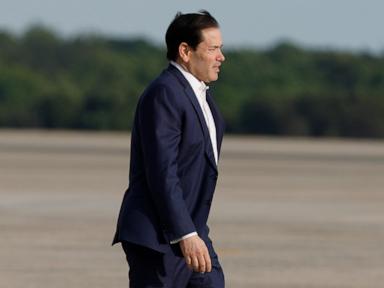
Marco Rubio, America’s newly minted Secretary of State, is landing in this climate of profound, teeth-gritting anxiety. He arrives not just as a diplomat, but as an emissary from a shifting empire. To the defense ministers waiting for him, he represents a Rorschach test. Is he the traditional internationalist who once championed NATO, or is he the loyal lieutenant of a Donald Trump doctrine that views transatlantic alliances less like sacred covenants and more like protection rackets?
The stakes are not abstract. They are measured in steel, borders, and the survival of nations.
The Cold Geometry of a Border Post
To understand the panic humming through the corridors of Brussels, you have to leave the glass-and-steel ministries and travel fifteen hundred miles east.
Imagine a hypothetical Estonian border guard named Tomas. He stands in the biting damp of Narva, looking across a narrow river at Russia. For years, Tomas’s confidence didn't come from his service rifle. It came from the knowledge that if a single Russian boot crossed that river, the entire weight of the United States military would fall upon Moscow.
Now, imagine Tomas watching the news on his phone during a break. He hears American politicians debating whether defending a "small country" is worth World War III. He reads threats about pulling U.S. troops out of Europe if spending targets aren't met.
The river suddenly looks much wider. The air feels much colder.
This is the psychological erosion that standard news reports call "regional instability." It is the slow, terrifying realization that the floor beneath your feet might actually be a trapdoor. European defense spending is rising, yes—nations are buying tanks and scrambling to fortify their ammunition depots—but you cannot build a nuclear deterrent or a continent-wide logistical spine overnight.
Europe spent thirty years reaping a peace dividend, hollowing out its militaries because Washington promised to handle the heavy lifting. Now, the bill has come due, and the landlord is threatening eviction.
The Ghost at the Diplomatic Banquet
When Rubio sits down at the North Atlantic Council table, he will face leaders who are terrified of two distinct realities, both wrapped in the same American flag.
The first is the immediate future of Ukraine. There is a palpable dread that Washington will force Kyiv into a meat-grinder peace deal, freezing the conflict along current front lines and effectively codifying Russian aggression. For countries like Poland or Lithuania, that isn’t diplomacy; it’s an intermission. They know that a paused Russia is simply a Russia preparing for the next war.
The second fear is broader, deeper, and more existential. It is the creeping suspicion that the American electorate has fundamentally changed.
Even if Rubio offers smooth assurances—and he is a skilled orator, fully capable of delivering a stirring defense of the Western alliance—every European diplomat in the room will be thinking the same thing: What happens in four years? What happens if the next tweet undoes everything you just promised?
Trust is a mirror. Once cracked, you can glue it back together, but everyone still sees the distortion.
The Secondary Shockwave: The Shadow of Iran
As if the eastern front weren't enough, Rubio’s briefcase carries another source of profound friction: Tehran.
Europe and Washington have long viewed Iran through entirely different lenses. For the U.S., Iran is a distant node in an axis of authoritarianism, a problem to be solved via maximum pressure and crushing economic isolation. For Europe, Iran is a volatile neighbor just across the Mediterranean pond, capable of weaponizing migration routes, disrupting vital shipping lanes, and unleashing cyber warfare directly on European infrastructure.
When the previous Trump administration tore up the Iran nuclear deal, European leaders scrambled to keep the carcass of the agreement alive. They failed. Now, with Iran supplying drones to rain down on Ukrainian cities, the crisis has merged into a single, massive security nightmare.
Rubio represents a hardline stance on Iran that leaves little room for European nuance. The anxiety in Brussels is that Washington will drag Europe into an escalation cycle in the Middle East that the continent is utterly unprepared to handle, all while America simultaneously demands that Europe take full responsibility for its own defense against Russia.
It is a geopolitical pincer movement, and Europe is caught in the middle.
The Price of Dependence
We often treat international relations like a game of chess, clean and calculated. It isn't. It is an messy, human arena driven by ego, fear, domestic polling, and historical trauma.
The current panic reveals a uncomfortable truth that Europe has spent decades trying to ignore: dependence is a form of vulnerability. By outsourcing its security to a superpower across the Atlantic, Europe traded its strategic autonomy for a comfortable lifestyle. It chose healthcare, infrastructure, and social safety nets over artillery shells and satellite constellations.
That trade was brilliant while it lasted.
But the world changed, and Europe didn't change fast enough. Now, the continent finds itself in the humiliating position of parsing the body language of an American Secretary of State, searching for clues about whether their children will grow up in a free world or under the shadow of a resurgent empire.
Rubio will likely say all the right things in Brussels. He will smile for the family photo. He will reaffirm America’s commitment to its allies, because he understands the value of the theater of diplomacy.
But the ministers watching him will look past the smile. They will look at the domestic political winds howling across America, winds that Rubio must ride to survive his own political future. They know that behind the reassurance lies a stark, unvarnished warning: the American safety net is fraying, and Europe needs to learn how to walk the tightrope alone.
Late into the night, the lights in the NATO headquarters remain on. Outside, the rain slicks the pavement, reflecting the gray, uncertain sky. In the offices, the calculators are out, computing the cost of new divisions, new fighter jets, and new missile shields. The era of easy security is over, buried under a mountain of doubt, and no amount of diplomatic charm from Washington can bring it back.