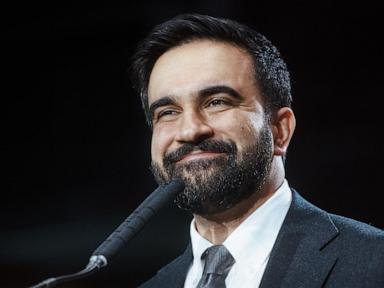
Zohran Mamdani isn't your typical suit at City Hall. Most New York mayors spend their tax day explaining property write-offs or complex investment portfolios. Not Mamdani. The newly minted 112th Mayor of New York City just released his 2025 tax filings, and they prove that his past life as a "C-list rapper" is still paying out—literally.
While he’s busy trying to make the city more affordable, the 34-year-old democratic socialist is still collecting checks from his days as Young Cardamom. Honestly, the numbers aren't going to buy him a new penthouse, but they tell a story that most politicians would try to bury. Mamdani? He’s telling you to go stream his tracks on Spotify.
The math behind the mic
Tax filings released this week show that Mamdani brought in $1,643 in music royalties during 2025. That’s a slight bump from the $1,267 he saw in 2024. It’s pocket change for a guy now pulling a mayoral salary of $258,750, but it’s a fascinating glimpse into the gig economy of a former artist.
Last year, the bulk of his income came from his $131,296 salary as a New York State Assembly member. His wife, Rama Duwaji, earned about $10,010 from graphic design work. Together, they reported a joint income of roughly $145,000. They’re basically a normal, upper-middle-class New York couple—at least until you realize one of them runs the five boroughs and used to drop bars about chapati.
From Young Cardamom to City Hall
If you haven't gone down the rabbit hole yet, Mamdani’s music wasn't just fluff. He rapped under the names Young Cardamom and Mr. Cardamom. His tracks were often multilingual, blending Nubi, Luganda, Swahili, and English. He wasn't just trying to get famous; he was using music to talk about colonialism, South Asian identity, and the Ugandan street food scene.
One of his most notable credits is the song "#1 Spice" from the Disney film Queen of Katwe. That’s the kind of credit that keeps those royalty checks coming in years after you’ve hung up the headphones. It’s also a reminder that Mamdani comes from a creative powerhouse family—his mother is the acclaimed director Mira Nair.
What these tax returns really tell us
Transparency is a big deal in NYC politics. Eric Adams used to catch flak for his opaque filings and those weird write-offs for "rodent mitigation" at his Brooklyn property. Mamdani is taking a different route. By releasing these returns, he’s trying to show he’s exactly who he said he was on the campaign trail: a guy who actually lives on a budget.
- The $7,011 Refund: Mamdani overpaid his taxes in 2025. While some see a refund as a "forced savings account," it’s a pretty human mistake to withhold too much from your paycheck.
- Limited Investments: He’s not playing the stock market. His filings showed $119 in interest from a Municipal Credit Union account and $117 in dividends from Fidelity.
- The Standard Deduction: He didn't itemize. This means we don't see his charitable giving, but it also means he isn't using complex loopholes to dodge the tax man.
The royalty trend for NYC Mayors
Mamdani isn't actually the first mayor to have entertainment money rolling in. Michael Bloomberg, despite being a billionaire, used to pull in a few thousand dollars in residuals. Why? Because he’d play himself in cameos on Law & Order or movies like The Adjustment Bureau.
The difference is Mamdani’s royalties come from his own creative labor before he ever entered a voting booth. It’s a bridge between his "celebrity politician" status and his roots in the Queens hip-hop scene. He’s leaning into it, even joking that "people say they're listening, but they're not listening," otherwise those royalty numbers would be higher.
Why you should care about $1,600
In the grand scheme of a city budget that tops $100 billion, $1,643 in rap royalties is less than a rounding error. But in terms of political branding, it’s gold. Mamdani beat Andrew Cuomo and Curtis Sliwa by promising a "relentless improvement" of the city’s affordability. It’s a lot easier to sell that message when your tax return looks like a regular person’s—royalties and all—rather than a hedge fund manager’s.
It also highlights the shift in what a "professional" politician looks like in 2026. Having a creative past isn't a liability anymore; it’s an asset. It makes you relatable. It gives you a "cool factor" that most candidates would spend millions on consultants to manufacture.
The immediate takeaway for New Yorkers
If you're looking for dirt in these filings, you're going to be disappointed. There are no secret offshore accounts or shady real estate deals. There’s just a guy who used to be a rapper, who’s now the mayor, and who still gets a check every time someone plays "Kanda" on Spotify.
If you want to support the mayor's personal finances, follow his advice: go stream the music. But if you're more interested in his policy, keep an eye on how he uses this "everyman" image to push through his aggressive tax plans for the city's actual millionaires.
- Verify the transparency: Check the public records for the 2025 financial disclosures.
- Stream the catalog: Listen to Young Cardamom and decide for yourself if he should’ve stuck to the booth.
- Watch the budget: See if his personal frugality translates to how he handles the city's wallets.